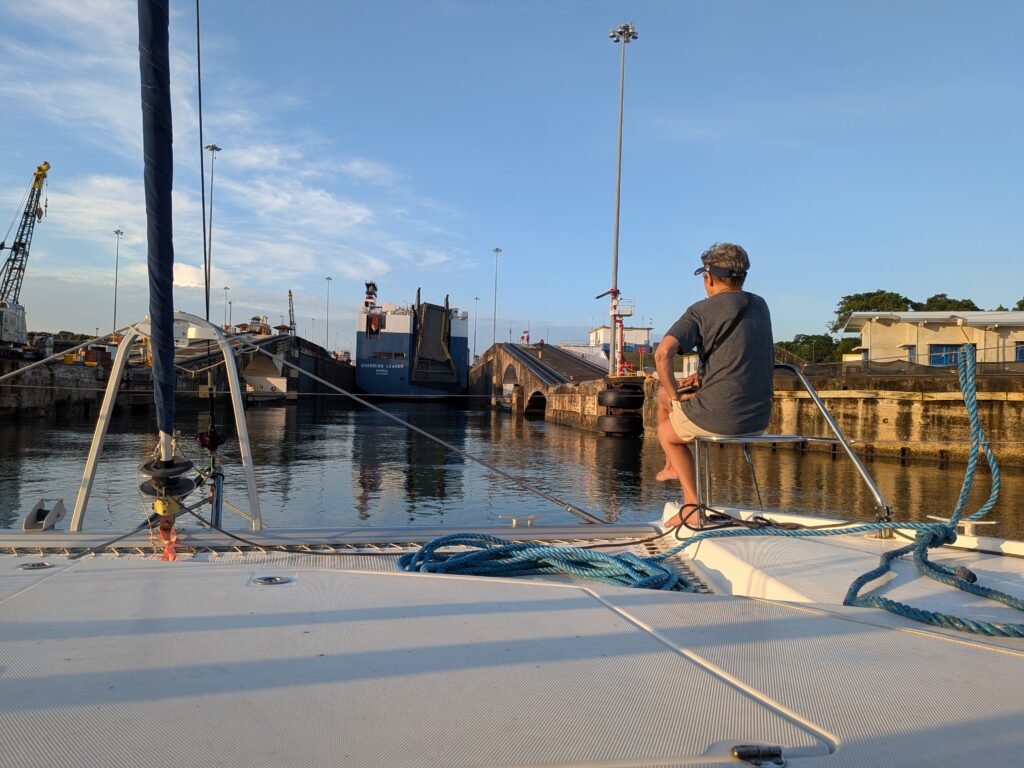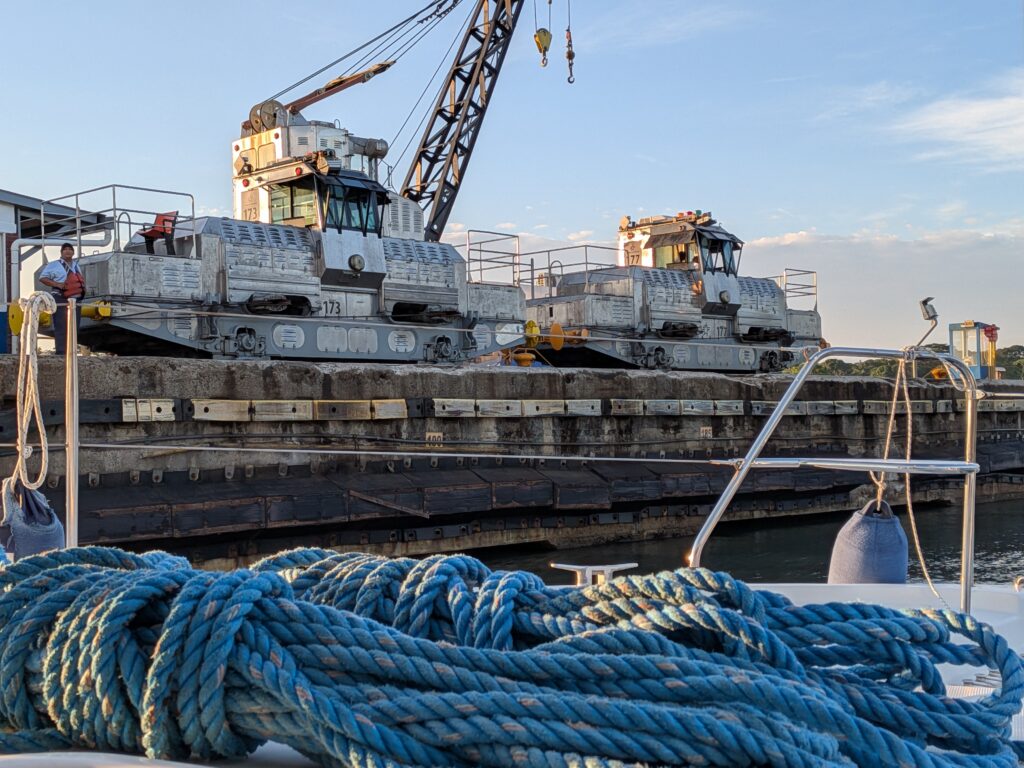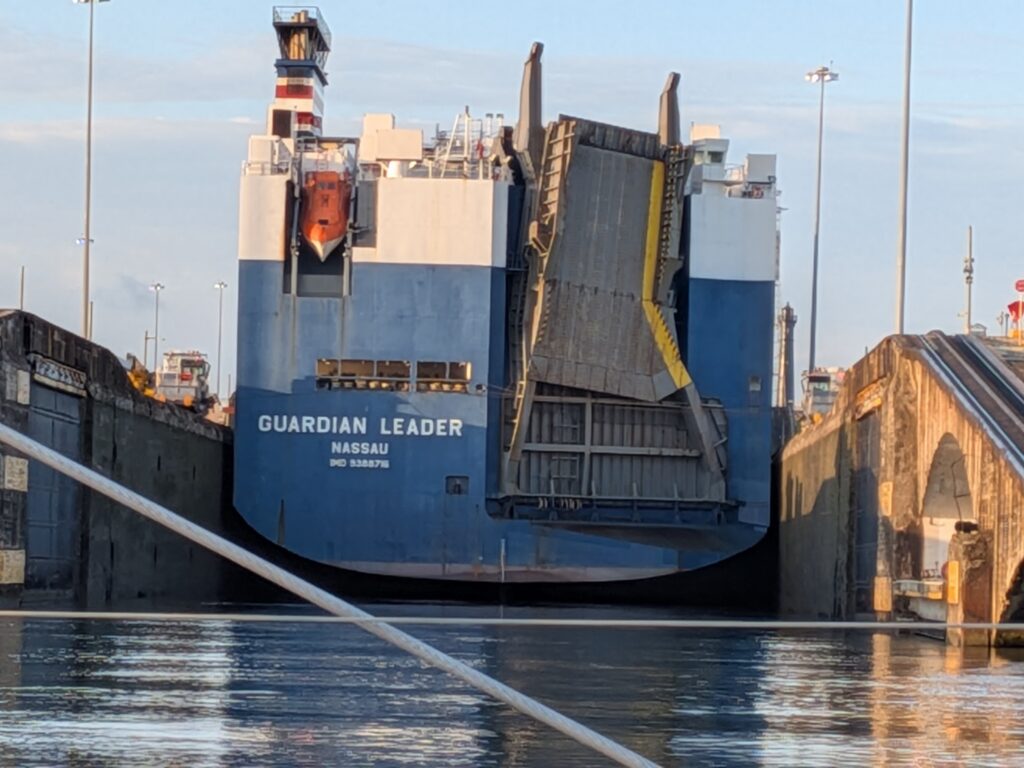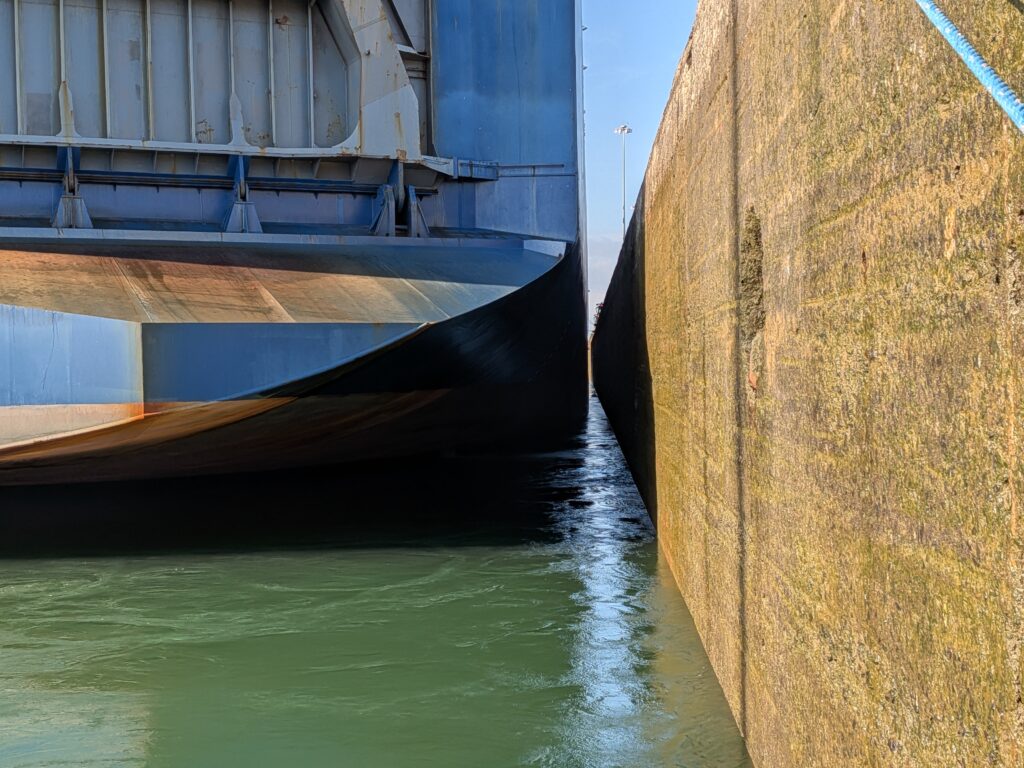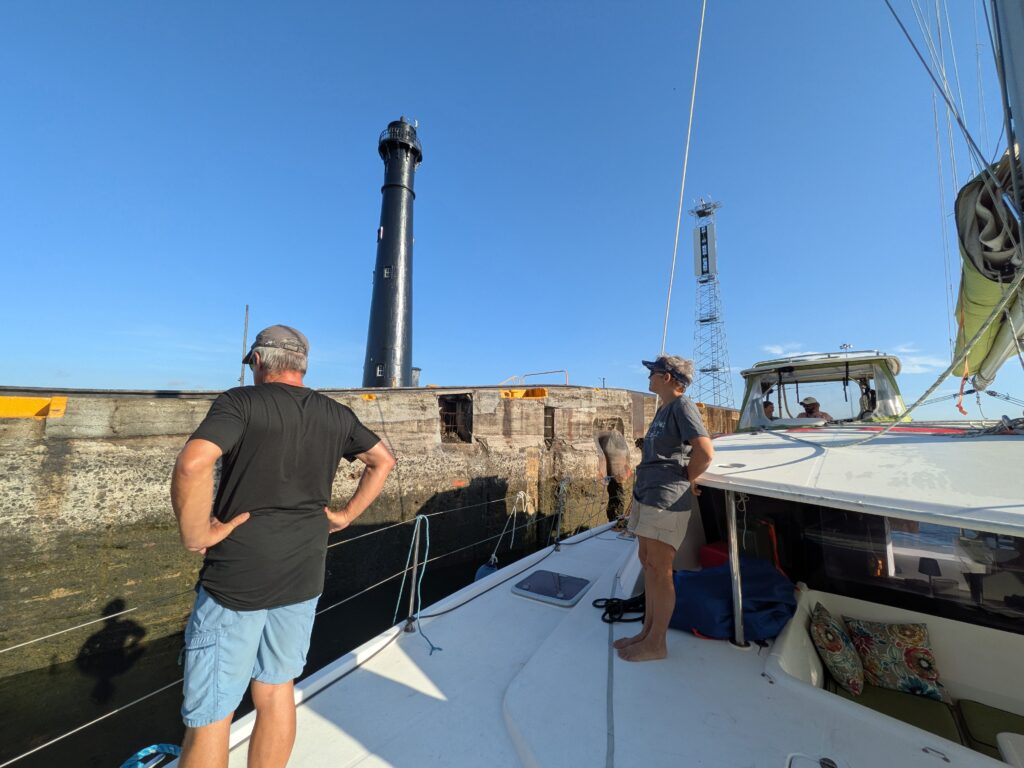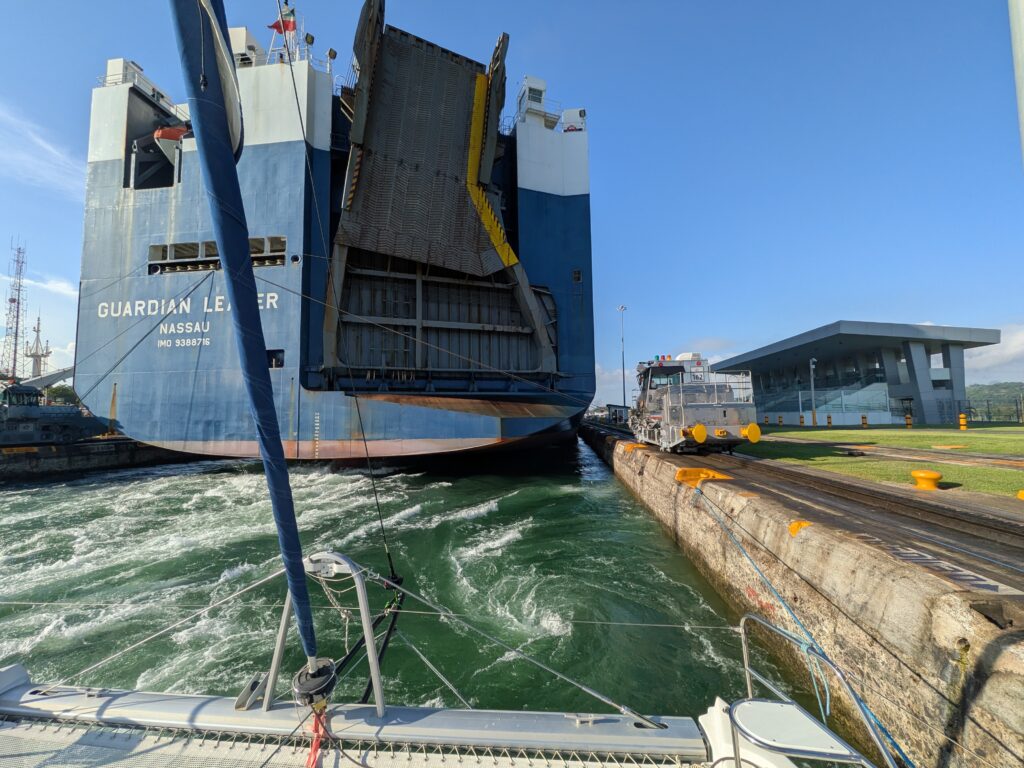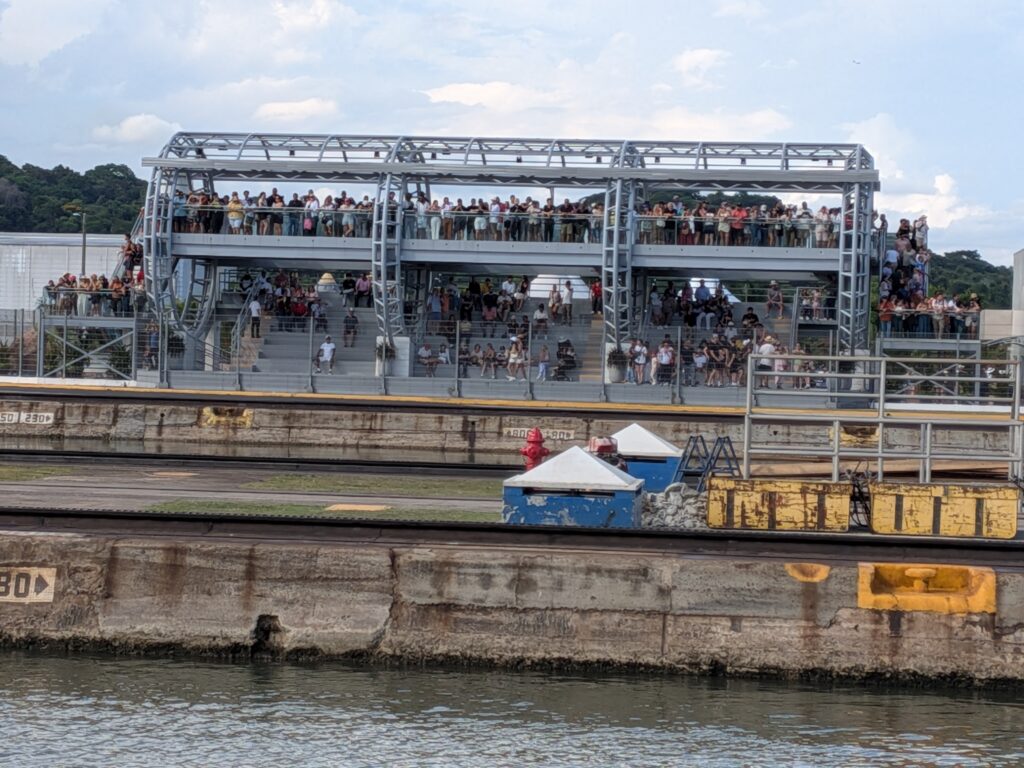

Crossing the Panama Canal is always a highlight for sailors. At Shelter Bay Marina, located at the Atlantic entrance, this becomes obvious the moment you arrive—yachts are constantly coming and going, each with its own crew of hopeful canal-crossers and last-minute volunteers.
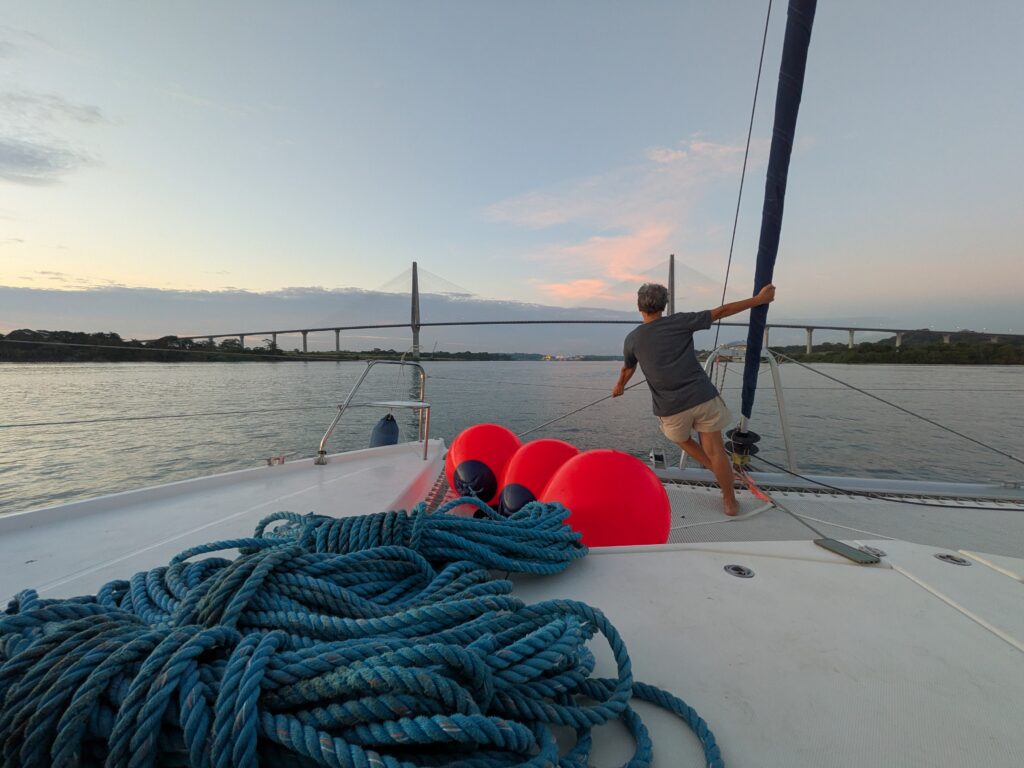
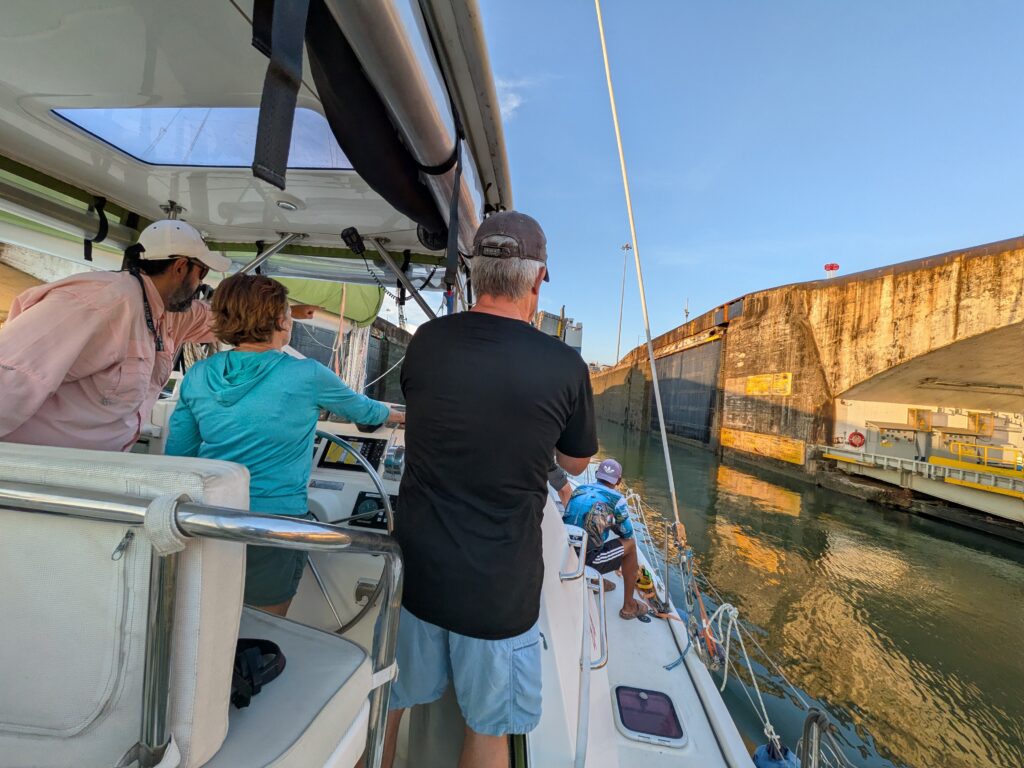
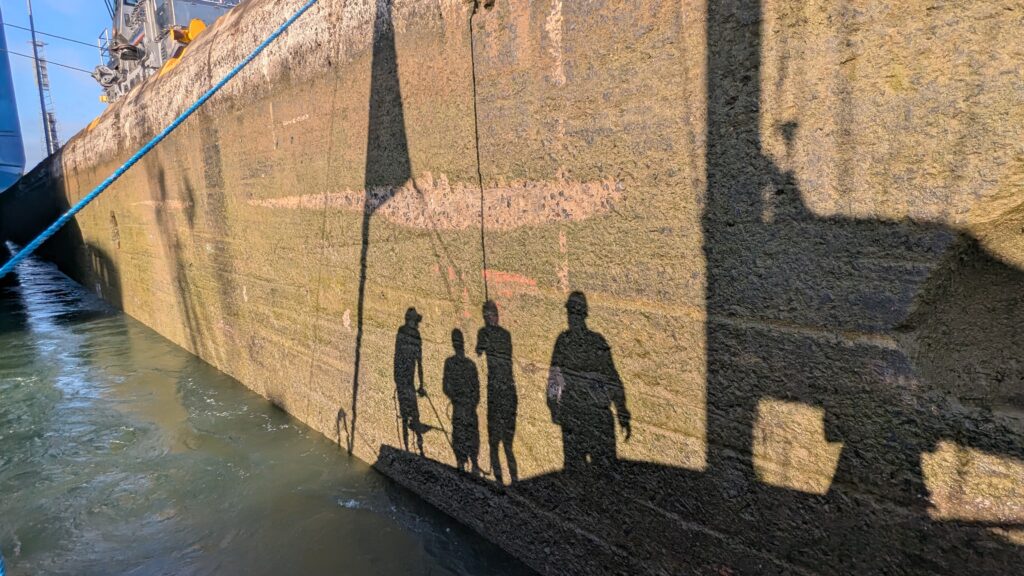
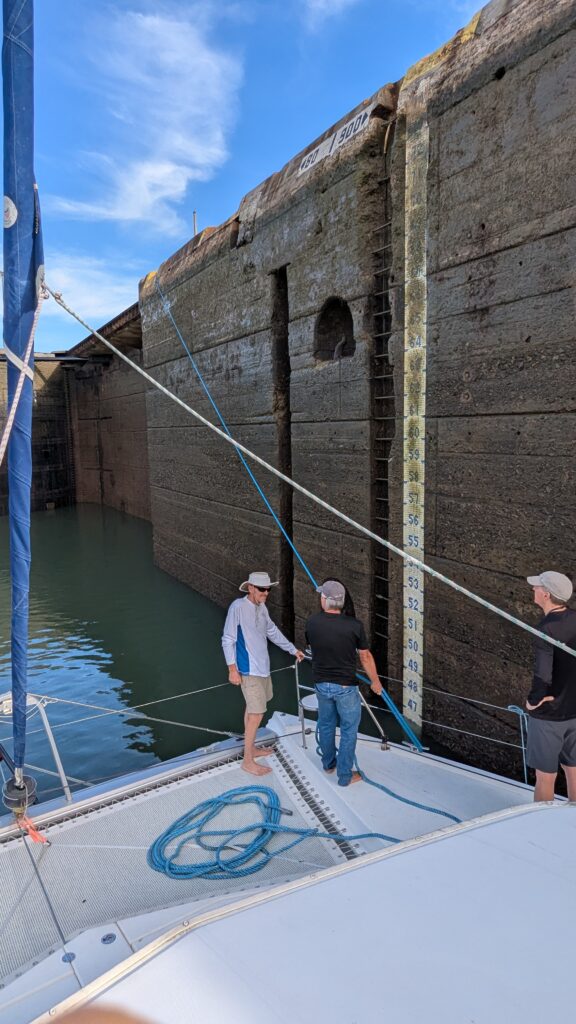
To transit the canal, a yacht needs more than just a capable captain—it requires four line handlers to manage the heavy mooring lines in the locks. If a crew comes up short, the captain can either hire local help or recruit fellow sailors from the marina. Volunteers are rarely in short supply; in fact, there’s often something like a waiting list. Who wouldn’t want a front-row seat to one of the world’s great engineering spectacles?
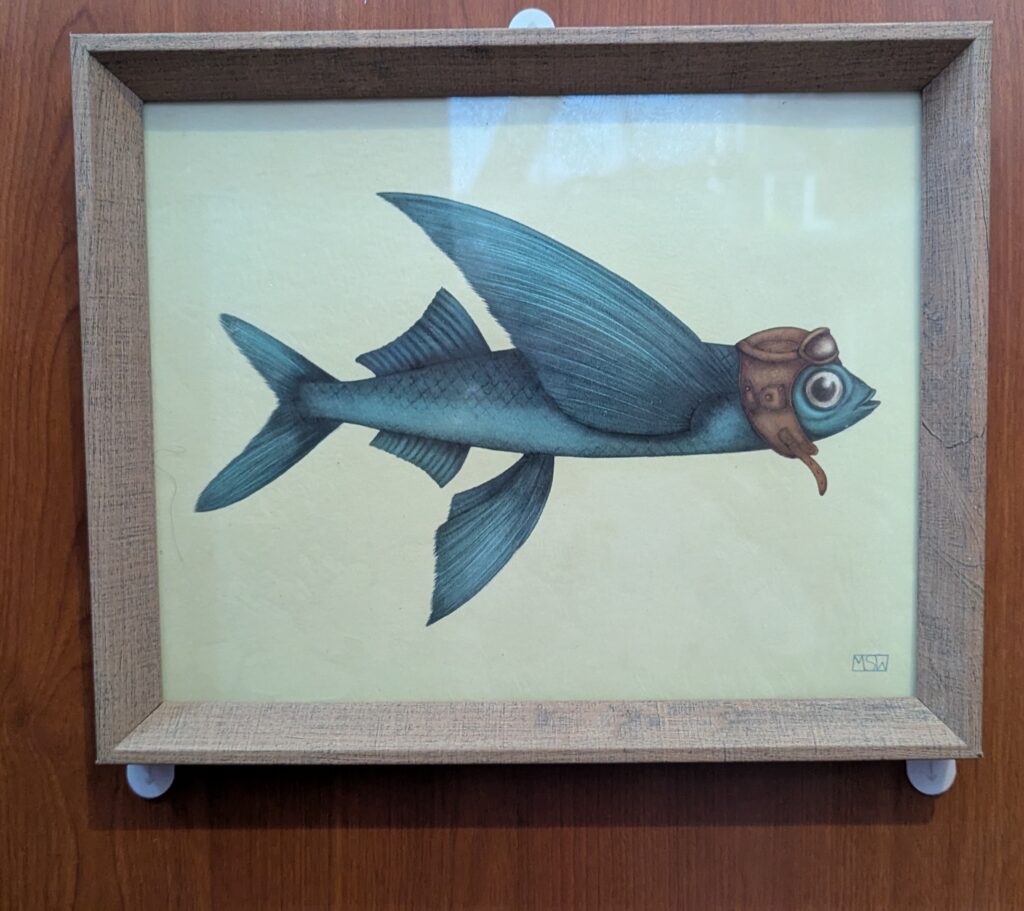
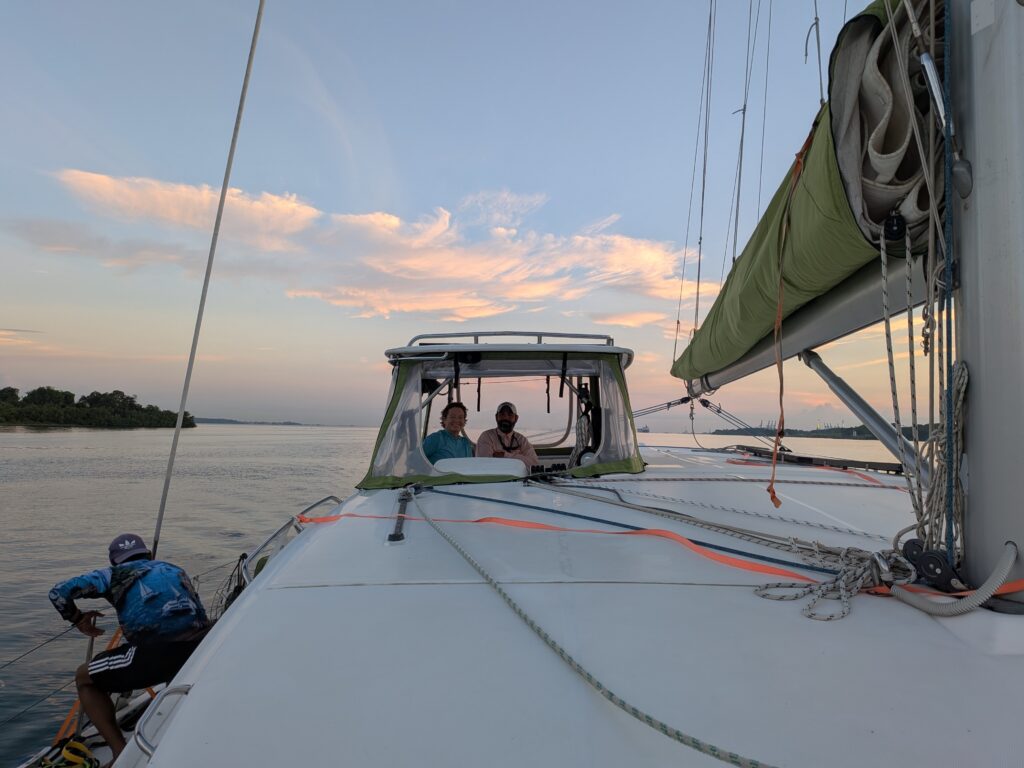
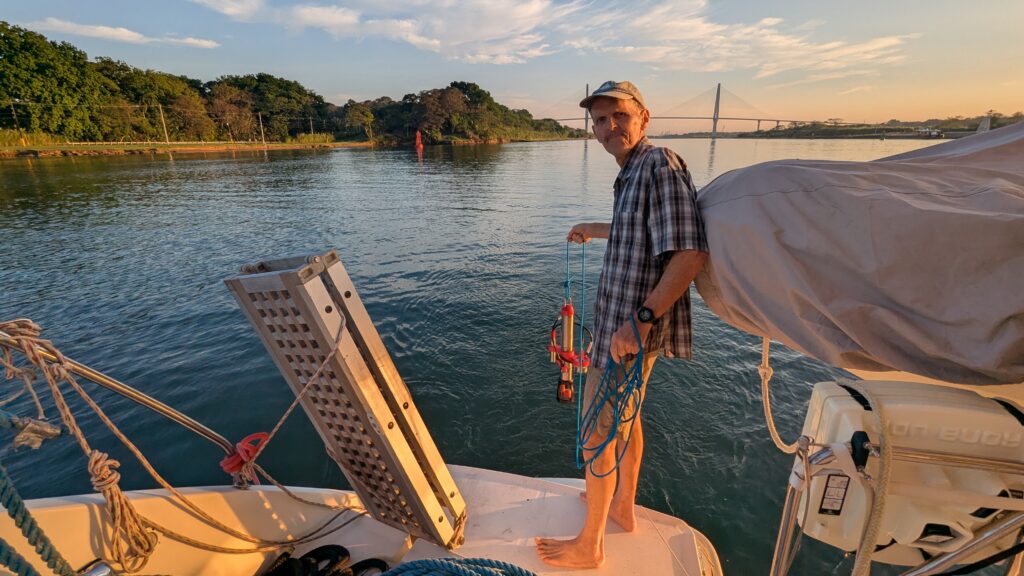
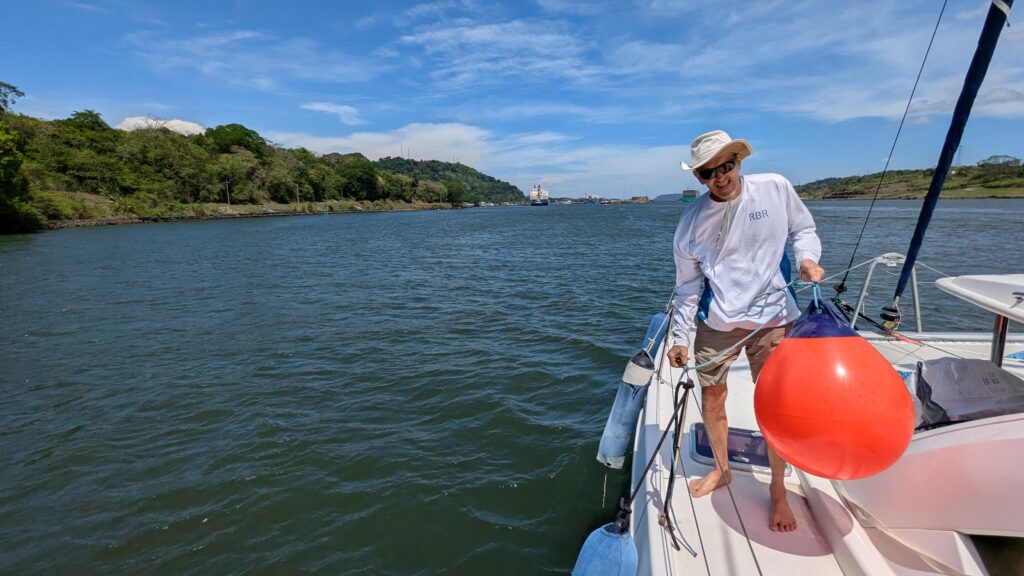
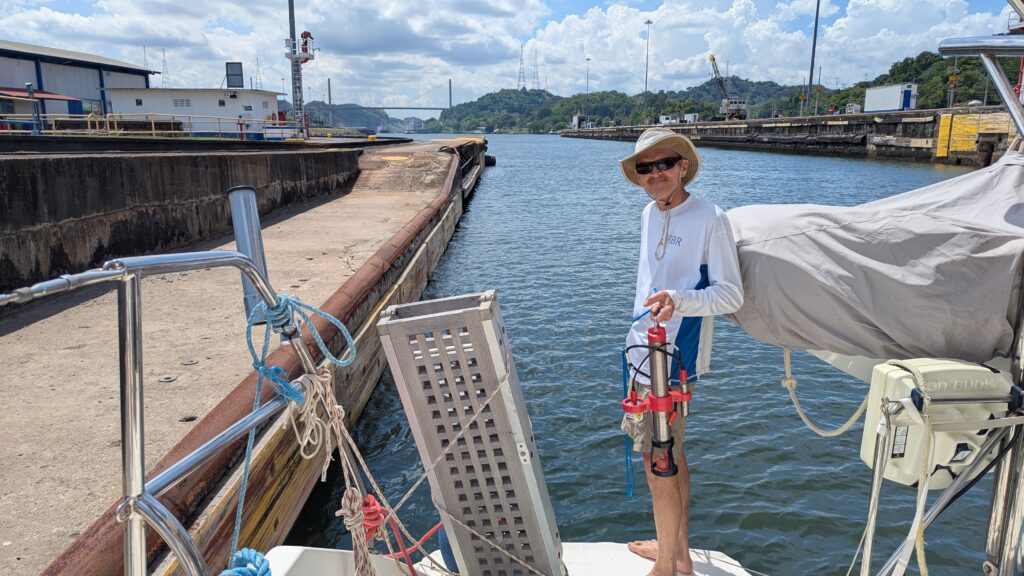
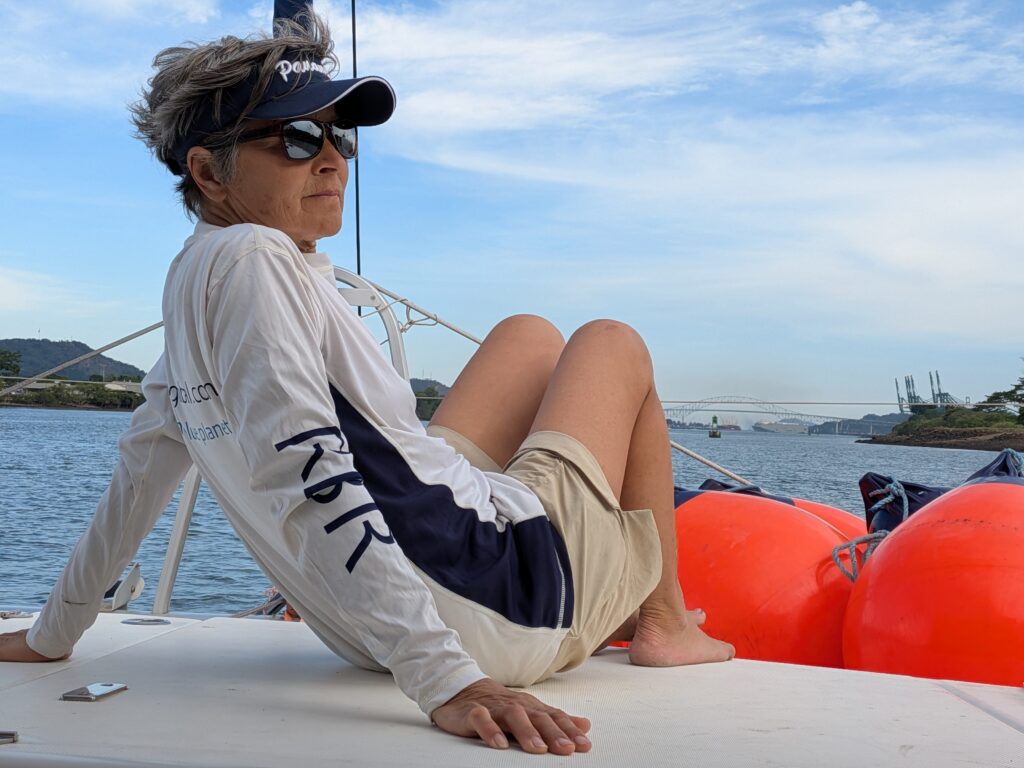
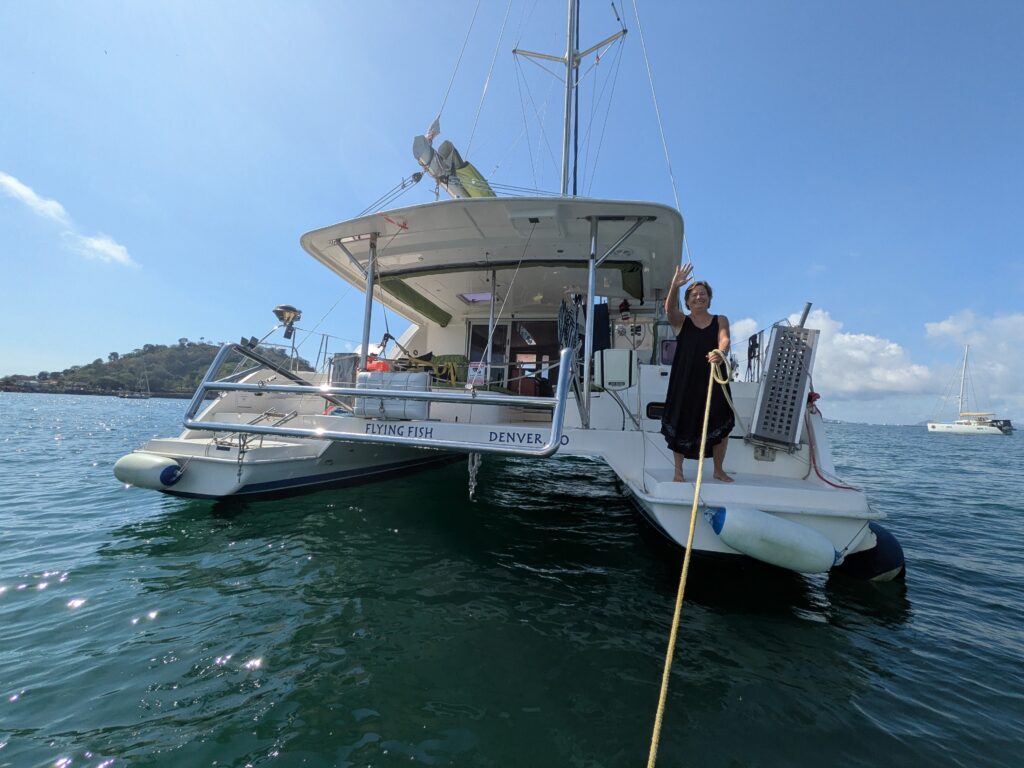
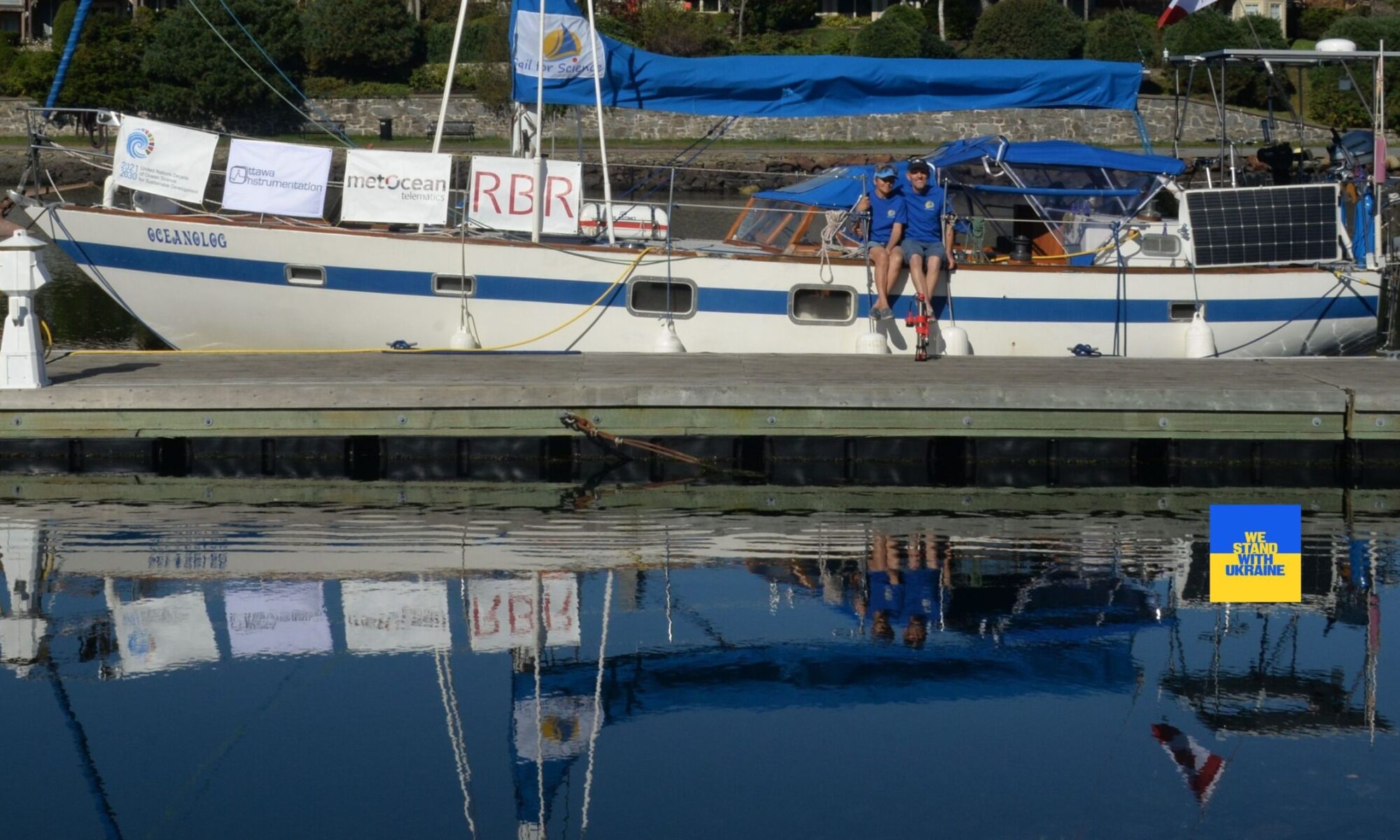
We were lucky enough to join as line handlers aboard the catamaran Flying Fish, with Captain Peter and First Mate Sarah. For us, this was not only hands-on training for our own future transit, but also a perfect opportunity to do what we do best—collect oceanographic data in unusual places.
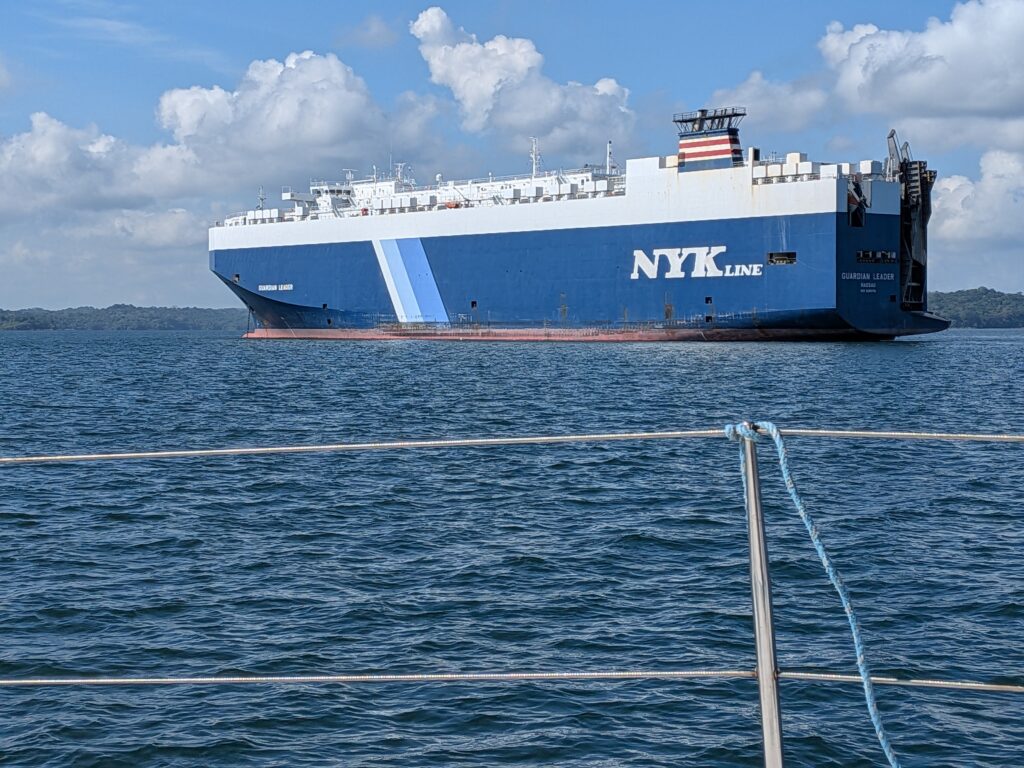
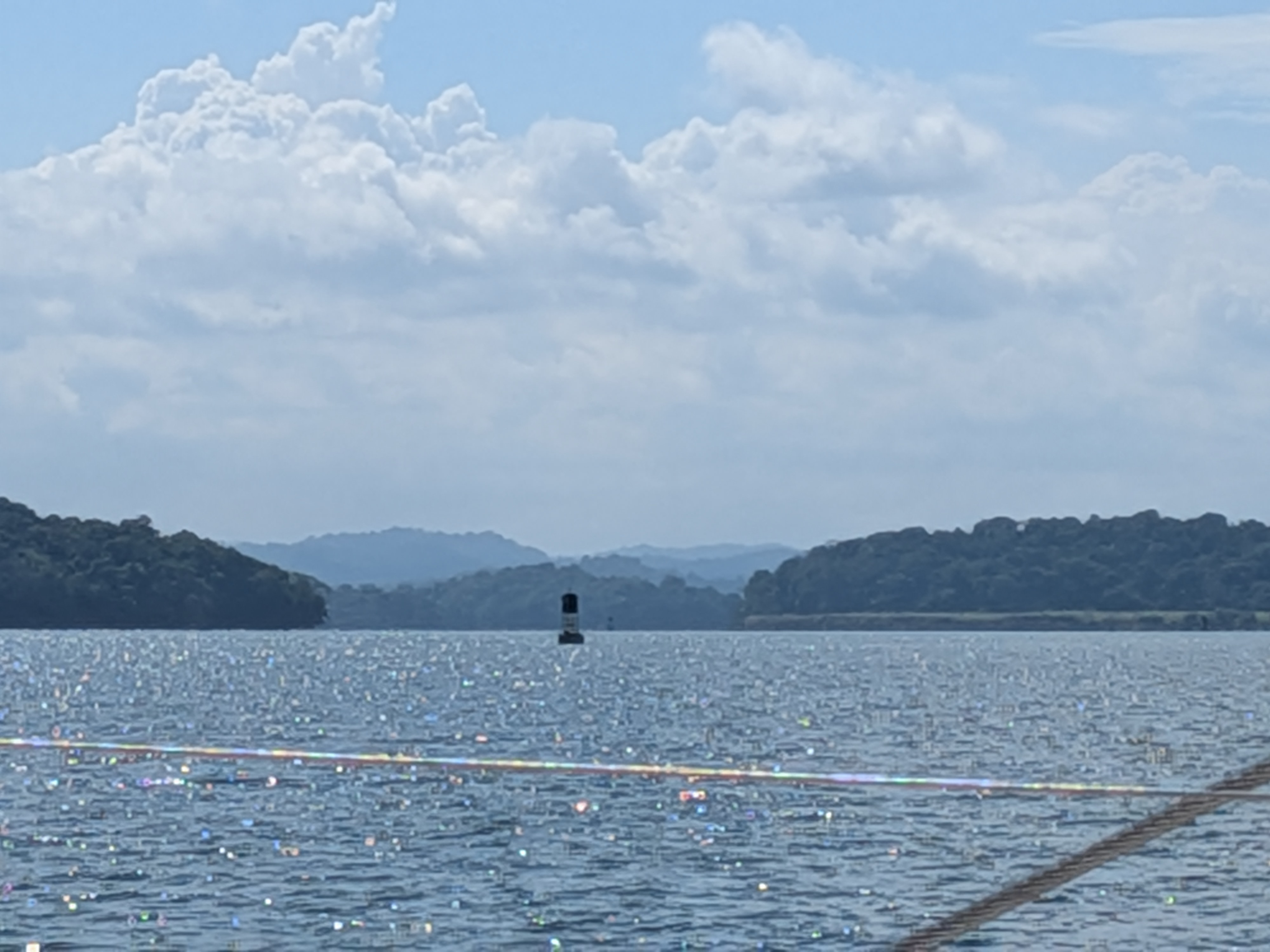
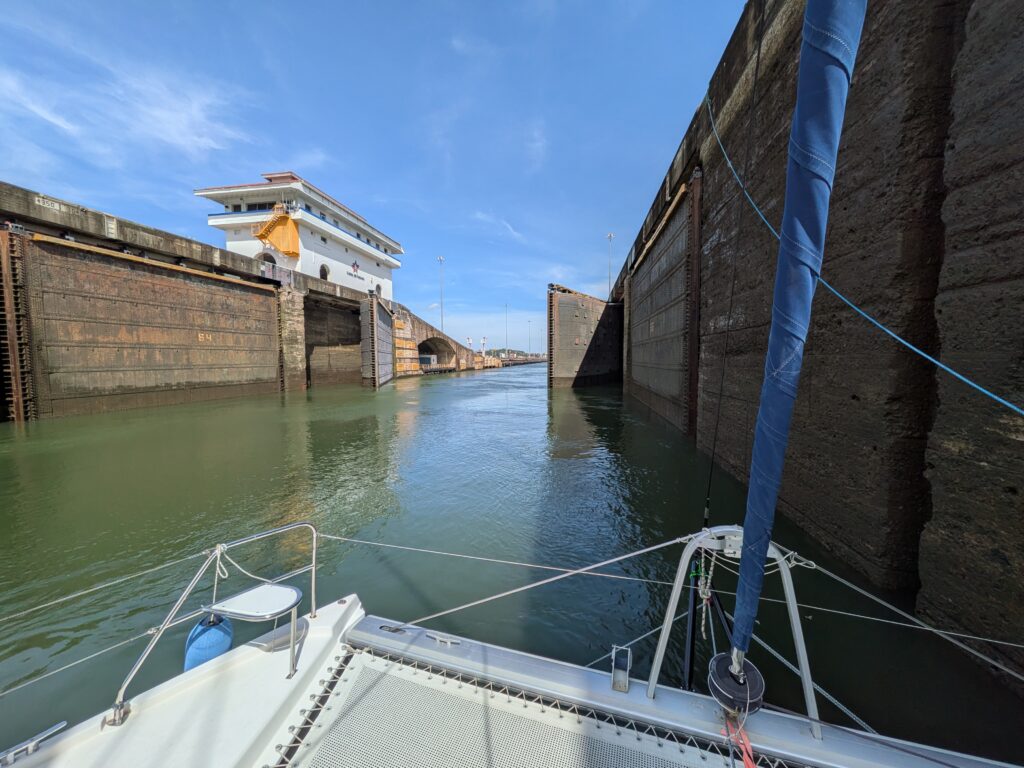
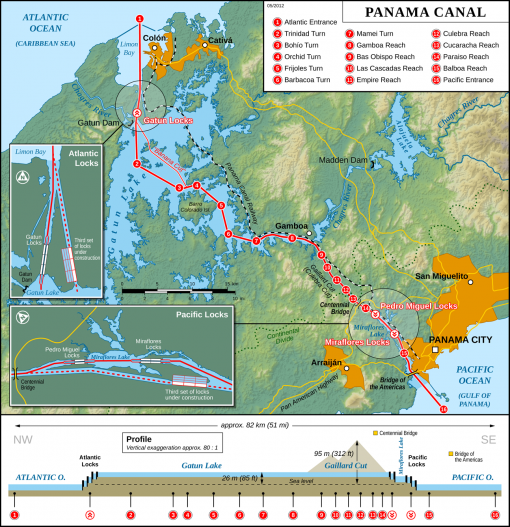
As is well known, the canal’s locks are fed by Gatun Lake, a freshwater reservoir that makes the entire system possible. In recent years, however, declining water levels and stricter water management—linked to climate variability—have become serious concerns. Add to this the constant procession of tankers, container ships, and car carriers, and you have a system under both operational and environmental pressure.
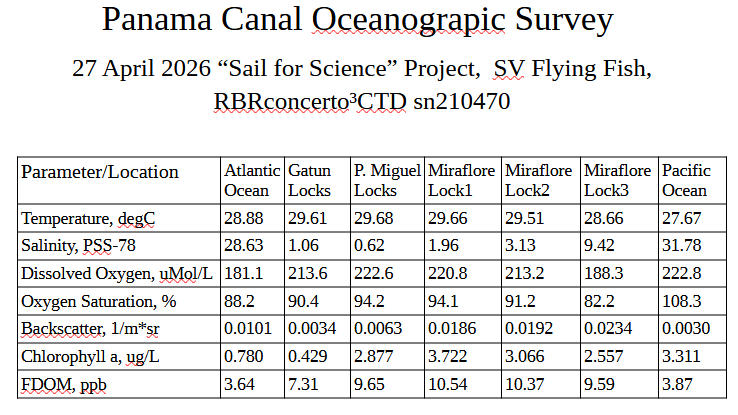
Our measurements reflected this unique environment. Salinity in the locks dropped significantly, compared to ocean levels, reaching (0.6 -9.4), i.e., to the level of brackish waters. Water temperatures in the locks hovered around a balmy 29.5°C, about 1-2 °C higher than in both oceans.
More interestingly, we detected elevated levels of fluorescent dissolved organic matter (up to 10.5ppb)—often associated with petroleum traces—suggesting the cumulative impact of heavy ship traffic. Dissolved oxygen and chlorophyll concentrations were lower than typical coastal values, pointing to reduced biological productivity.
Water clarity varied noticeably between locks. The Miraflores Locks stood out as the most turbid, three to five times more than the water in Gatun and Pedro Miguel Locks. Each lock, it seems, has its own personality—and its own mixing story.
Our transit through the canal was smooth and successful. And as tradition (and common sense) demands, we celebrated crossing the only proper way—by jumping into the Pacific Ocean at the end.
From one ocean to another, with science along the way. 🌊⛵