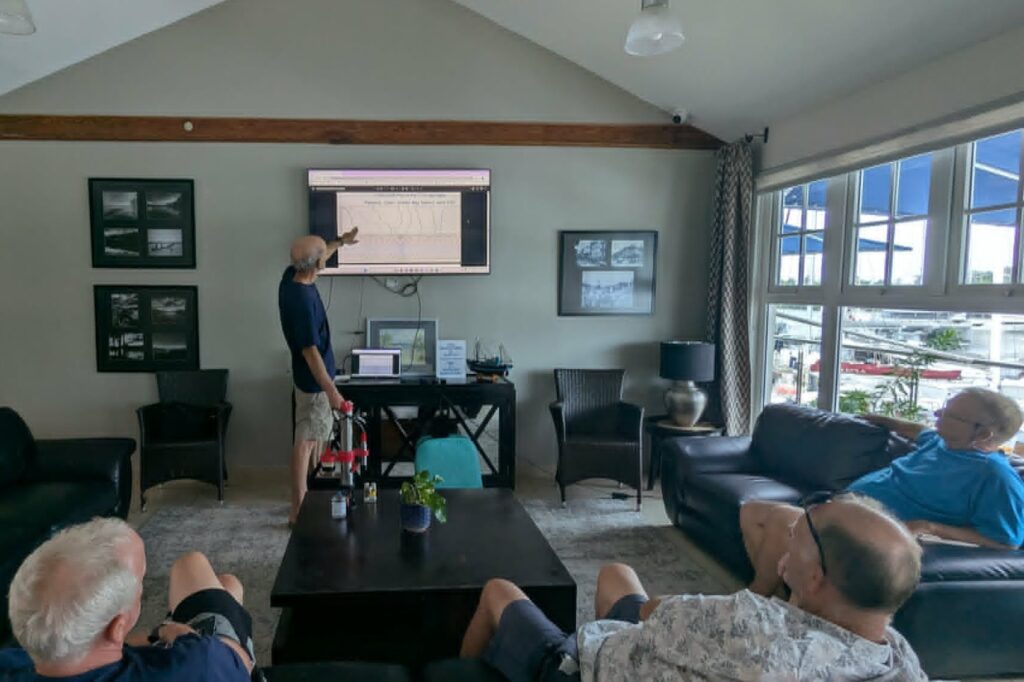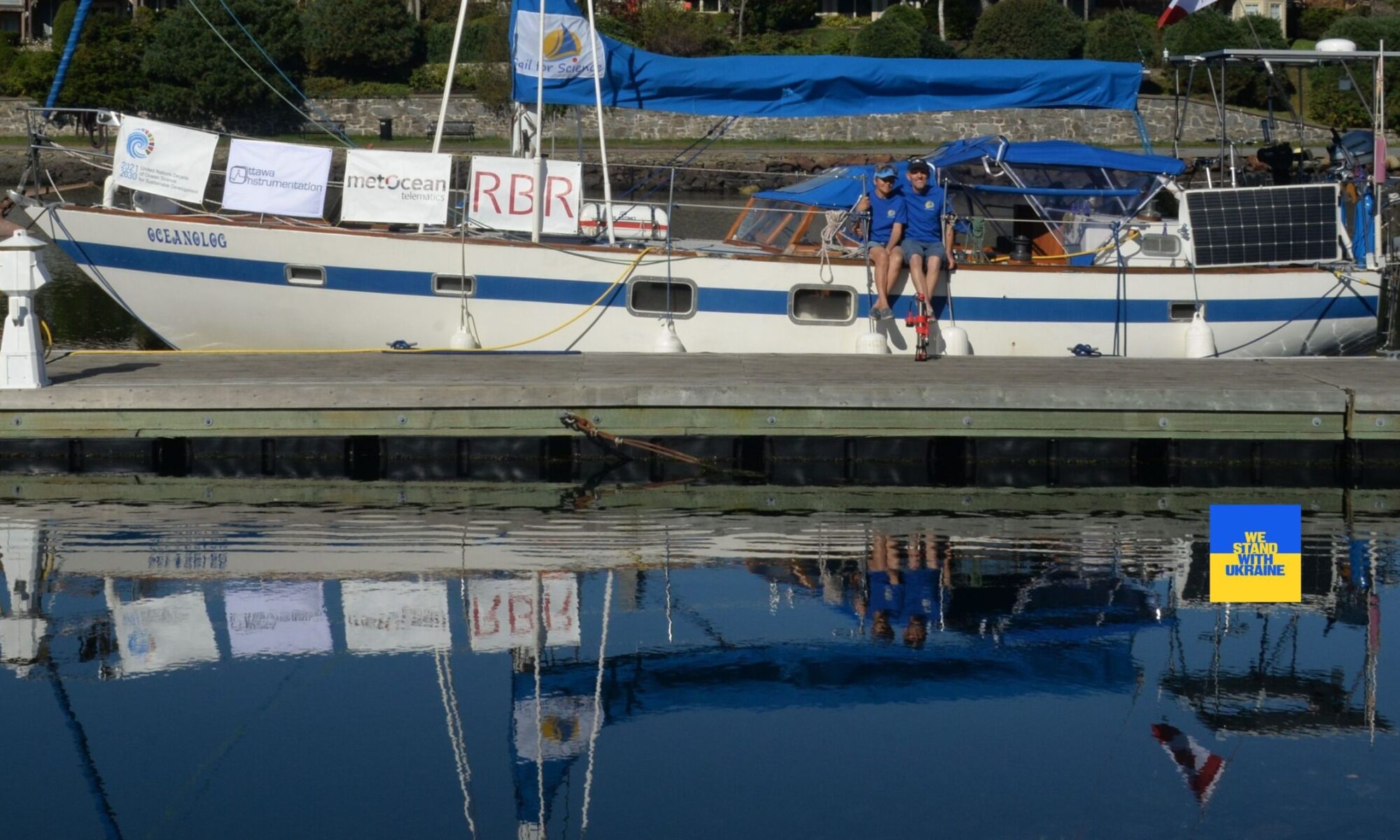

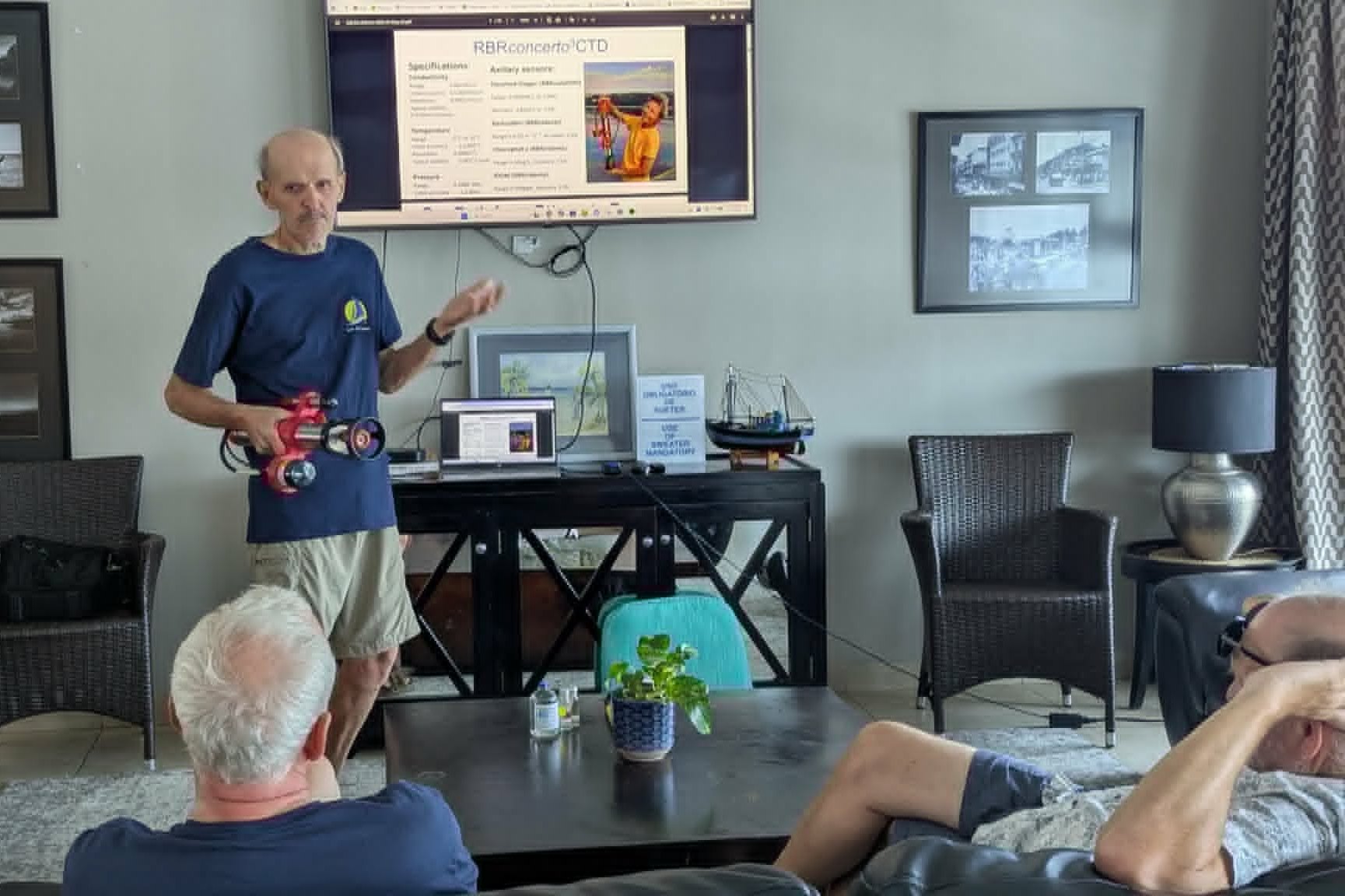
On a hot late afternoon of 15th May at Shelter Bay Marina, the Sail for Science team returned to the public with new stories, deeper insights, and more data to show. This was our third public presentation there, following the collection of oceanographic data during crossing the Panama Canal on SV Flying Fish.
The community gathered once again, curious and supportive, as we unfolded our mission: bridging cruising sailors with ocean data collection. I gave a presentation on our two-year expedition through the Caribbean Sea and introduced our CTD measuring system—the workhorse of our ocean citizen science project.
The talk covered current methods of collecting oceanographic data, from traditional ship-based CTD systems to autonomous Argo floats. I highlighted the gaps that still exist, particularly in coastal and island regions, and explained how small vessels like ours can play a vital role in closing those gaps. Beyond data, what makes Sail for Science resonate is its model. We’re demonstrating that sailing vessels can be platforms for serious science, even outside of institutional frameworks.
Using sailboats to collect ocean data is not only cost-effective, but also has an incredibly low carbon footprint. It’s a sustainable model for grassroots science—and we hope to see it grow.
We’re incredibly grateful to Shelter Bay Marina for hosting us again and to everyone who came out to listen, ask questions, share ideas, and spark connections. This is proof that curiosity and stewardship still travel far—especially when wind-powered.