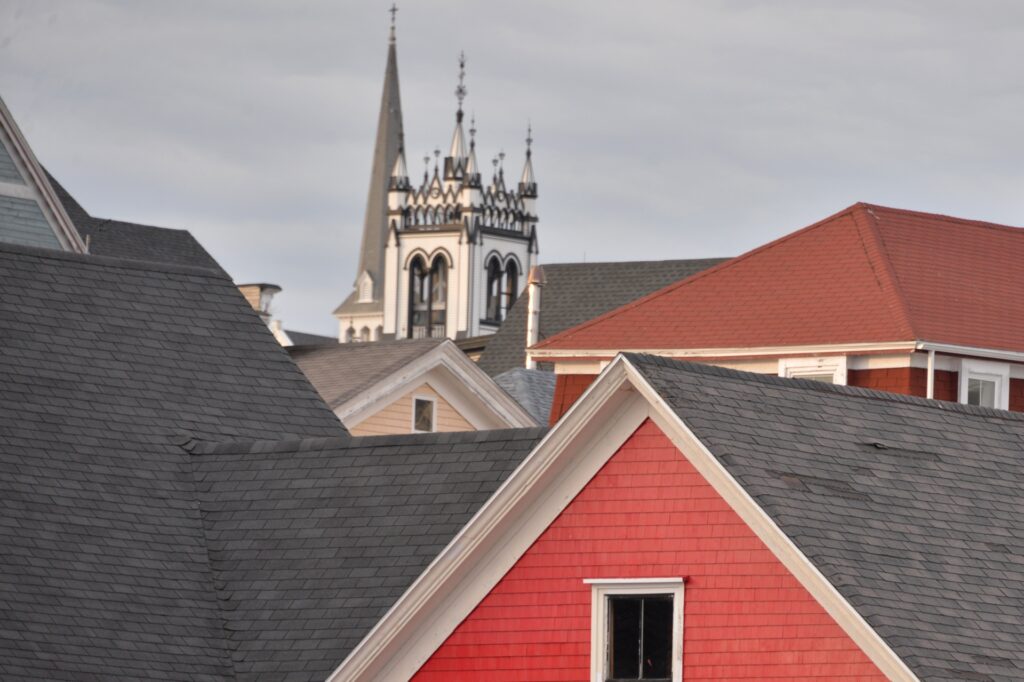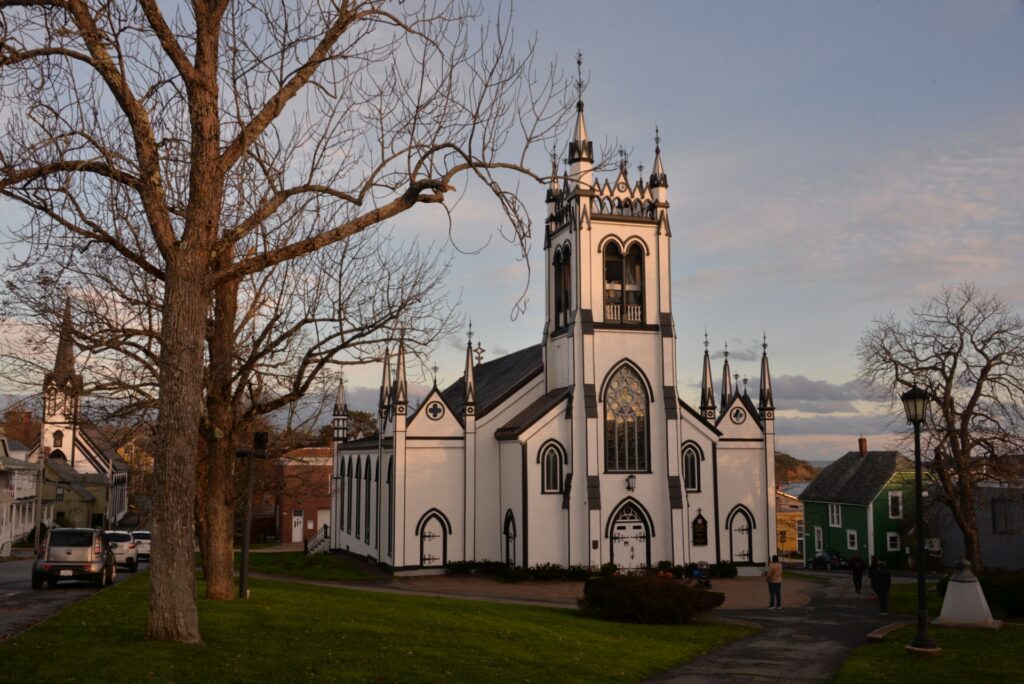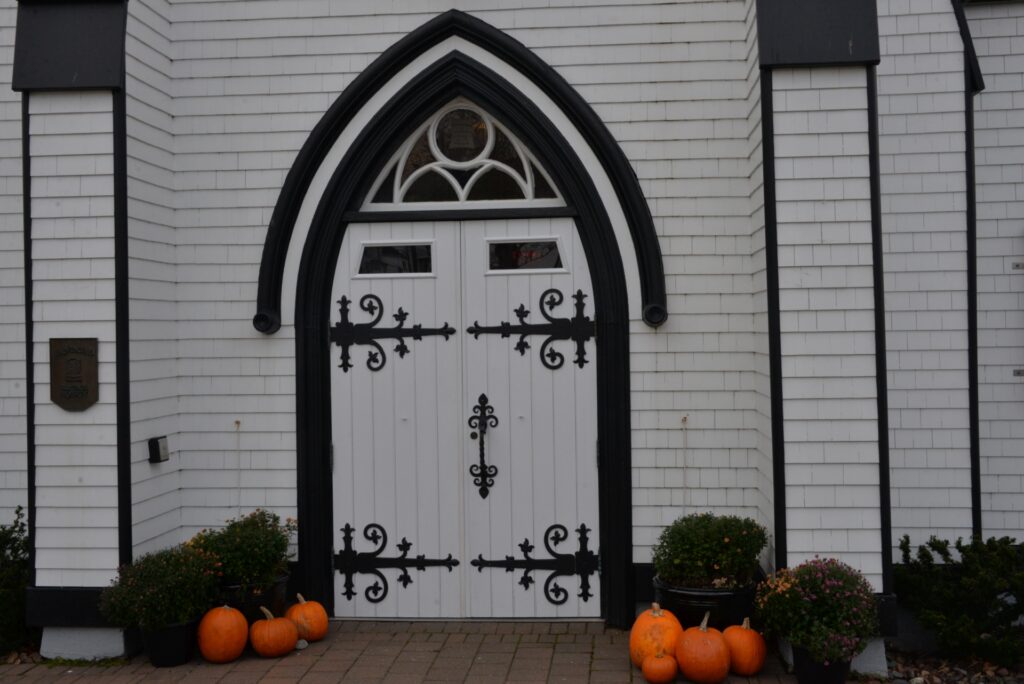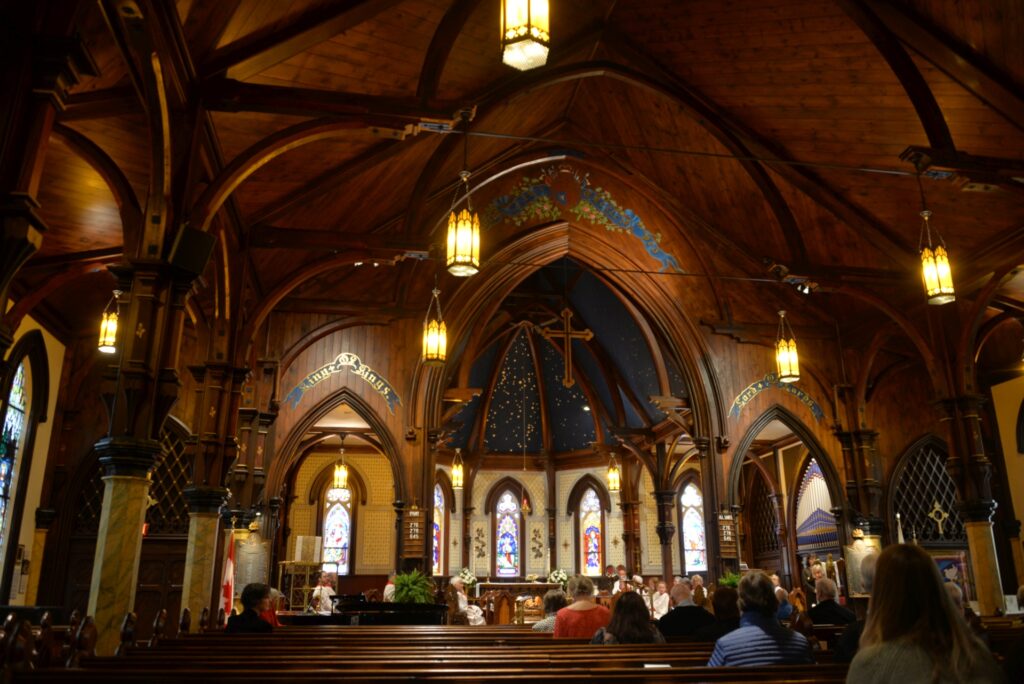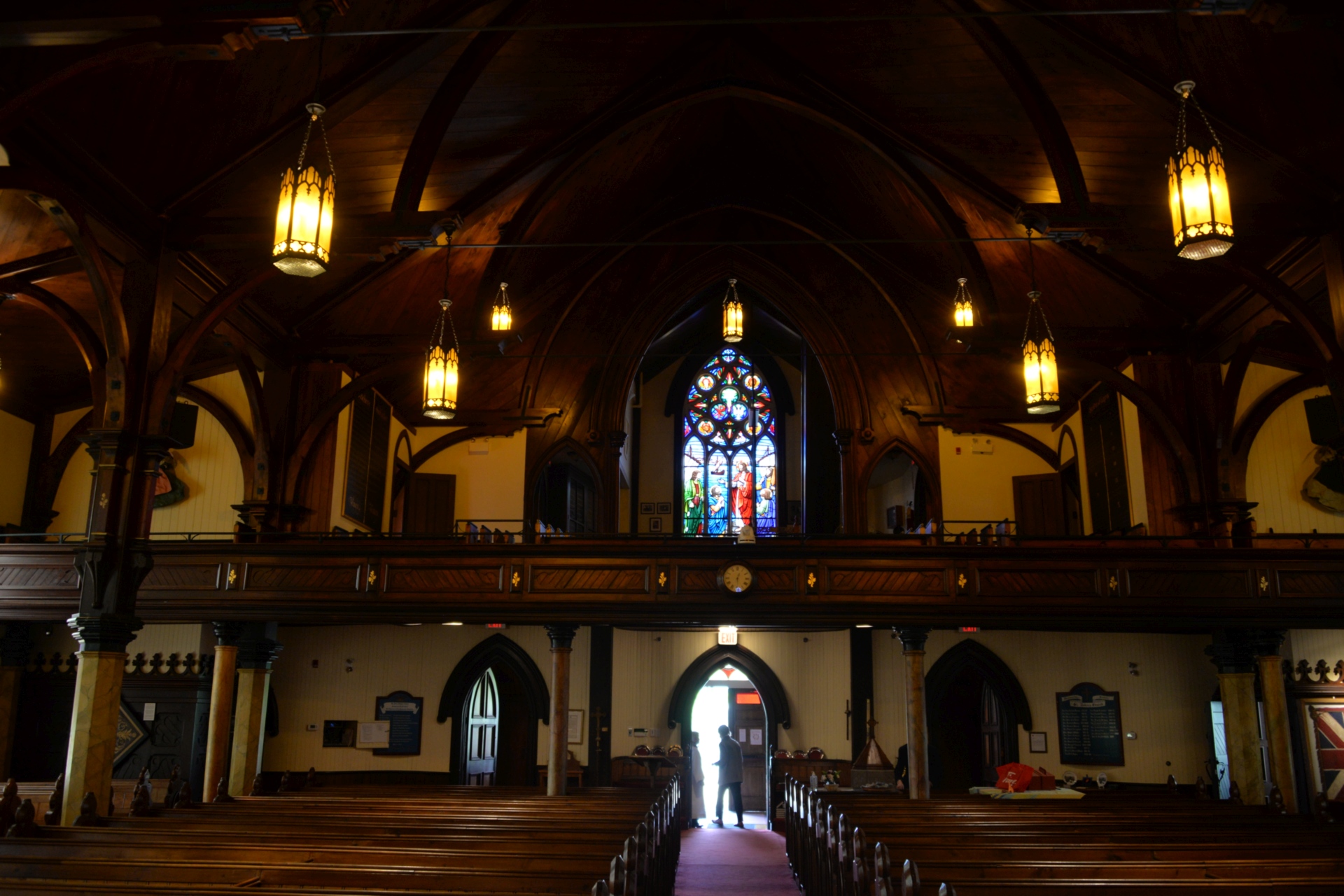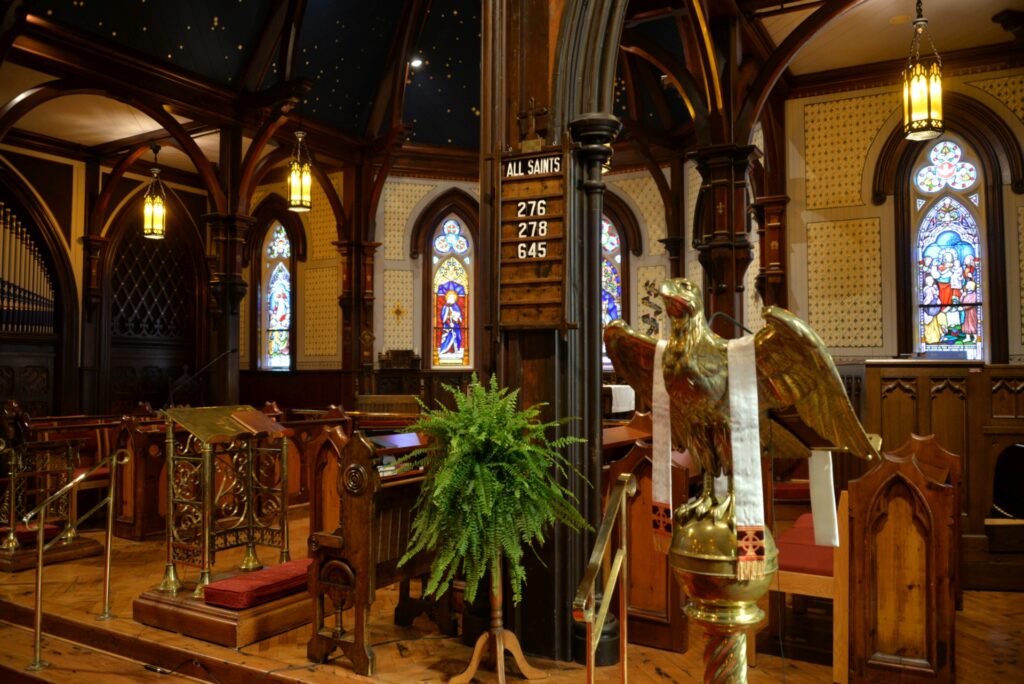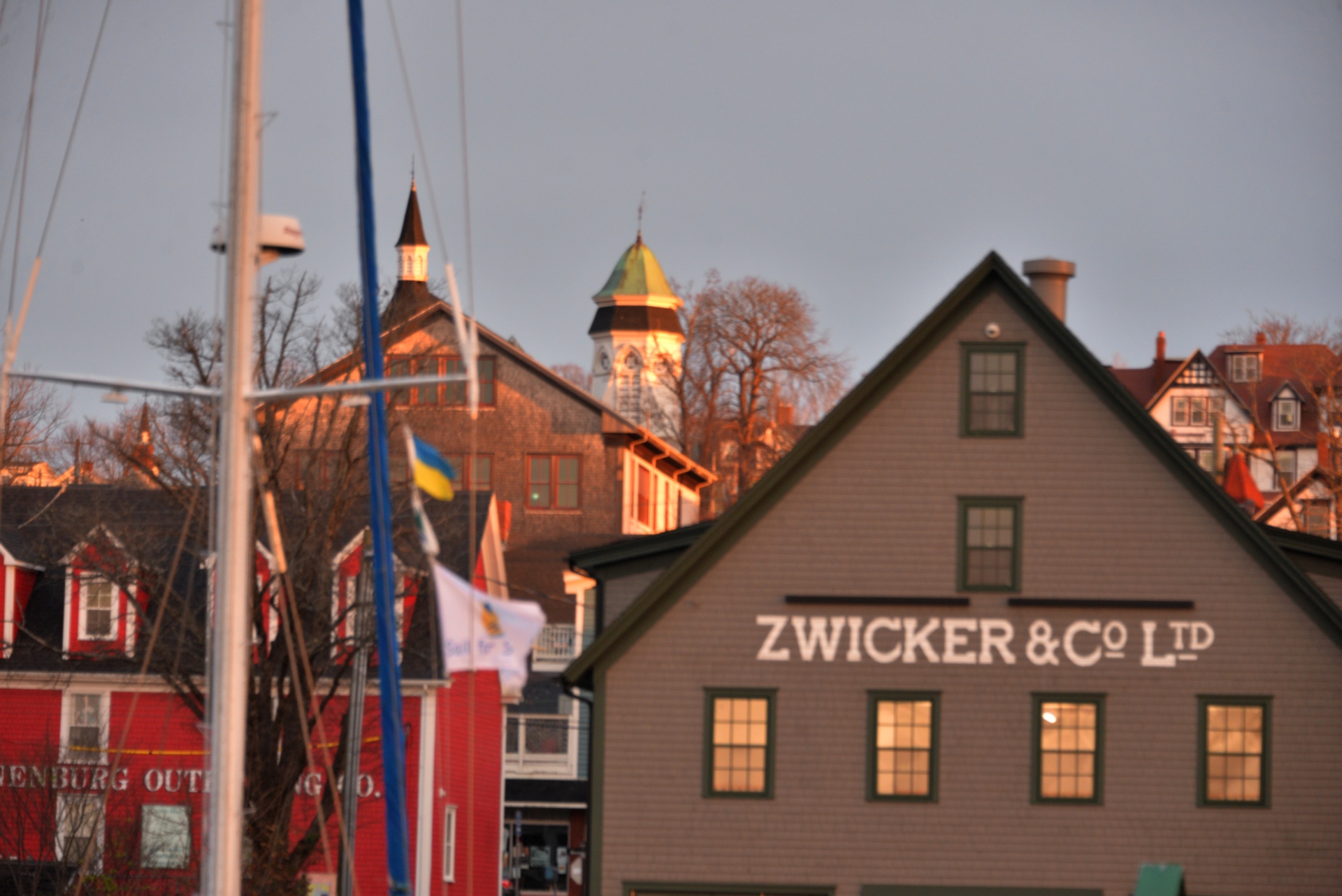

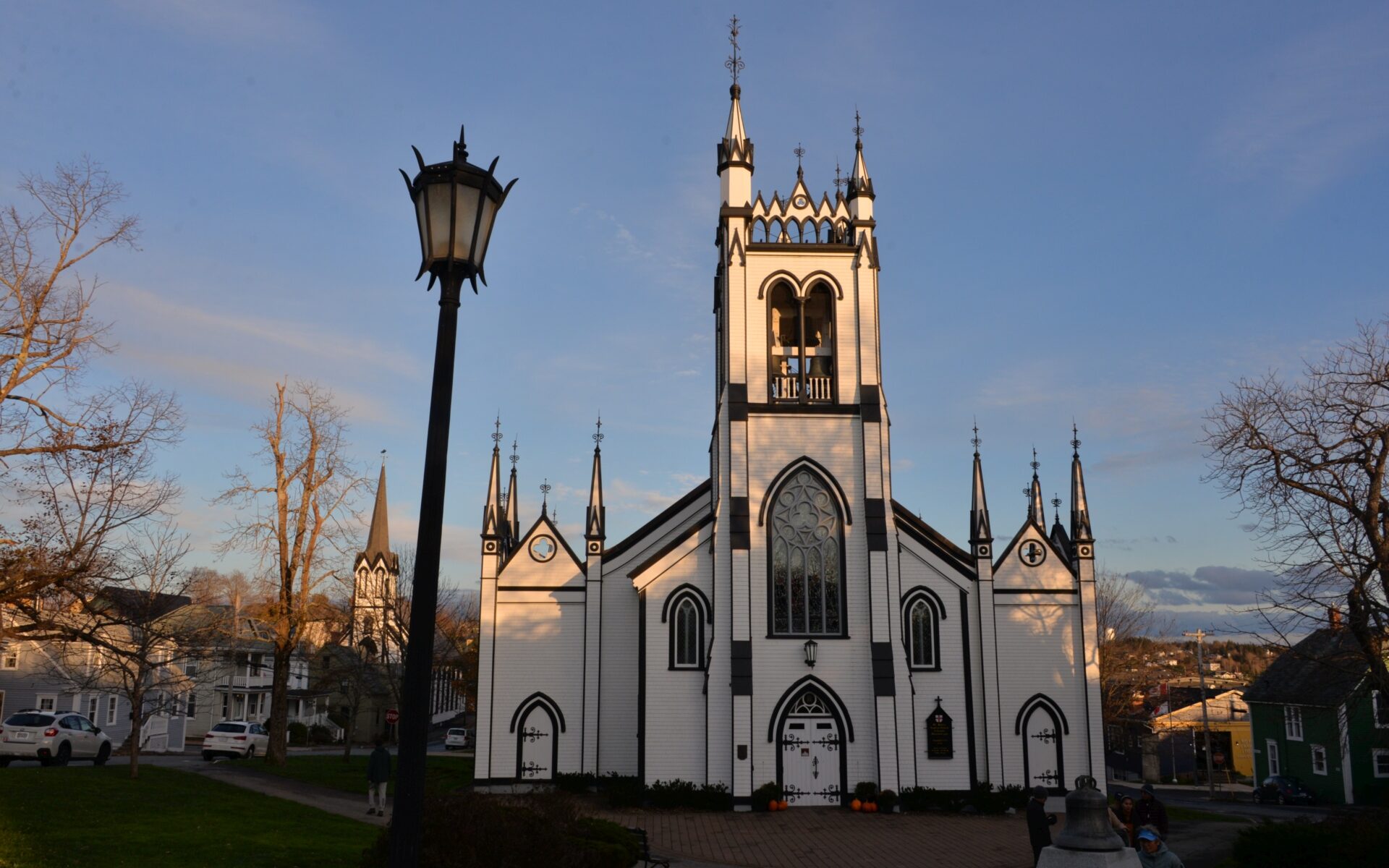
Sunday morning, bathed in sunlight and serenity, brimming with divine grace. As we sipped our morning coffee and charted out our plans for the day, a melodious bell rang out, beckoning us. It was the melodious call of the beautiful St. John’s Church, a gem even amid the artistic beauty of Lunenburg. Excited, we hastened to attend the morning mass, eager to immerse ourselves in the city’s life and bask in the splendour of its stained glass windows and the church’s interior.
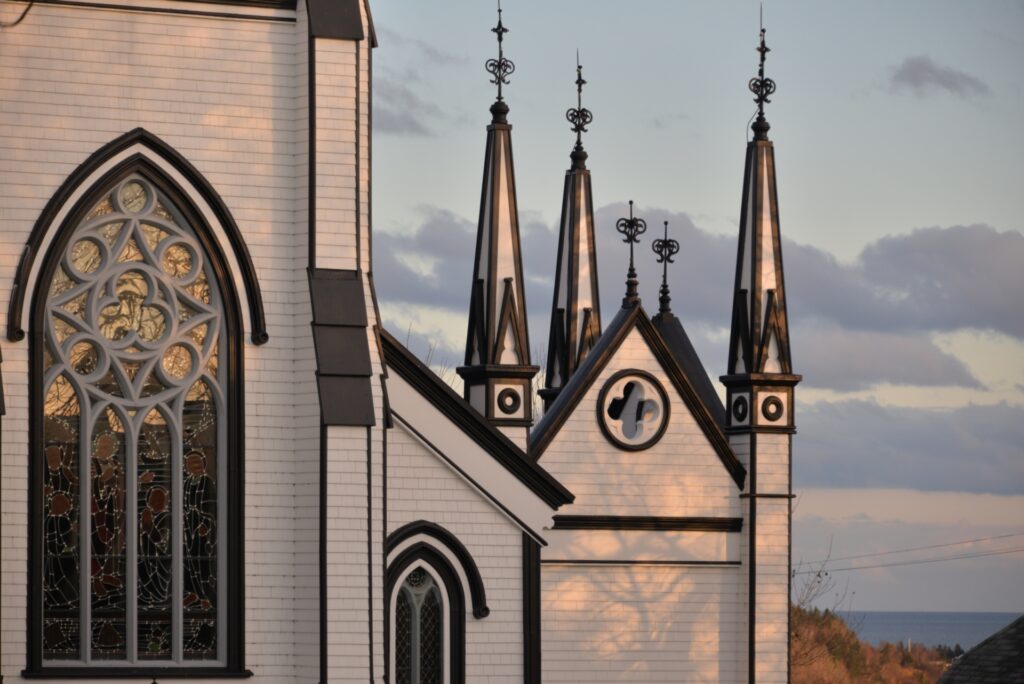
St. John’s, the second oldest Anglican church in Canada, stands as an architectural marvel in the historical part of Lunenburg, designed in the Carpenter’s Gothic style. Since 1753, it has been a sanctuary of solace for its parishioners. On a fateful Halloween night in 2001, a destructive fire wreaked havoc, consuming 50% of the church. In a remarkable display of devotion, 91% of the parishioners voted for the restoration of the church, an edifice crafted in 1892, instead of opting for a modern replacement or a replica of the original 1754 design or transforming the site into a memorial park.
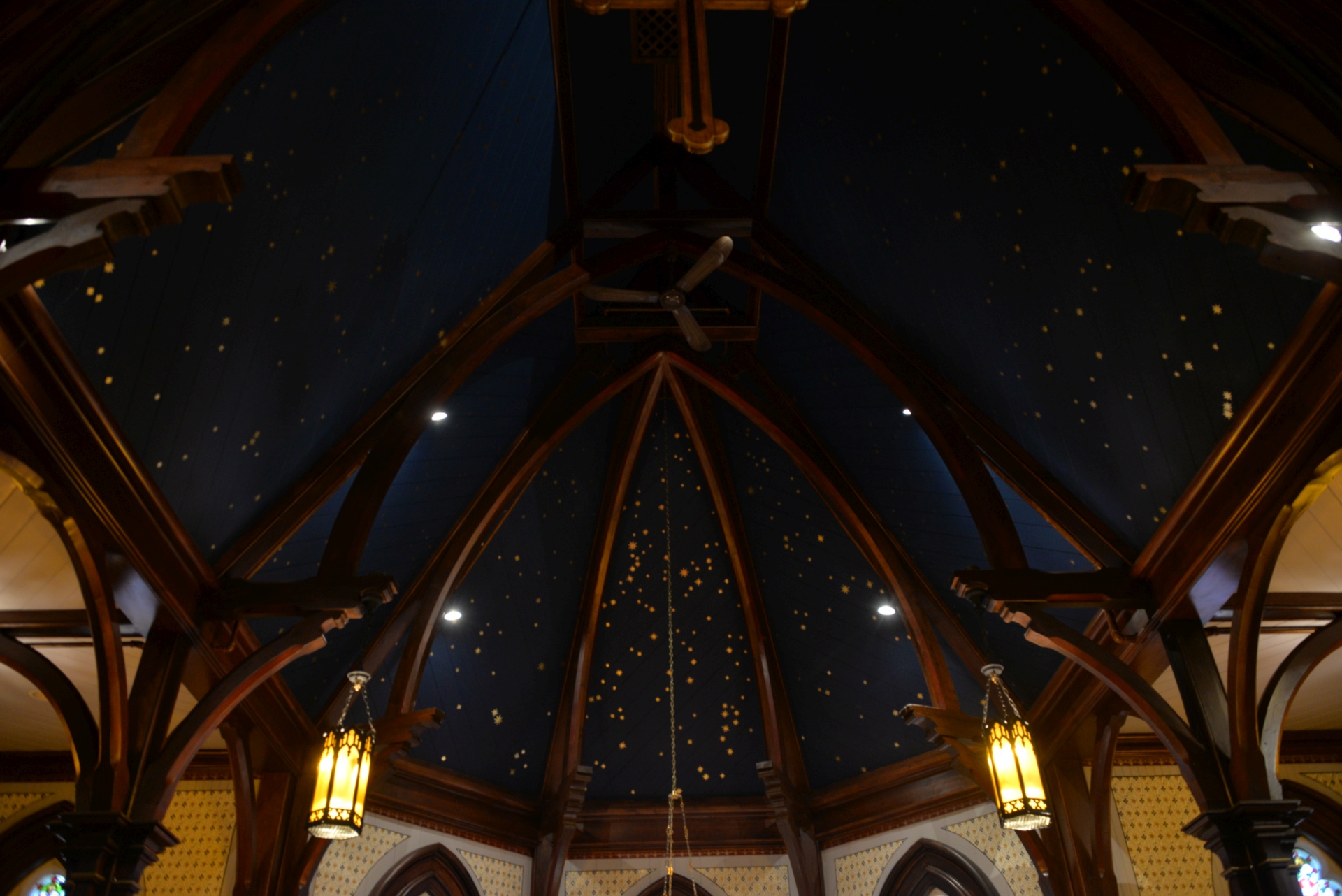
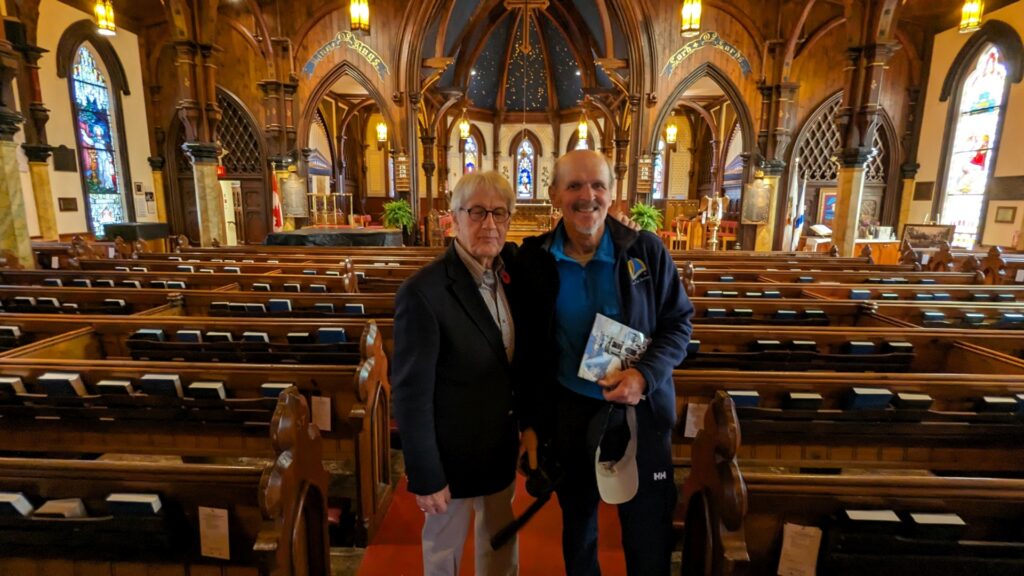
The church’s doors swung open once more on June 12, 2005. During the reconstruction, a curious mystery unfolded concerning the profusion of golden stars adorning the church’s interior. This enigma piqued the interest of the international media and astronomers. The captivating starry scene above the apse seemingly mirrors the night sky over Lunenburg on the evening of Jesus Christ’s birth.
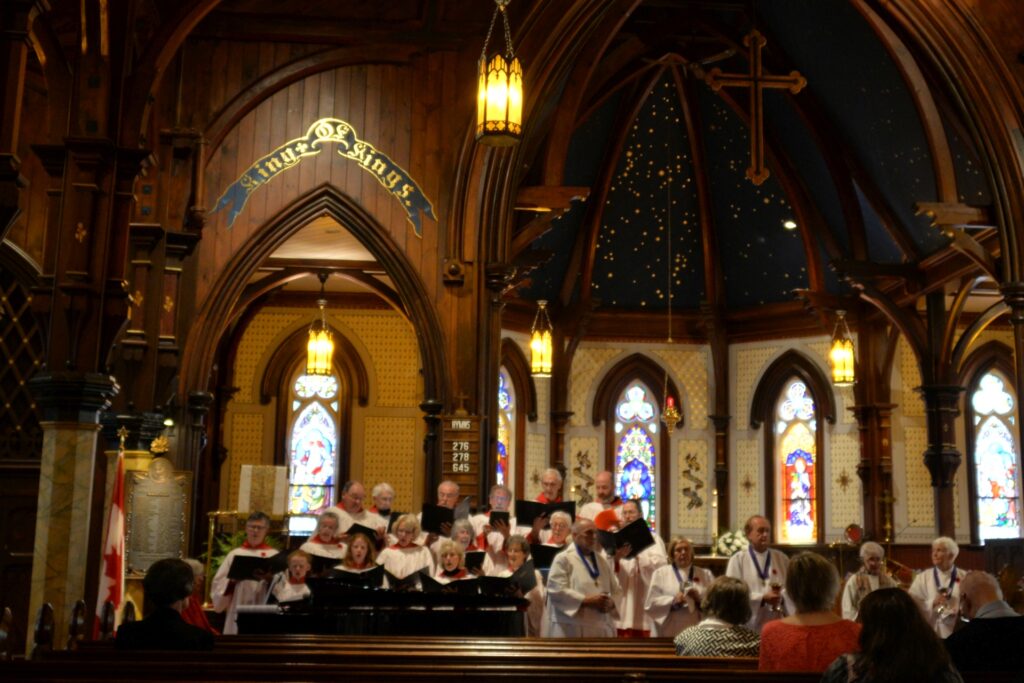
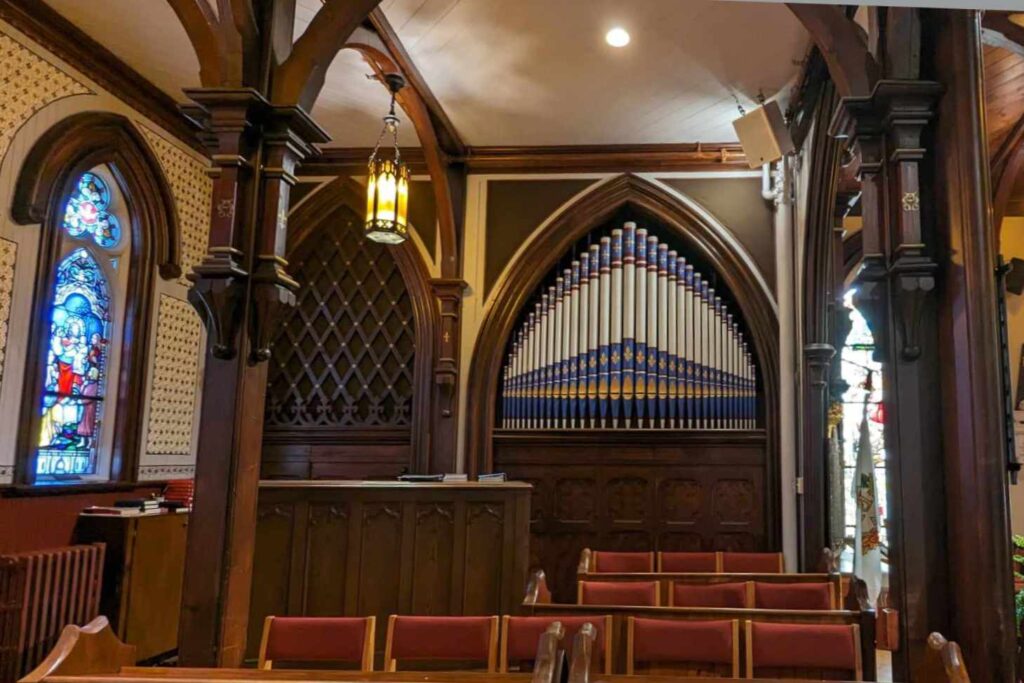
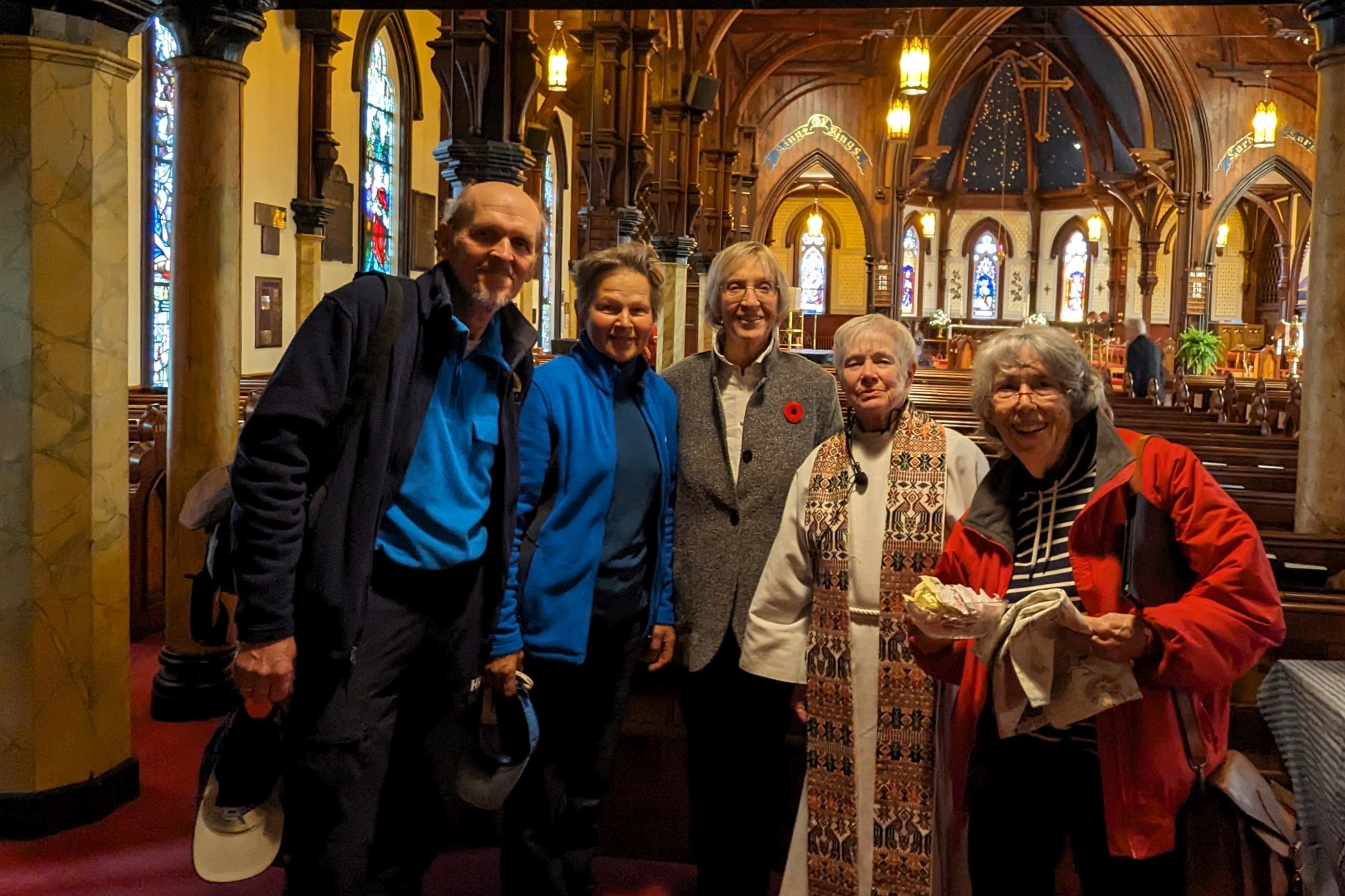
This time, St. John’s commemorated All Saints and All Souls. We relished the solemn ceremony, accompanied by the resonant choir and the majestic organ. Following the mass, the church hosted a convivial coffee gathering, allowing us to engage in heartwarming conversations with parishioners and Rev. Victoria Byrne, the Priest in Charge. She told us about her oceanographic background and became acquainted with our project with due interest.