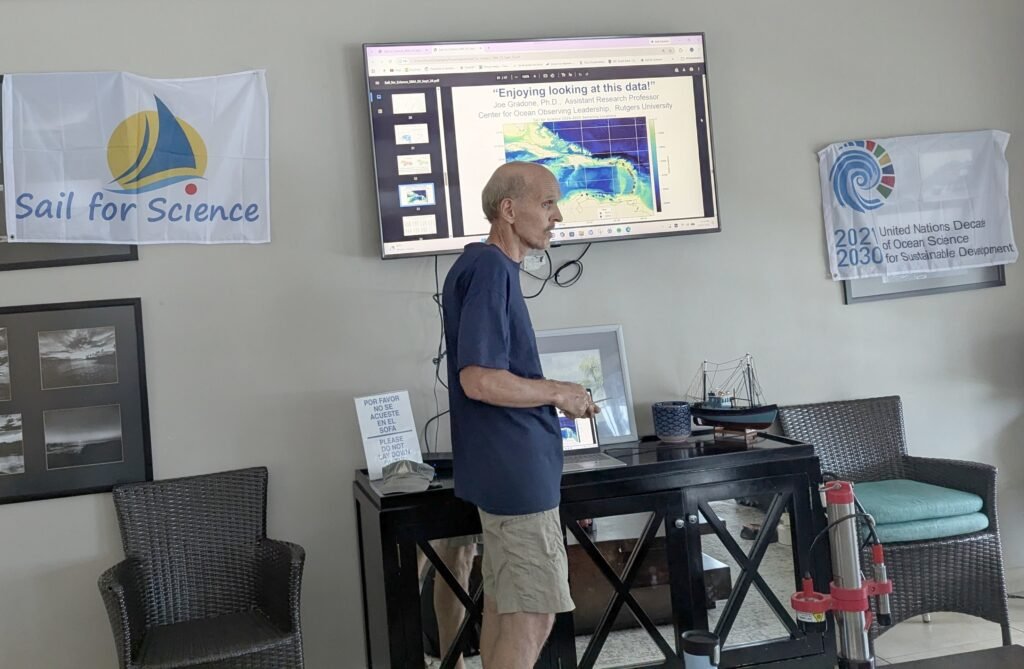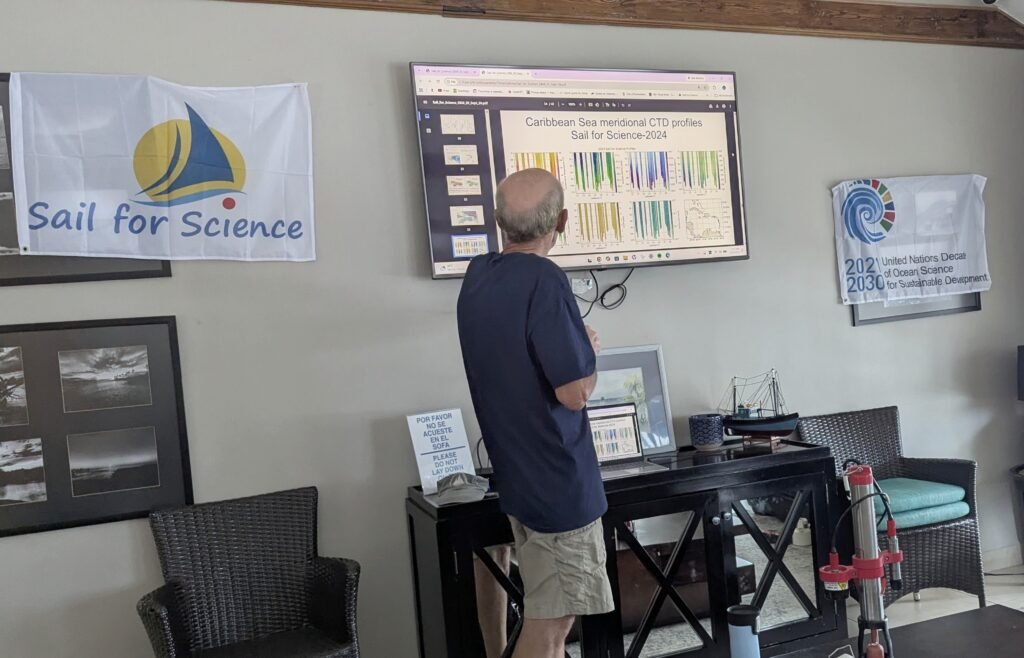

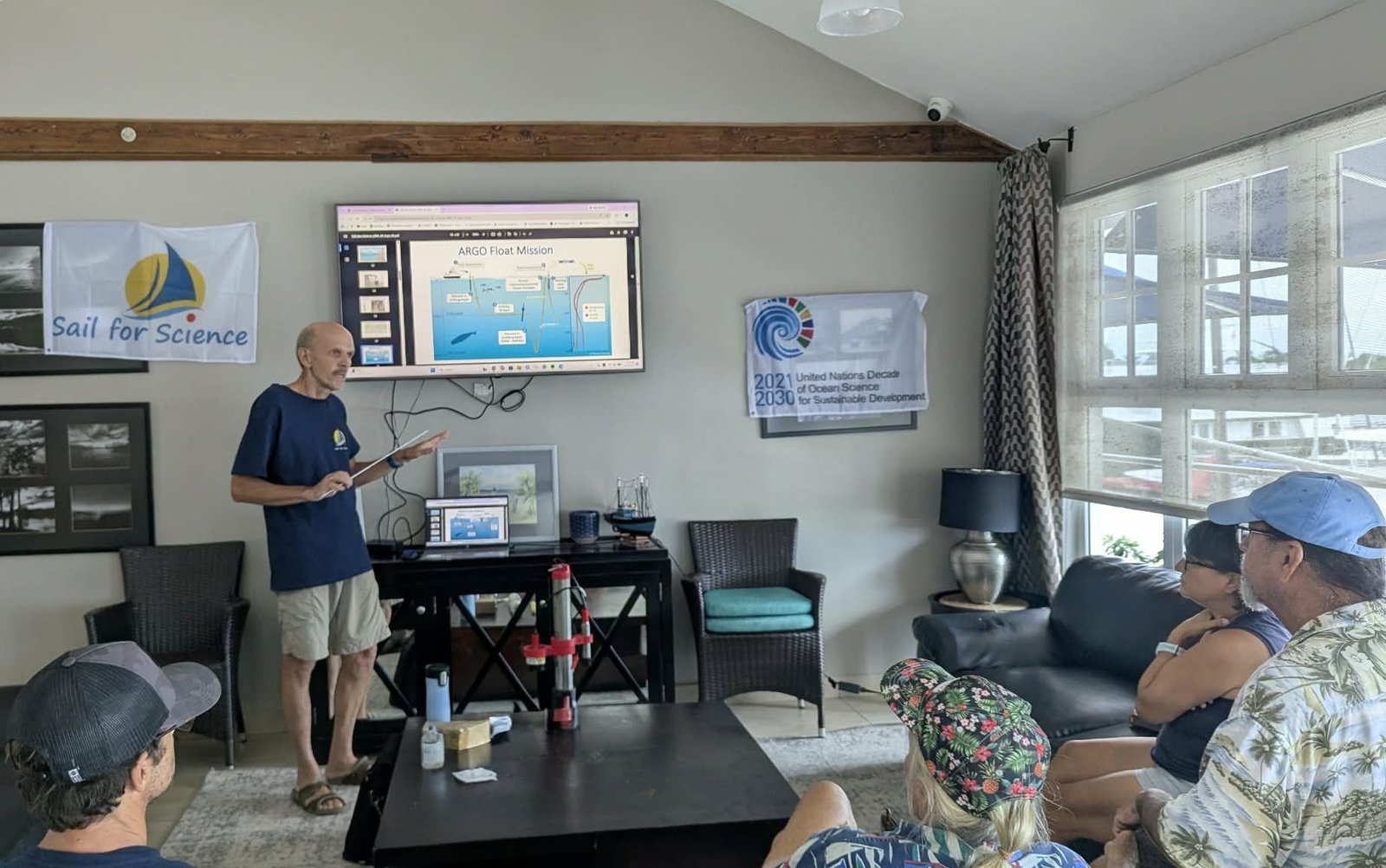
During our stay at Shelter Bay Marina, we once again had the opportunity to present our Sail for Science project to the local cruising community, on September 20, 2026.
The community gathered with the same curiosity and enthusiasm we experienced before as we shared our mission: connecting cruising sailors with ocean science and encouraging them to become ocean observers.
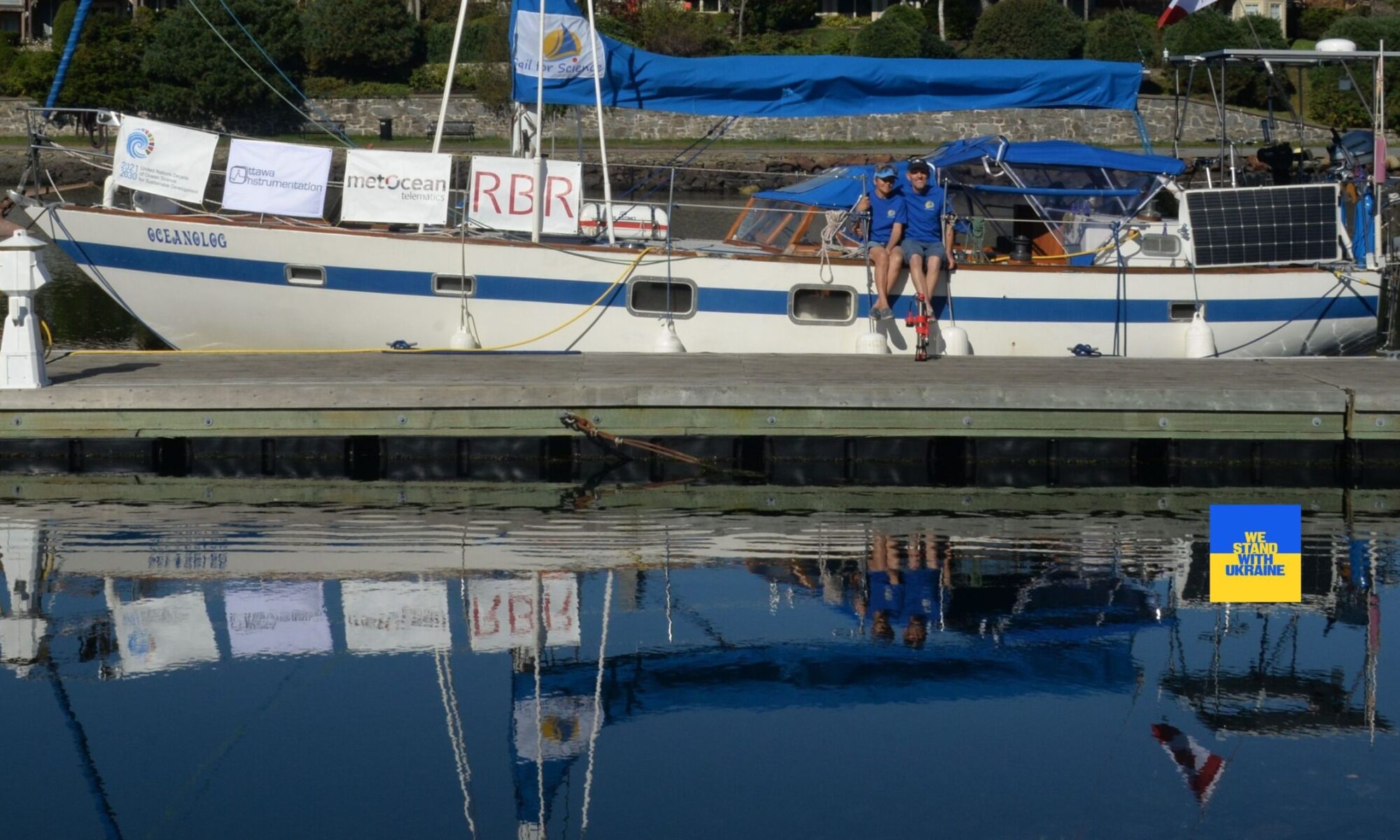
I presented our two-year expedition from Canada to Panama and introduced the CTD measuring system—the workhorse of our oceanographic citizen science project. We discussed how oceanographic data are collected today, from traditional ship-based CTD systems to autonomous platforms such as Argo floats.
We also talked about the gaps that remain, particularly in coastal and island waters, where conventional observing systems often have limited coverage. This is where small sailing vessels can make a difference. Cruising sailors are already out there, travelling through exactly these waters. With appropriate equipment, training, and quality-control procedures, their voyages can become opportunities to collect valuable ocean observations.
But Sail for Science is about more than data. We want to demonstrate that a sailing vessel can be a platform for serious ocean science, even outside traditional institutional frameworks.
And there is another important advantage: collecting oceanographic data from a sailboat can be remarkably cost-effective and very low-carbon. Perhaps this combination of science, sustainability, and citizen participation can become a model for expanding ocean observations in the future.
We are incredibly grateful to Shelter Bay Marina for hosting us once again, and to everyone who came to listen, ask questions, share ideas, and perhaps dream a little about becoming an ocean observer themselves.
Curiosity and stewardship can travel a long way—especially when you have the wind behind you. 🌊⛵