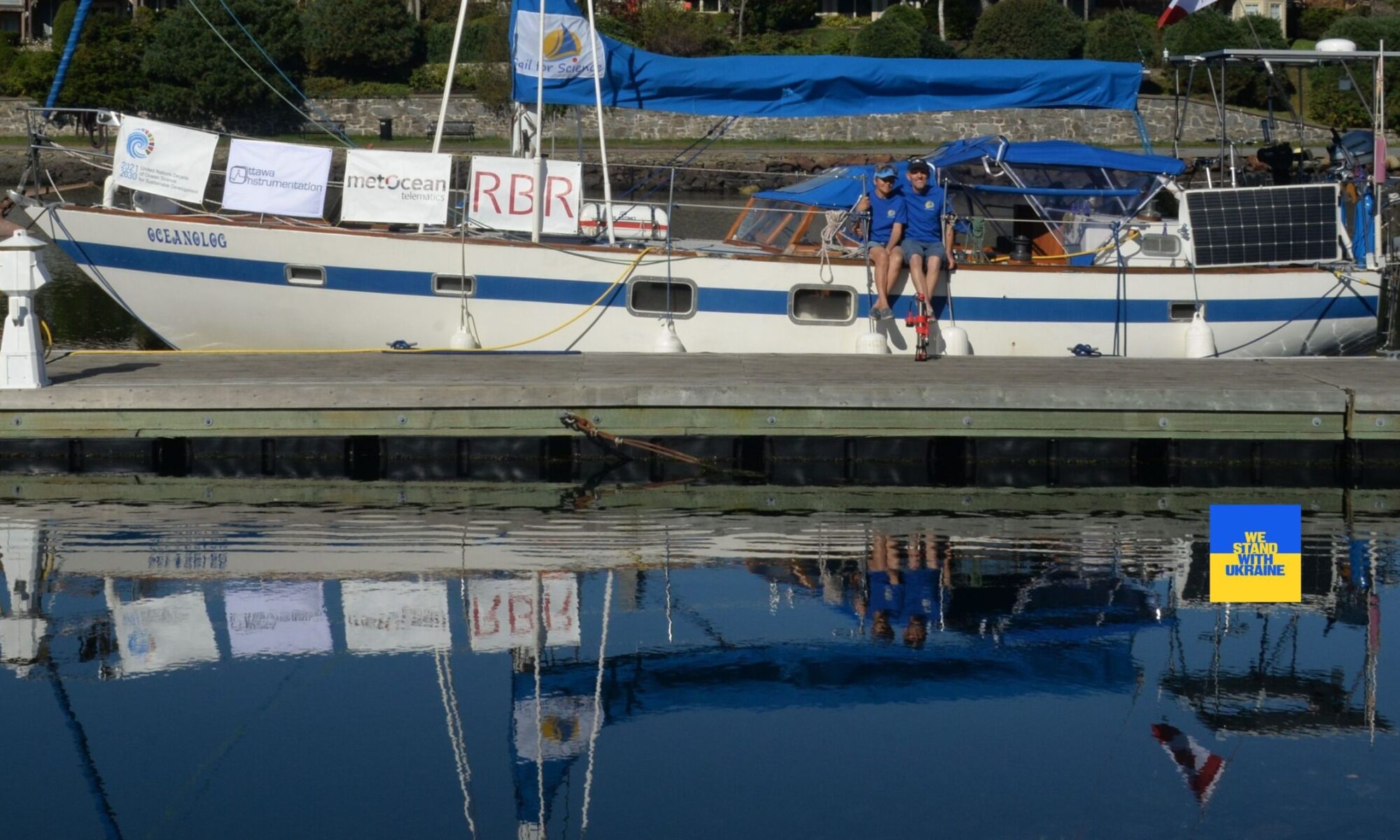
Thanks to Lunenburg!

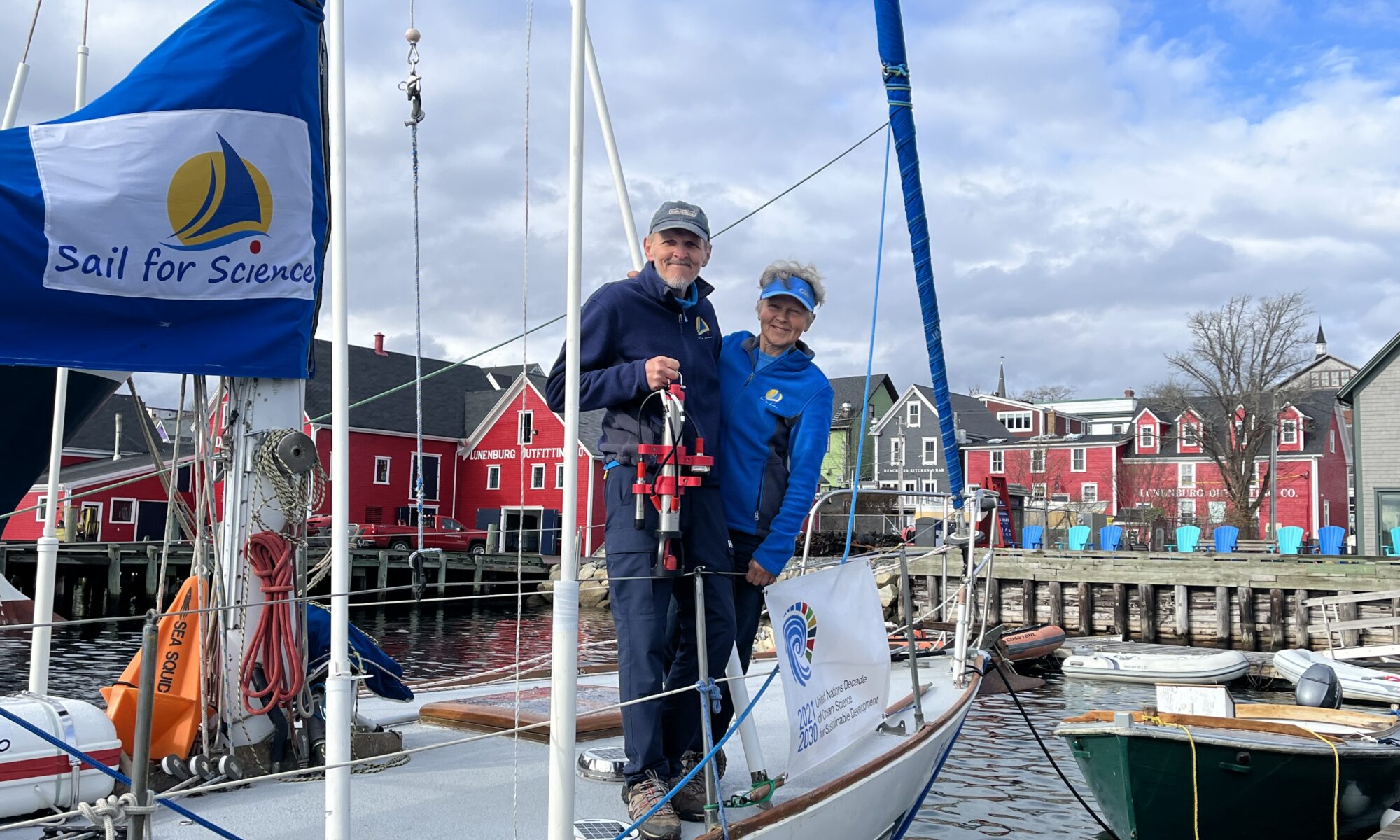
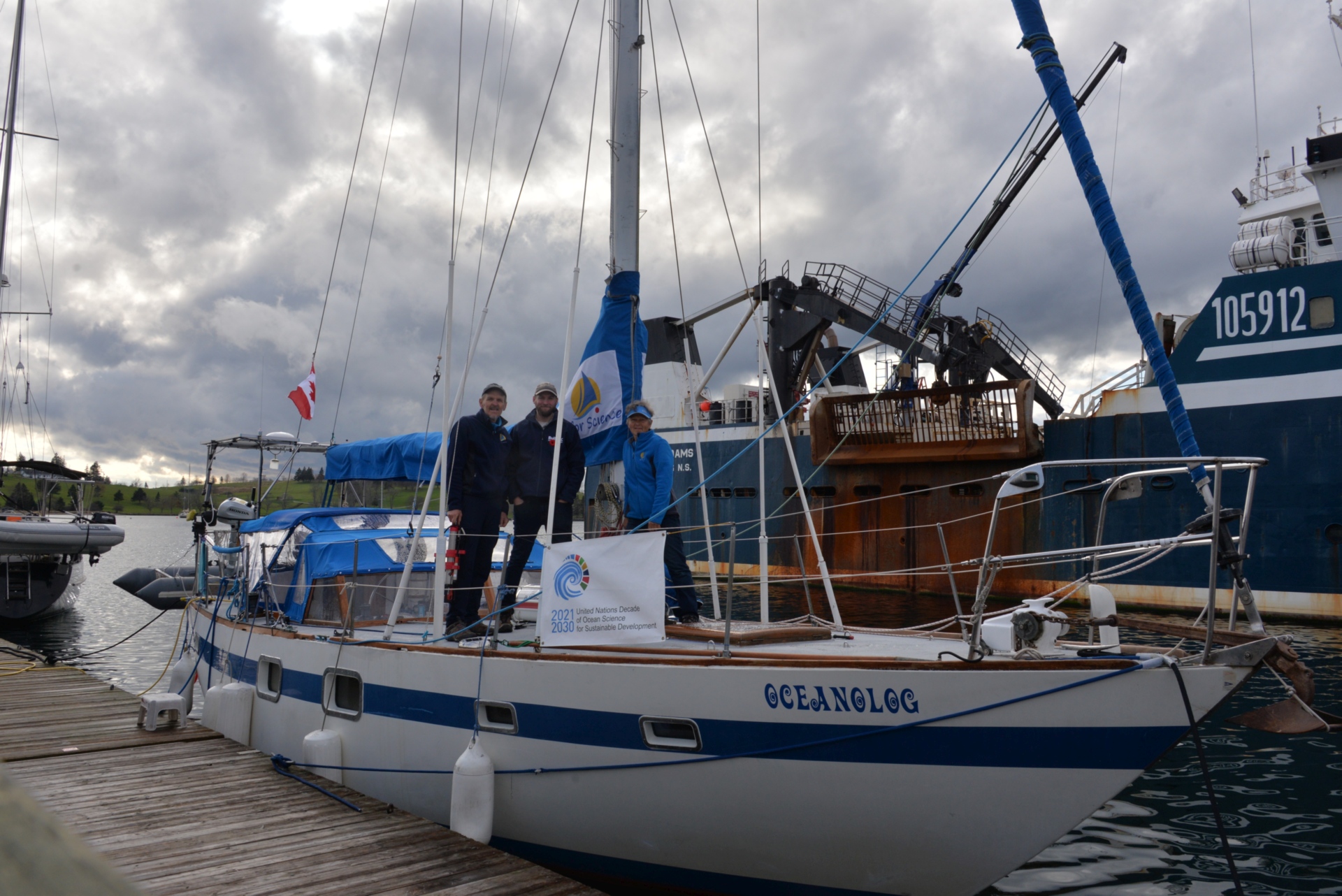
Our forced stay in Lunenburg brings new meetings and discoveries every day. We are glad that our project is supported both by many organizations in the town and in personal contact with town residents and sailors. We are grateful to the corporation Build New Scotia for providing free docking in the Zwicker Wharf Marina, thanks to Marina Operator Ian for taking care of us and for assistance in sponsorship for our project. Thanks to the President of Adams and Knickle Ltd Jane Ritcey for providing Wi-Fi and refreshments, Greg Trowser from Luna Sea Solutions for warm conversations about our project and Walter Flower for finding a diesel heater for us.
Thanks to Mike (Black Dragon) for the pleasant time spent together and interest in our project and thanks to Colin (Fruition) for his keen interest in our project, I hope that he will be able to find for his yacht a CTD measuring system. Thanks to mechanic Louis for his dedication to fixing our engine, I hope we don’t have any more problems. Thanks to Mike from Ironbound Rigging for advice on rigging and donated steel wire. Thanks to Kathleen from Ocean Gear for helping to purchase an exhaust pipe for the diesel heater. Thank you, Lunenburg, for warmly welcoming us these 12 days!

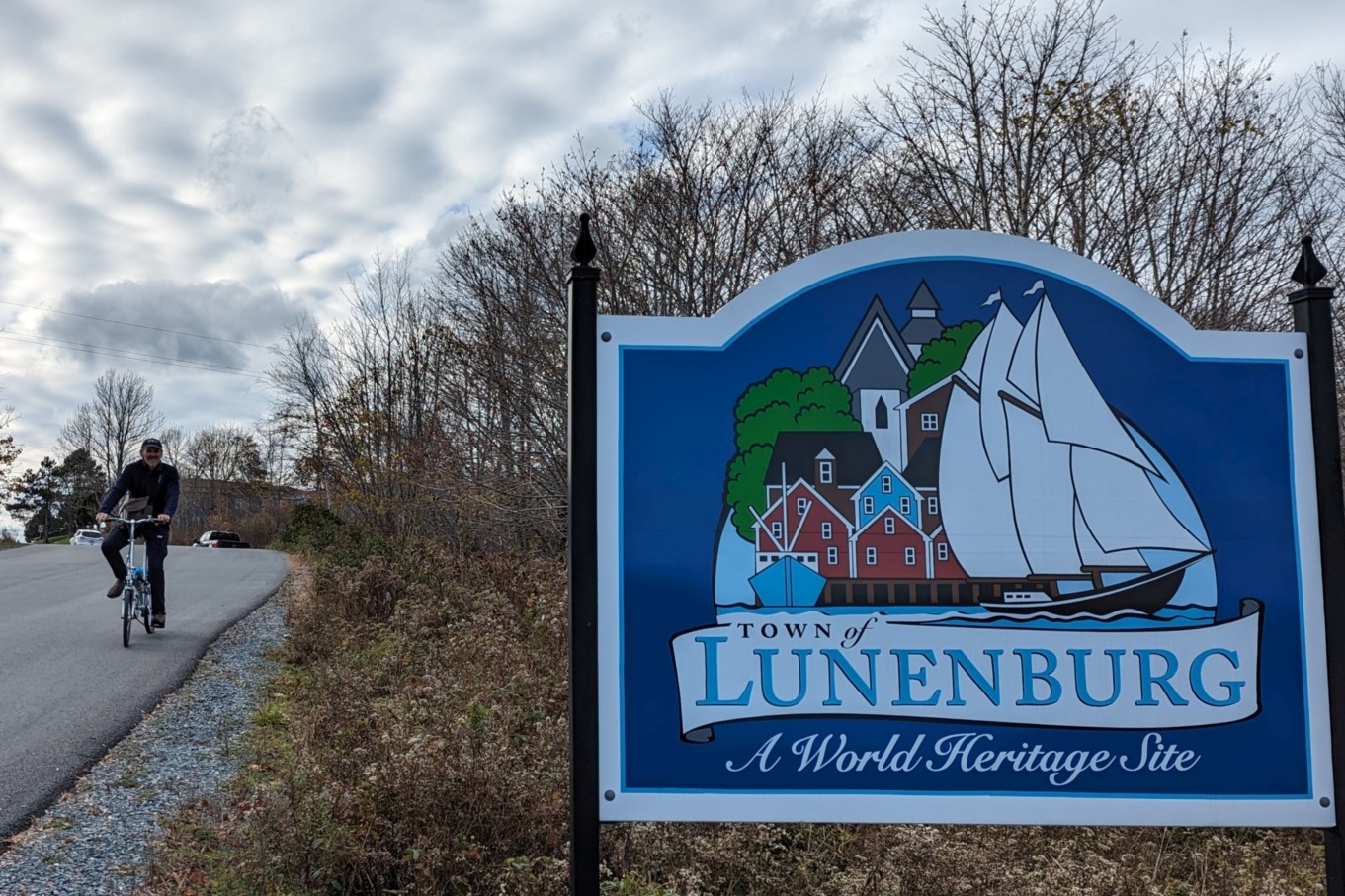
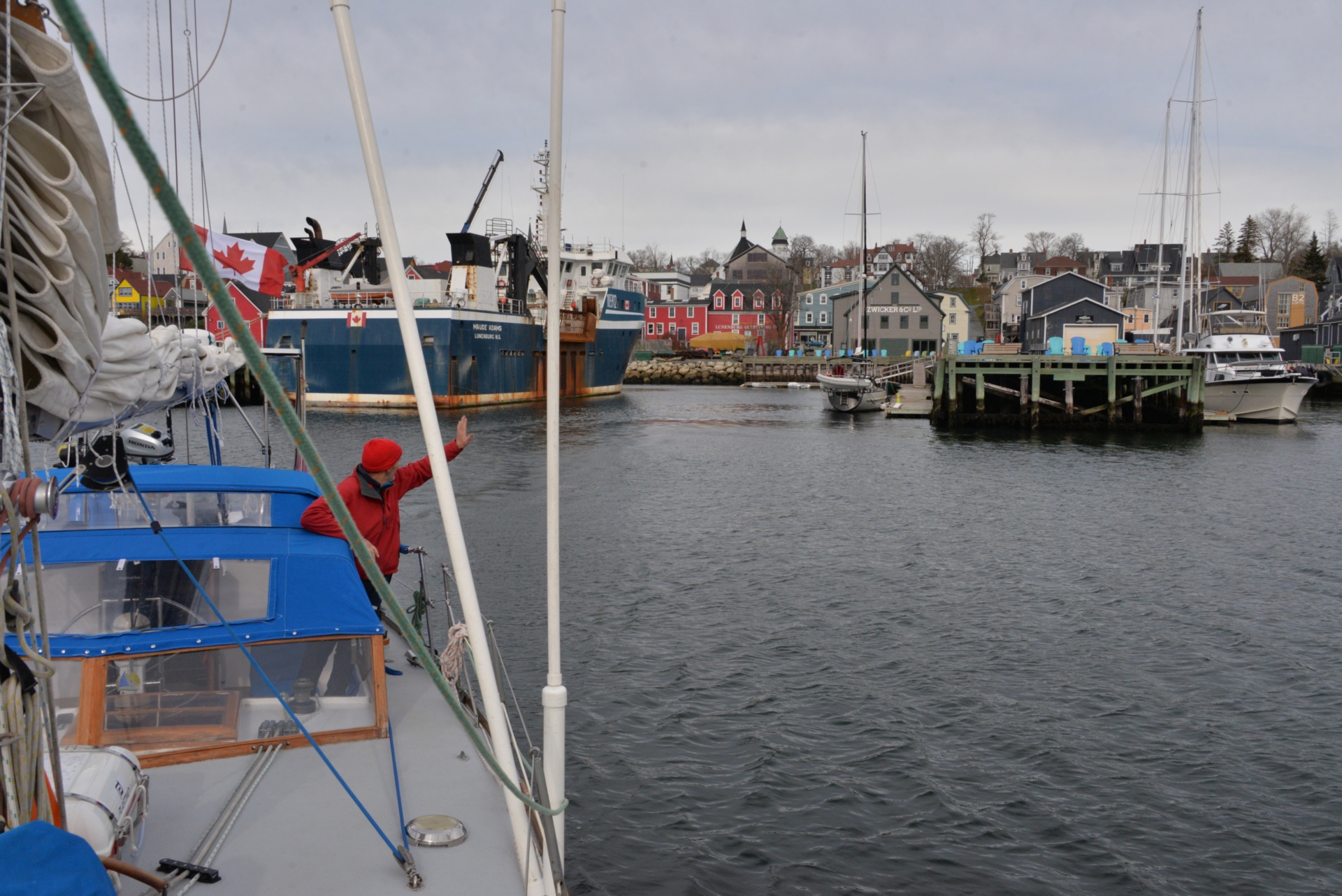
It’s time to leave the Town of Lunenburg – a World Heritage Site
A nice day in Lunenburg
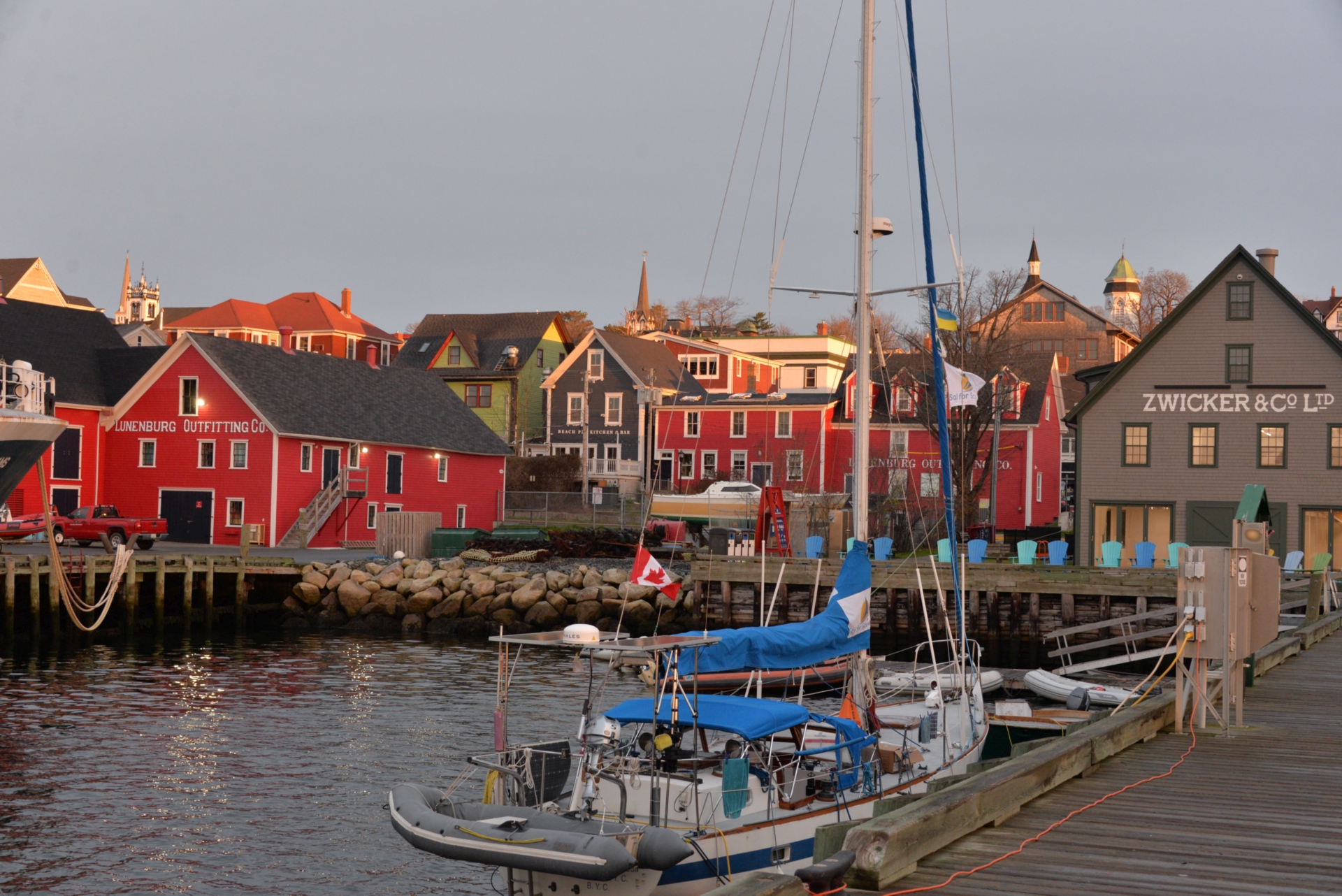
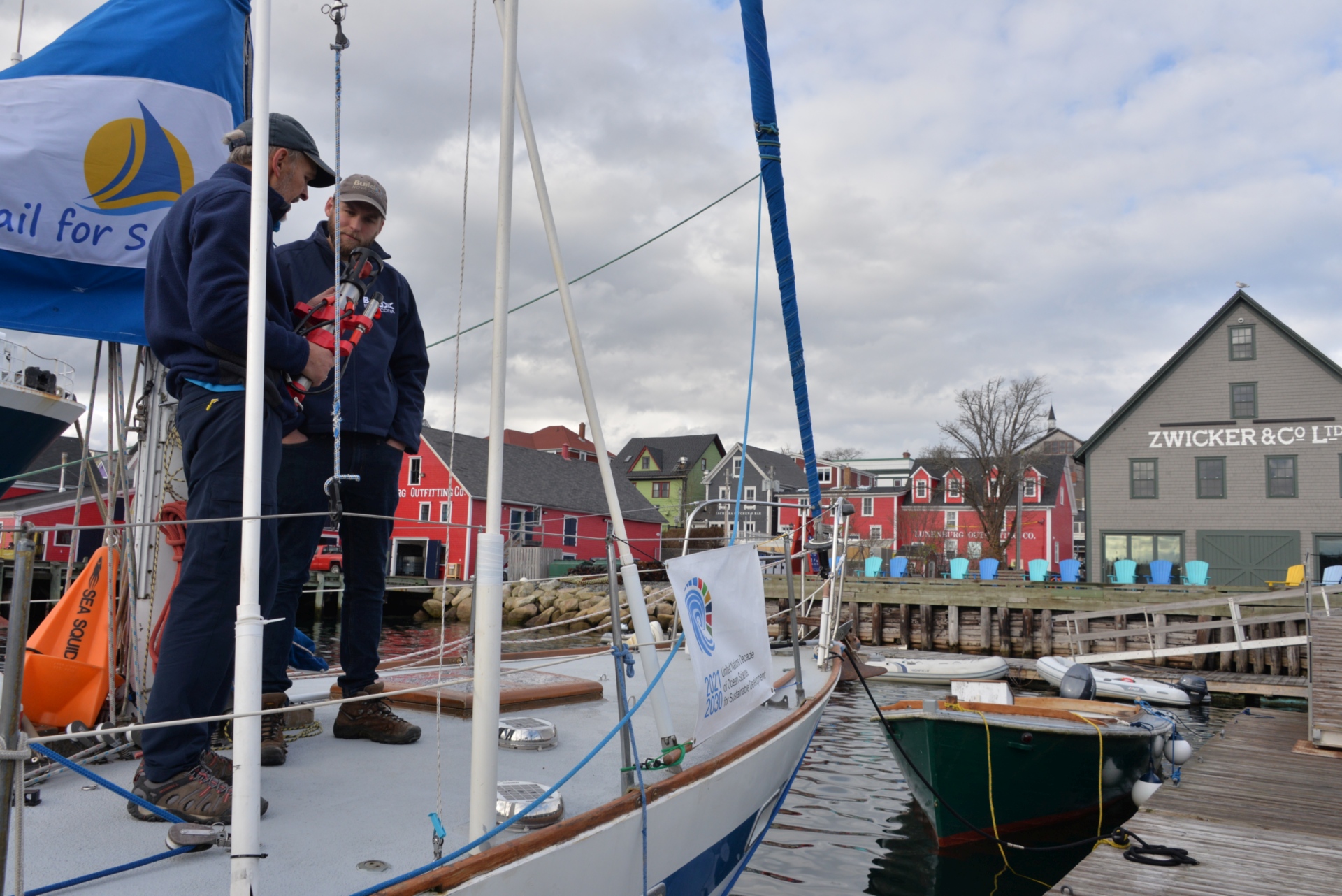
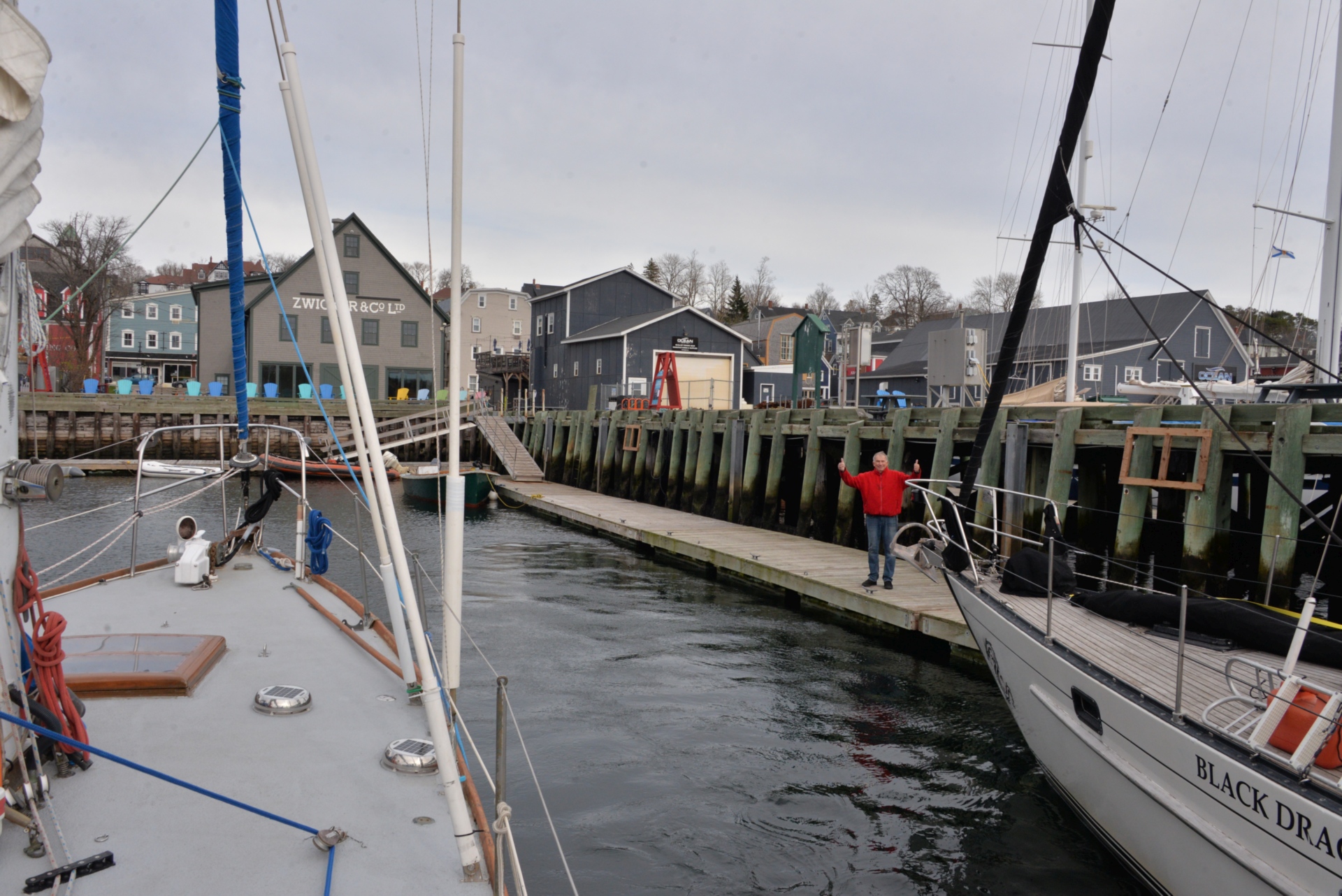
Docking in the Zwicker Wharf
With Ian – operator of Zwickers Wharf Marina
Demonstrating CTD measuring system to Ian
SV “Fruition”
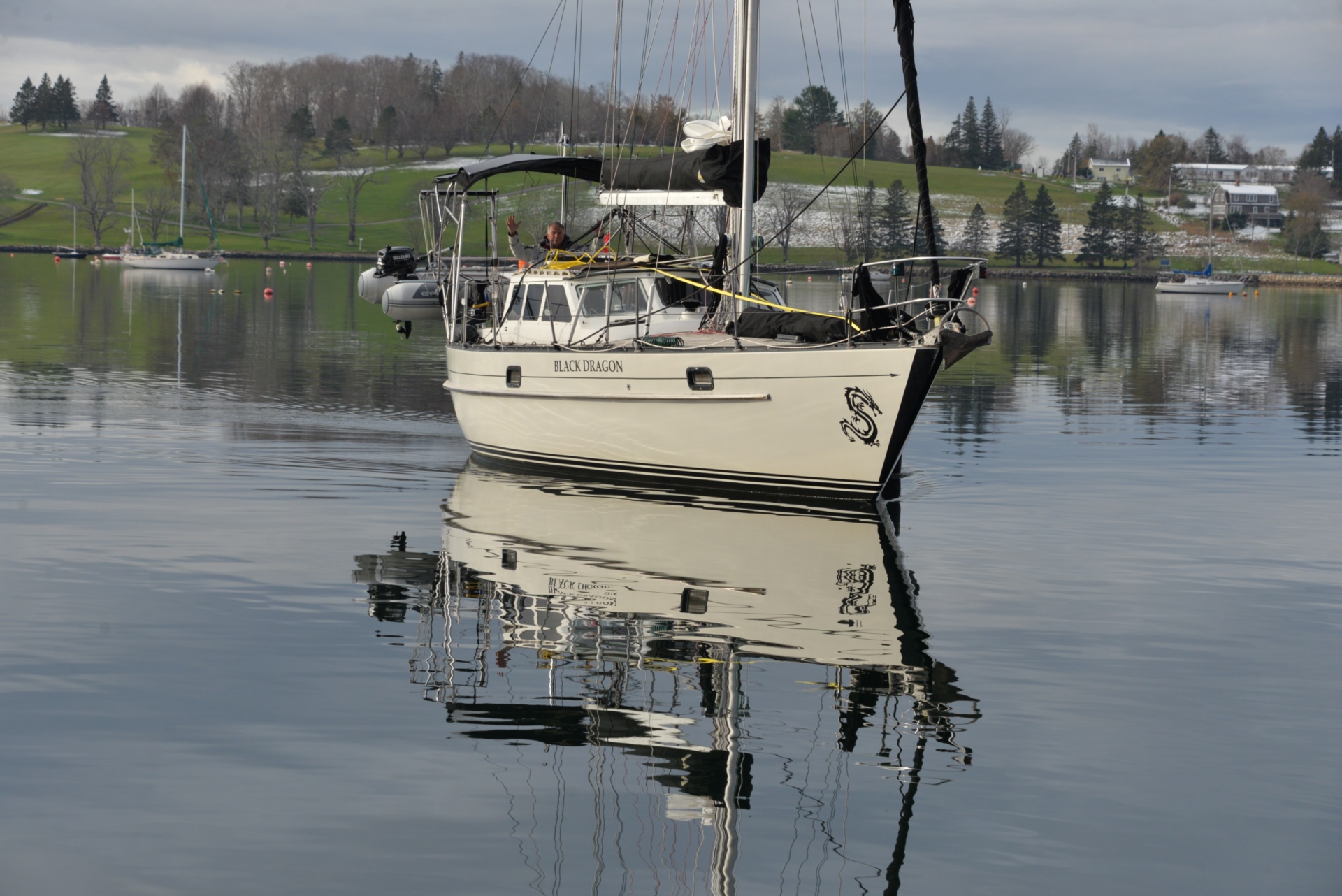
SV “Black Dragon” with Mike at helm
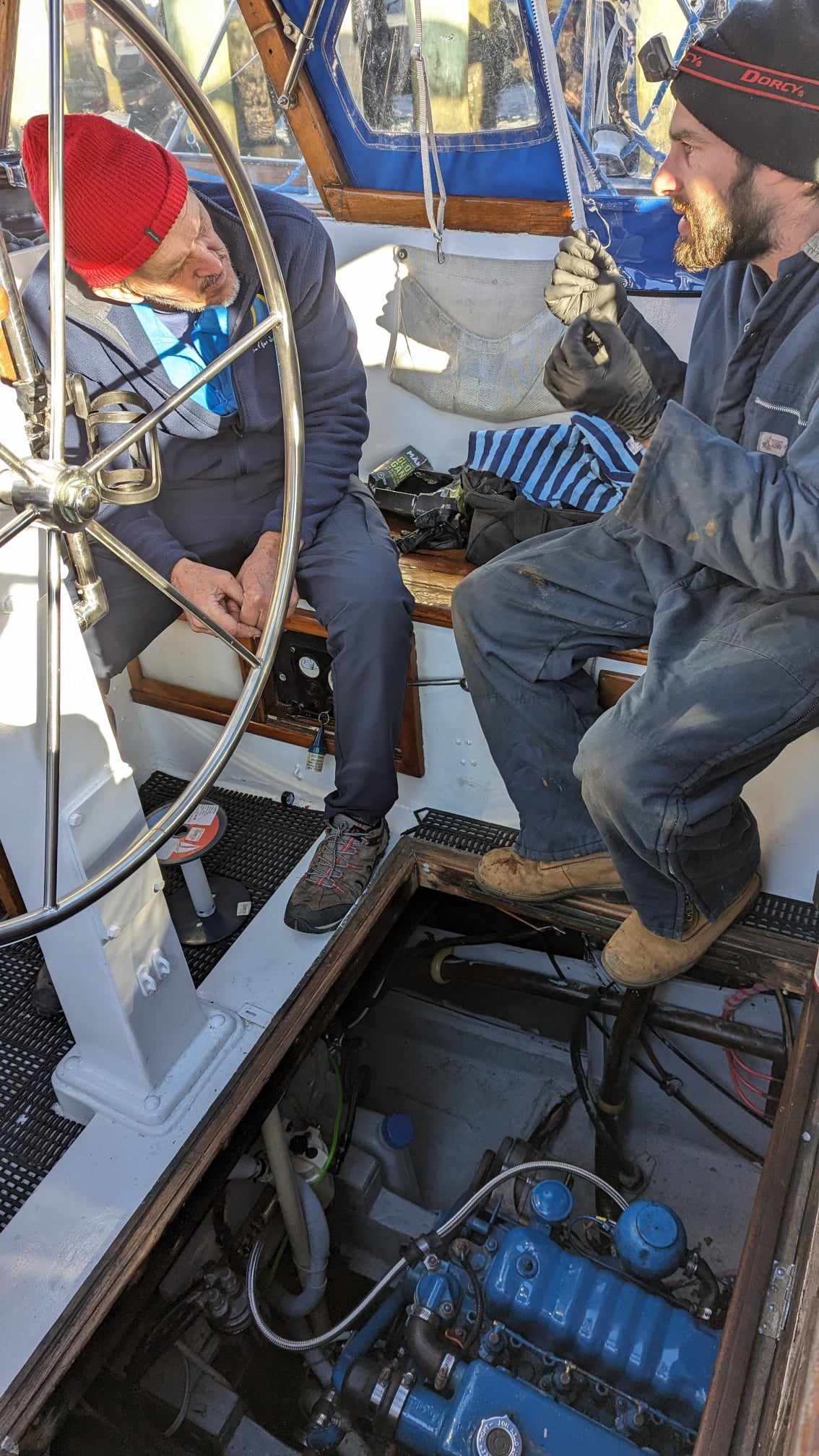
With Louis talking about how to fix the engine
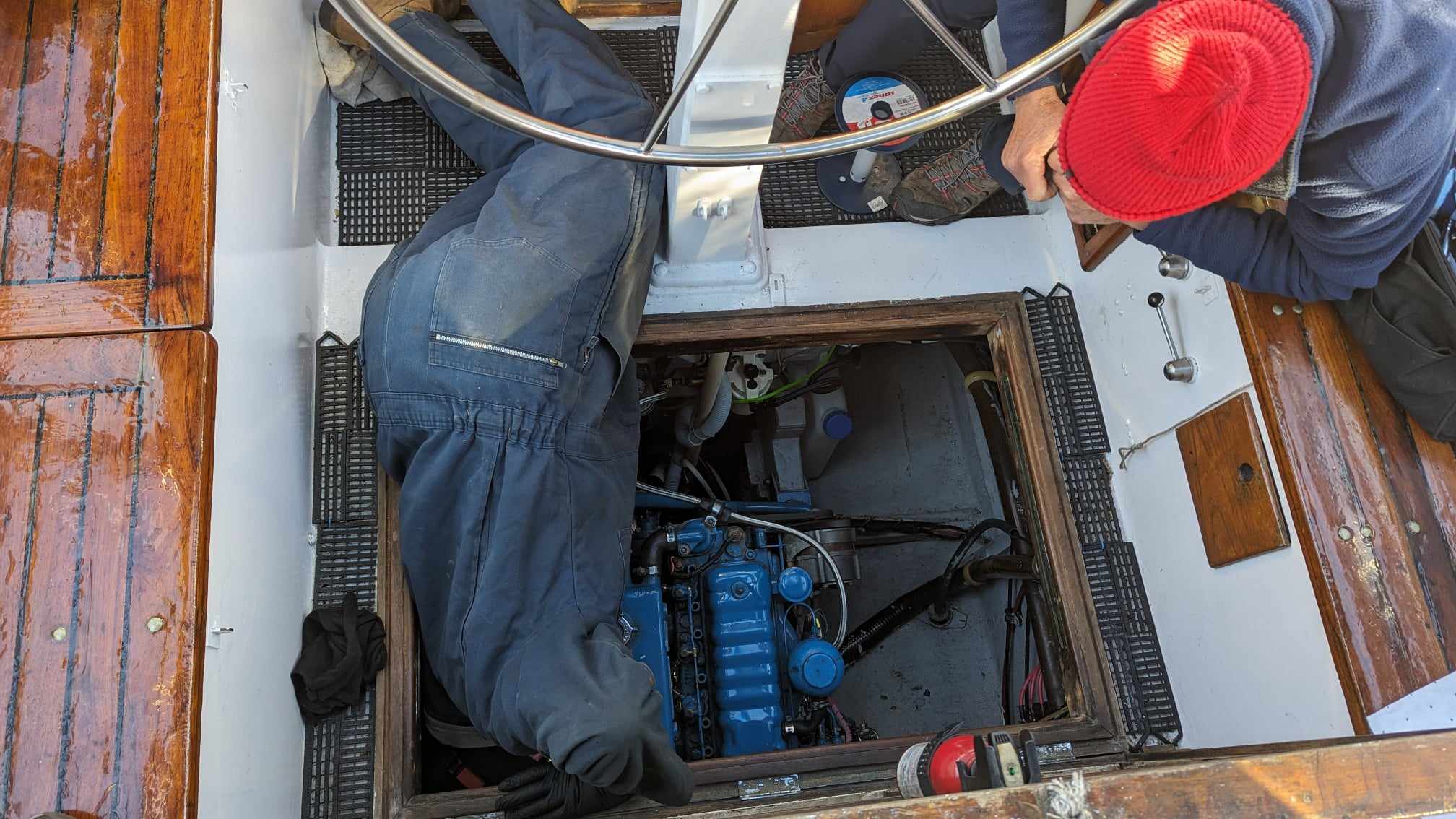
Louis dives into the engine room
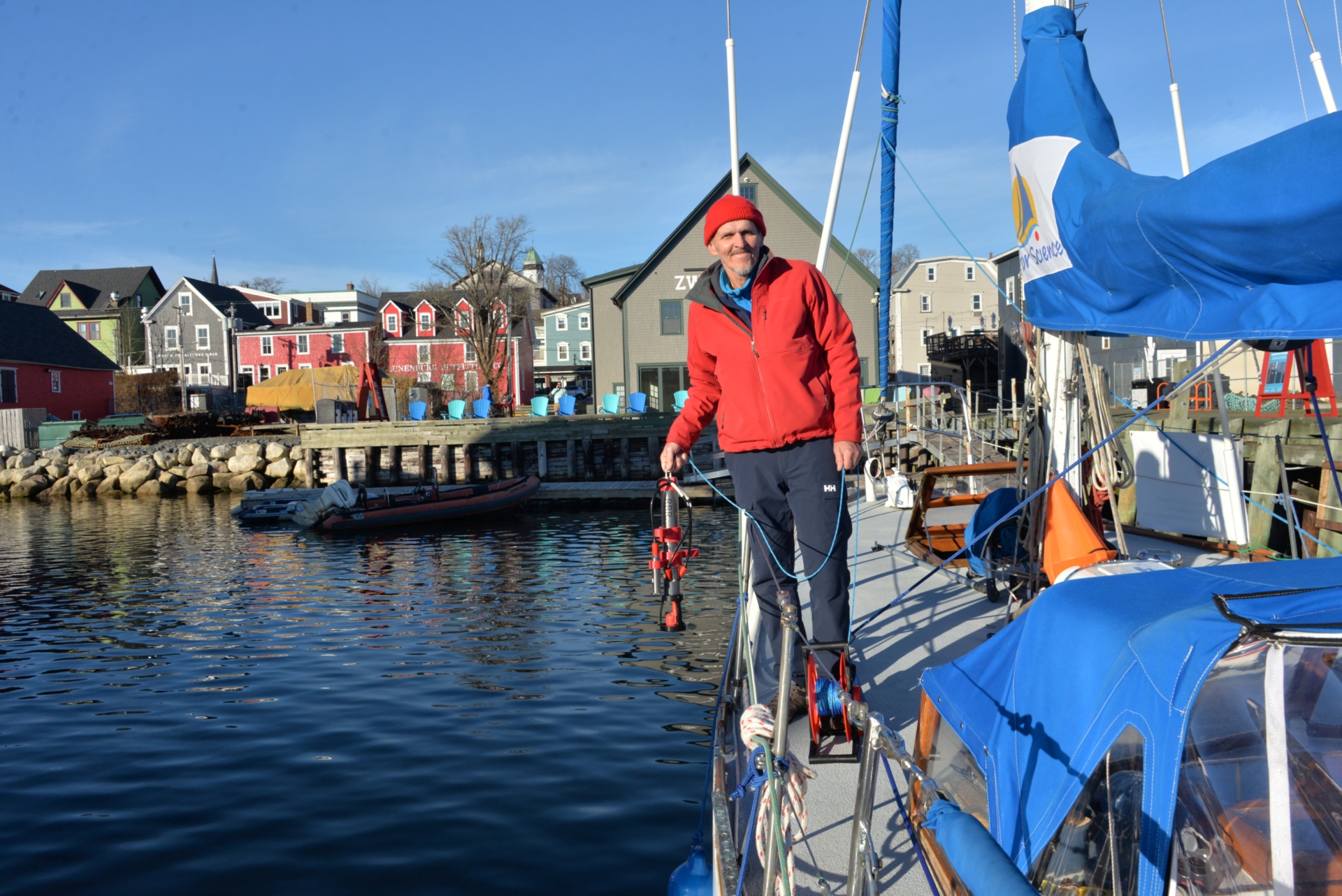
CTD cast at Zwicker Wharf
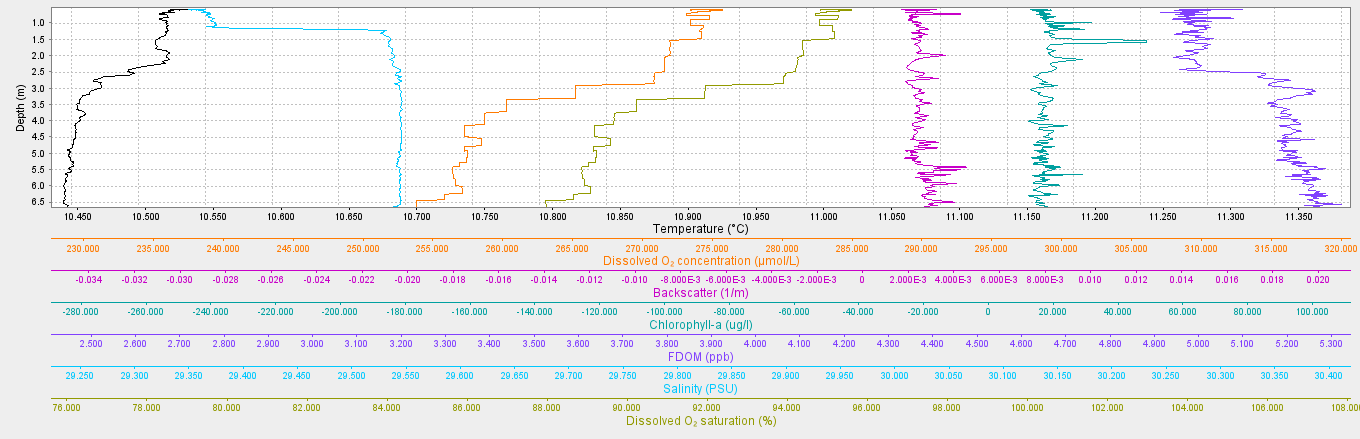
The plot of CTD-cast data shows an almost uniform temperature profile with a sharp halocline at 1m. Oxygen saturation (85-95)%, which is normal, and the concentration of Chlorophyll a (14-24)mg/L is above normal, the transmission of water is good (0.003m-1) and fDOM shows a slight increase in the concentration of organic matter after 2m, which is a possible result of dying increased phytoplankton.
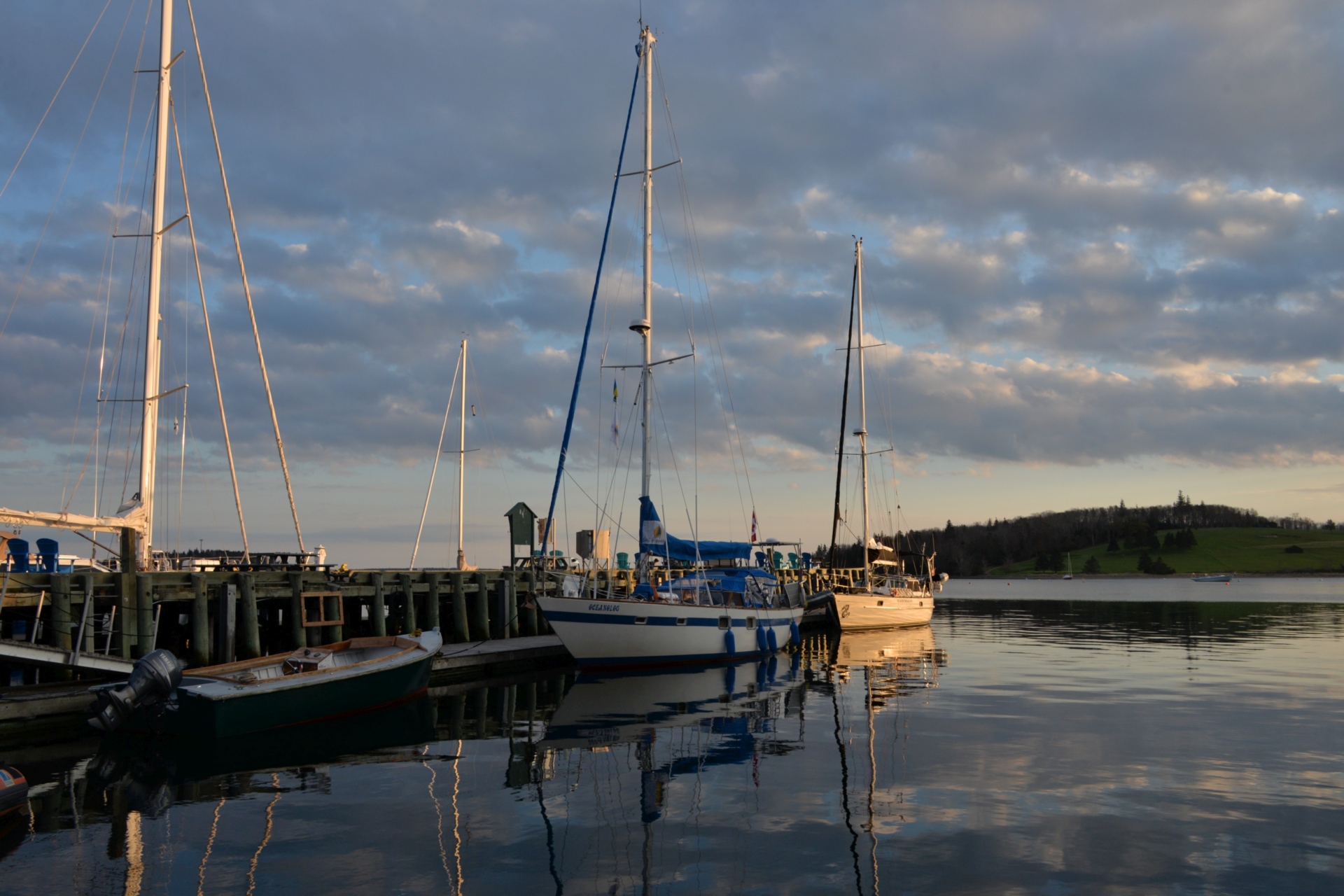
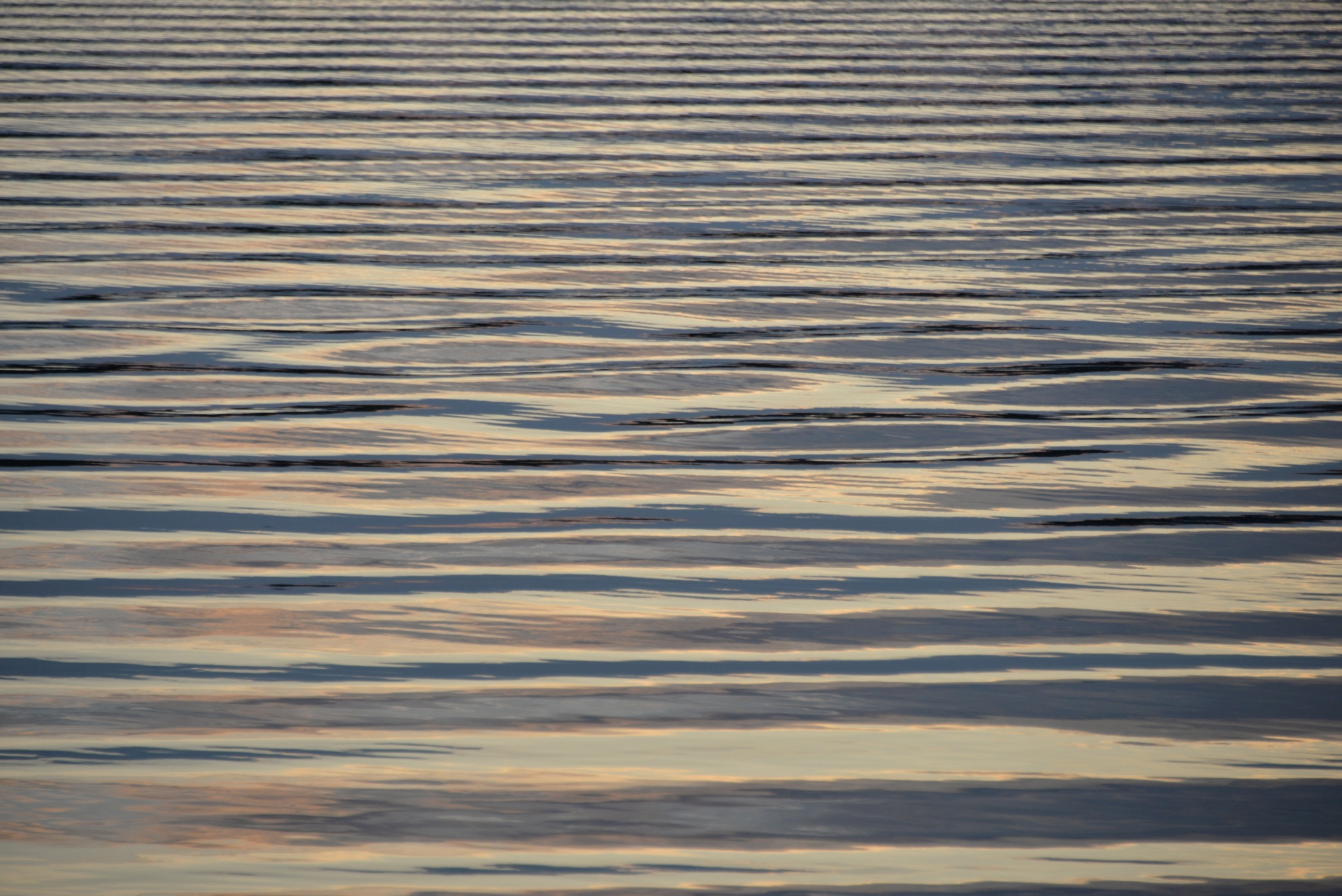
Water reflections in the Lunenburg harbour
Cast off!
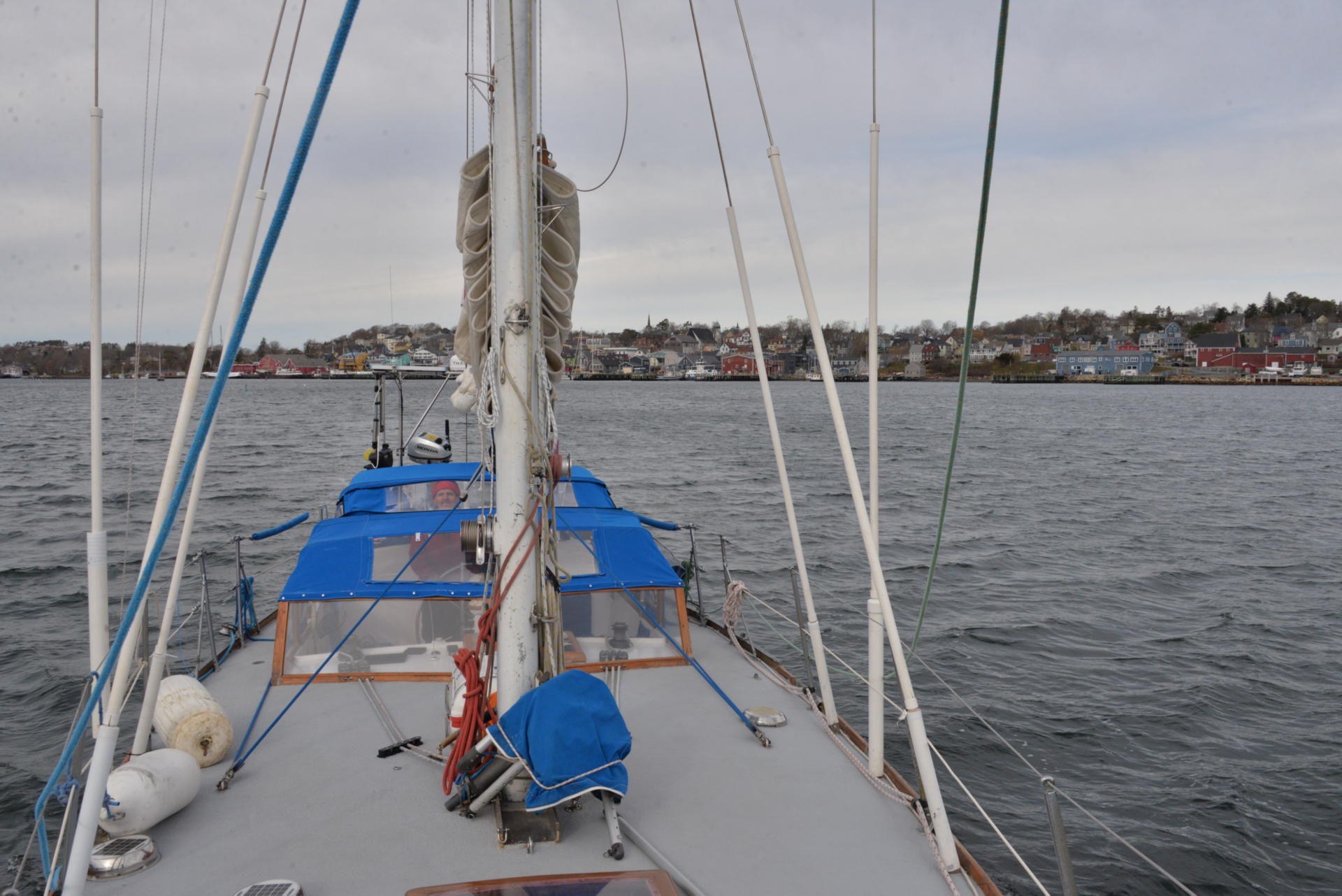
Goodbye, Lunenburg!
Leaving the Lunenburg Harbour
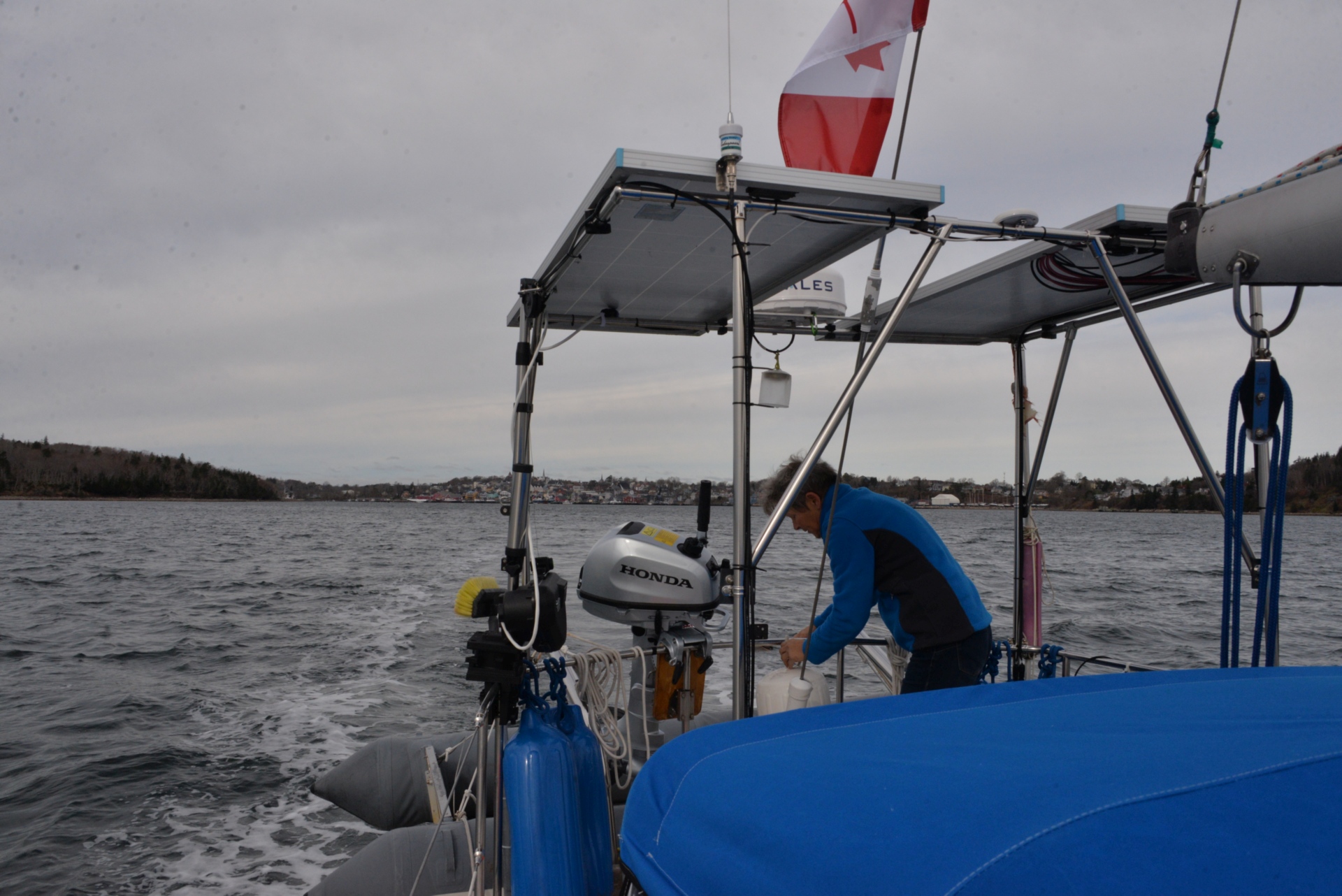
Iryna’s fenders tightening work, be ready to sail
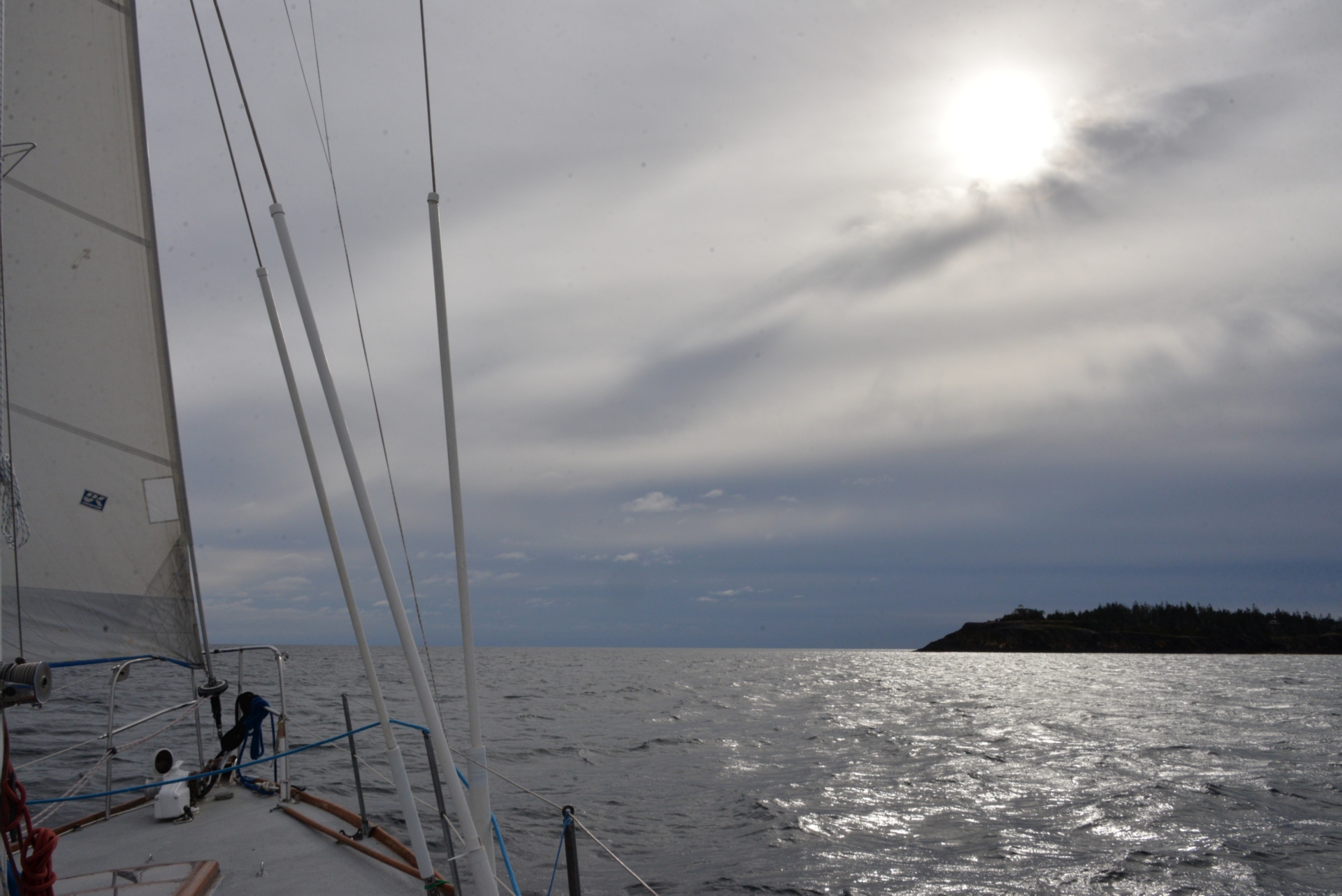
Sailing to Liverpool Bay

How Ironworks works

On a chilly, blustery day, we decided it was finally time to follow through on our long-standing plan to visit the local distillery, Ironworks, and embark on a tour. A few days prior, we had casually dropped by, initially searching for a metal workshop, but to our pleasant surprise, we stumbled upon an exceptional distillery boasting an extensive range of spirits. On that occasion, we had purchased a bottle of Bluenose rum and discovered that they offered tours of the distillery. In all honesty, while we had explored our fair share of wineries, distilleries had yet to make their way onto our radar. Well, let’s see how it works!

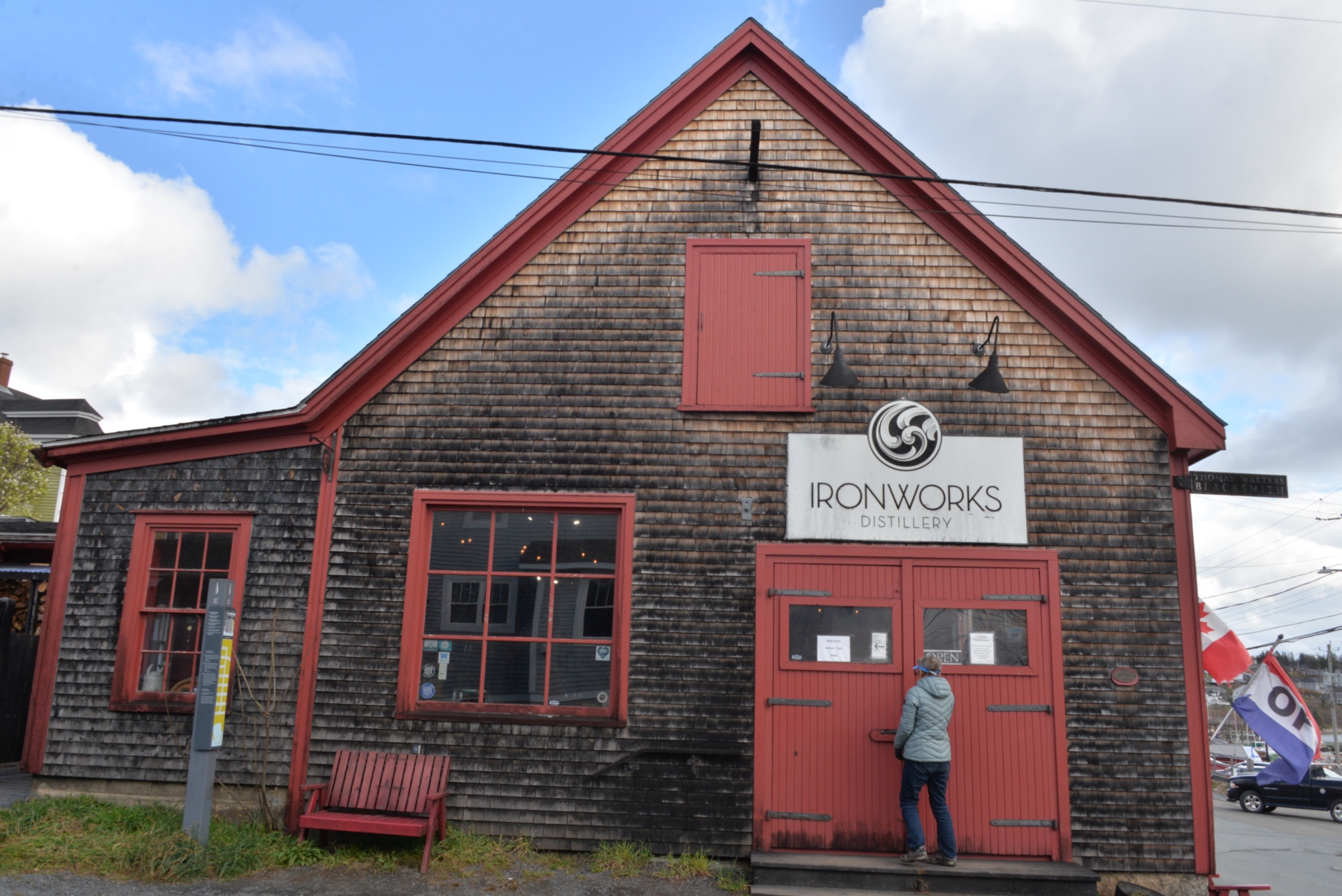
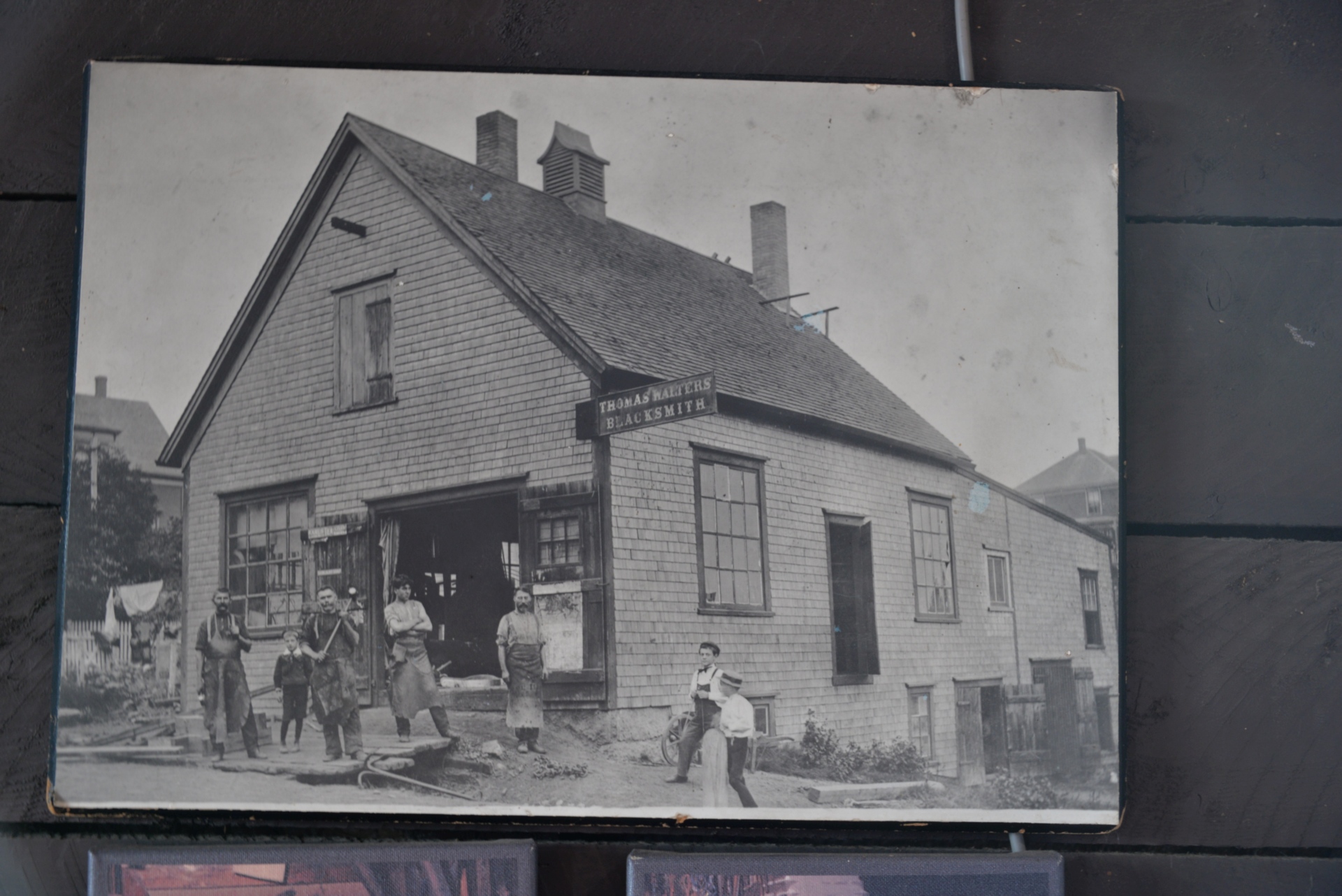
Ironworks Distillery is located on a historical Lunenburg waterfront in the old Blacksmith shop.
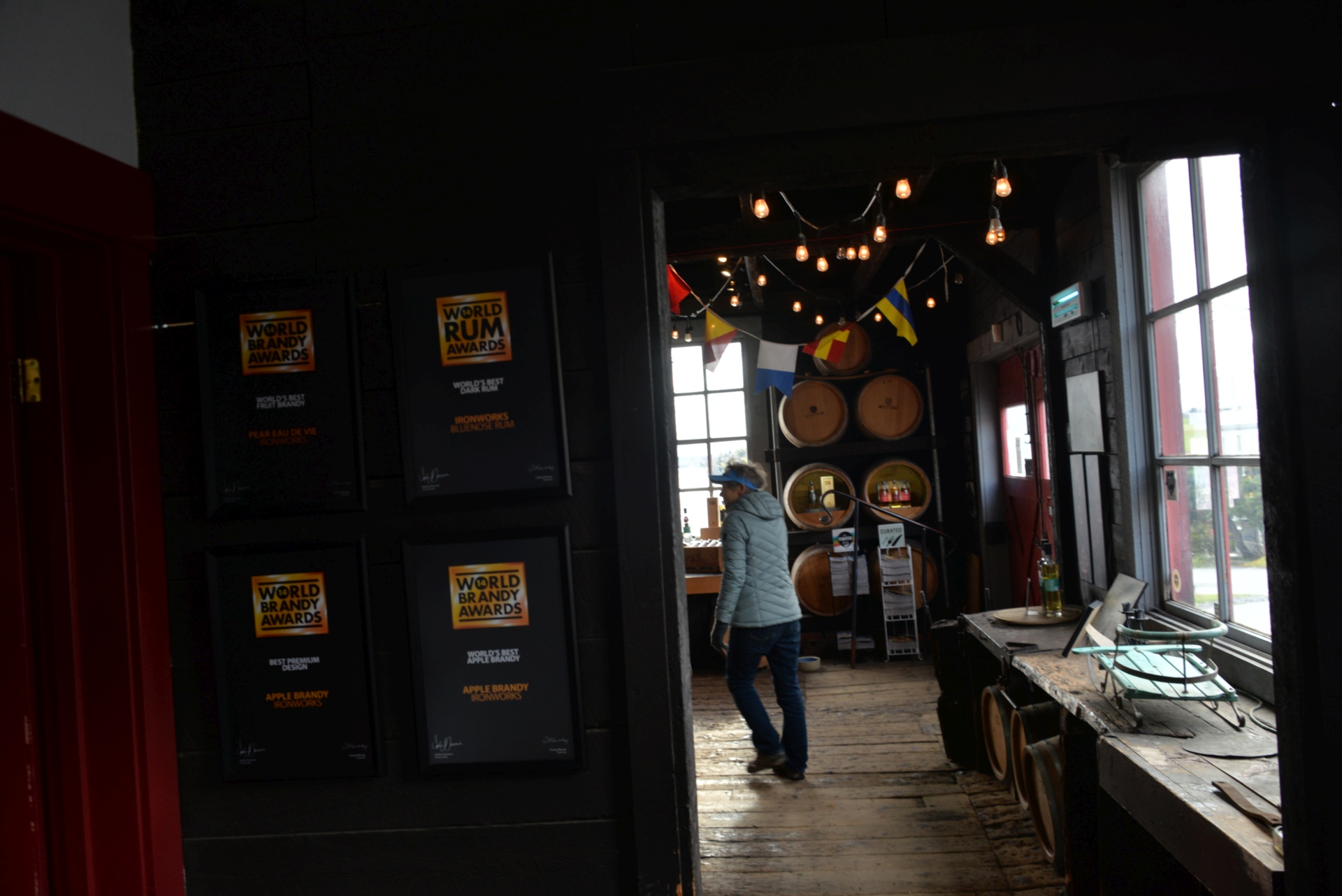
Awards of Ironworks’ spirits and liquors
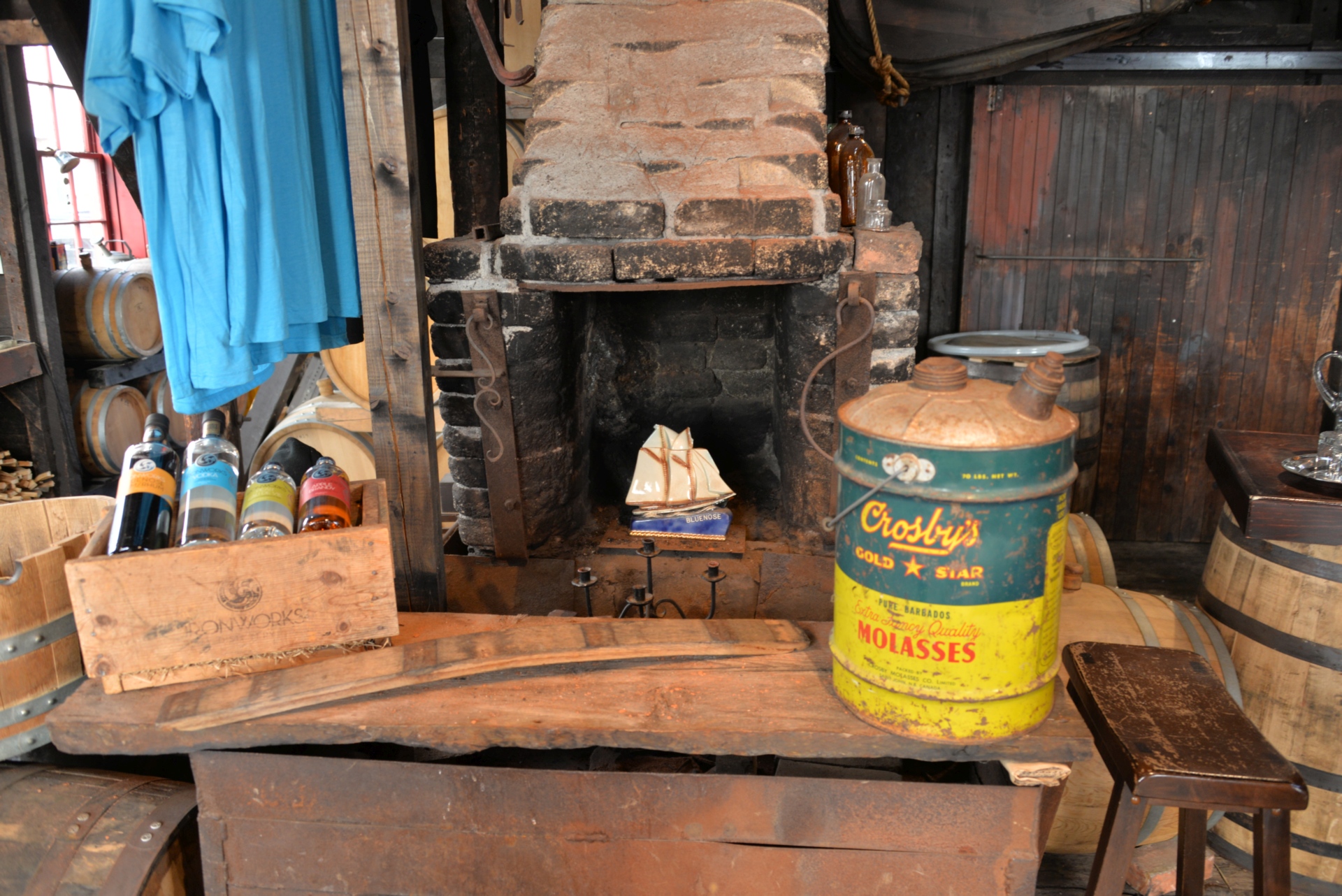
Inside it preserves the spirit of the old iron workshop with a taste of old rum production
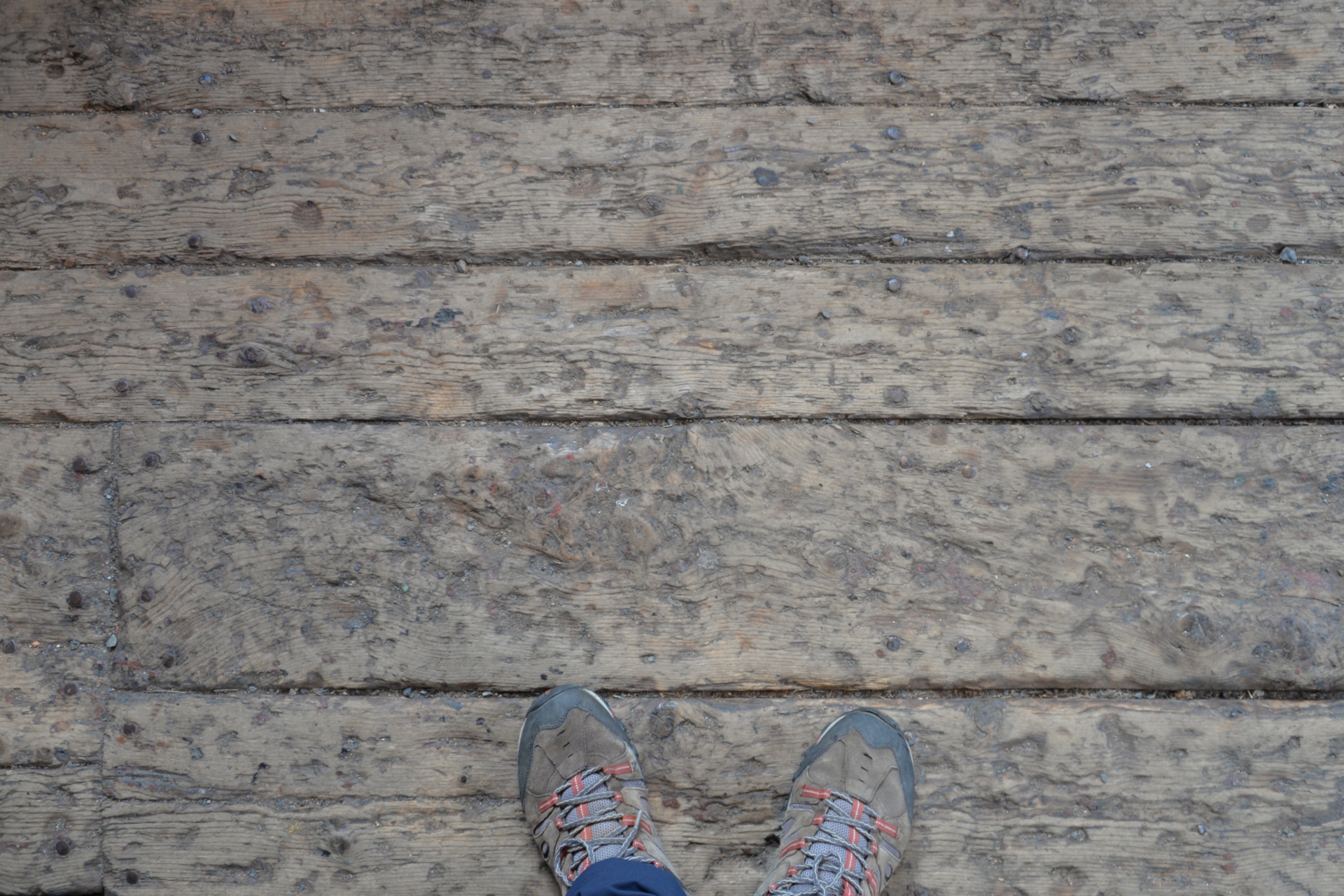
Wooden floor remains traces of melted iron
The Walters Blacksmith Shop ca.1920
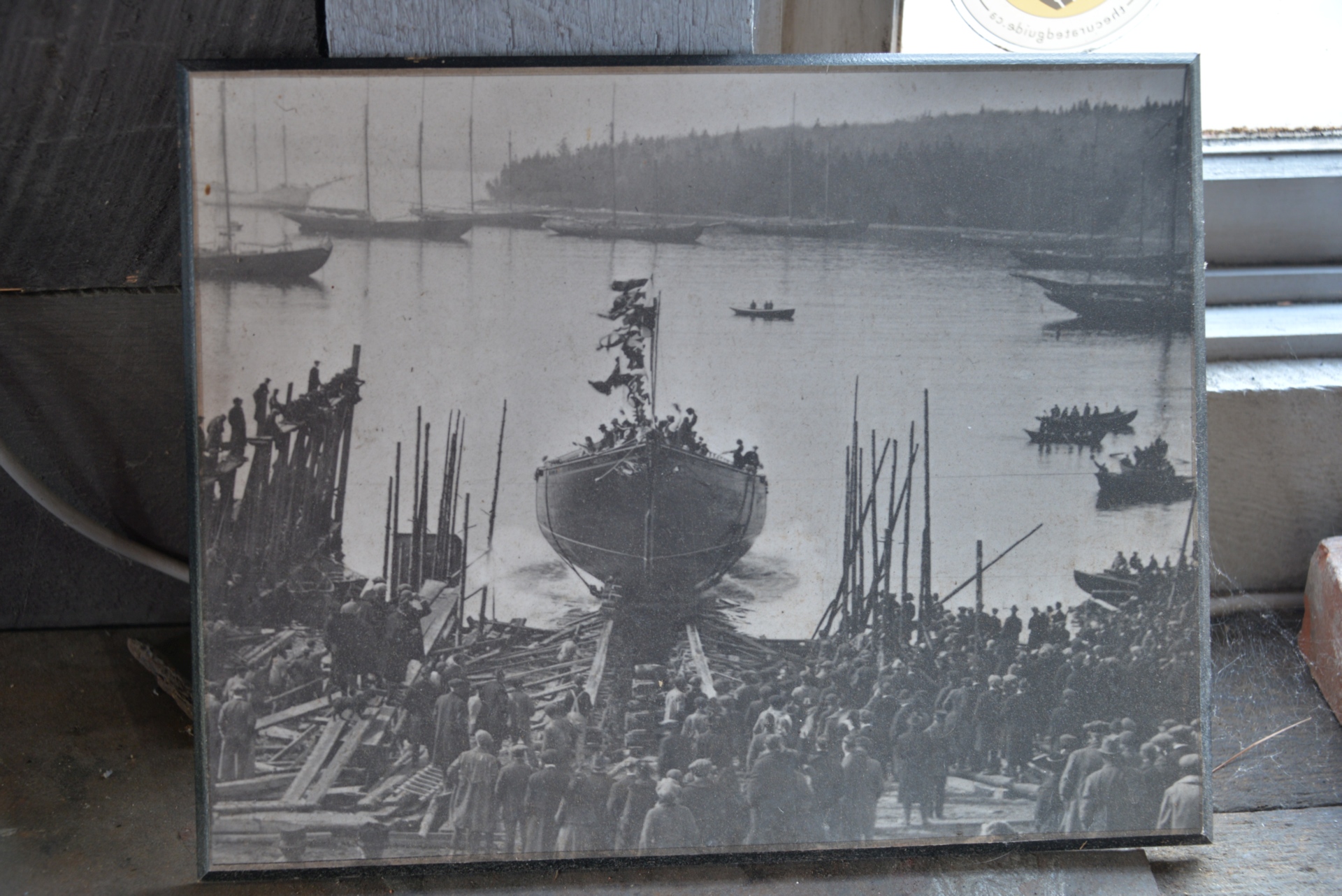
Launch of the famous schooner Bluenose in 1921, all ironworks for which were done here
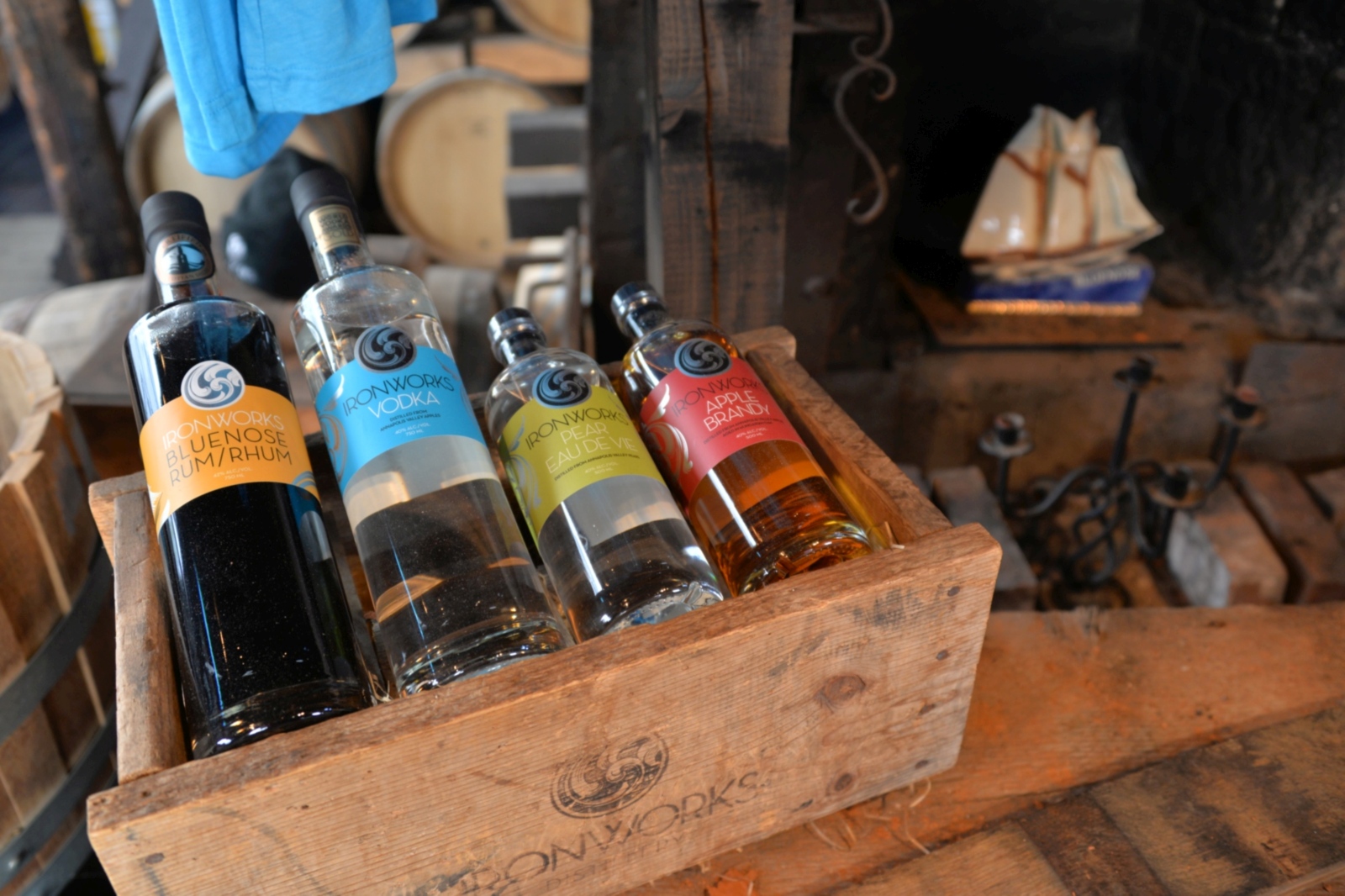
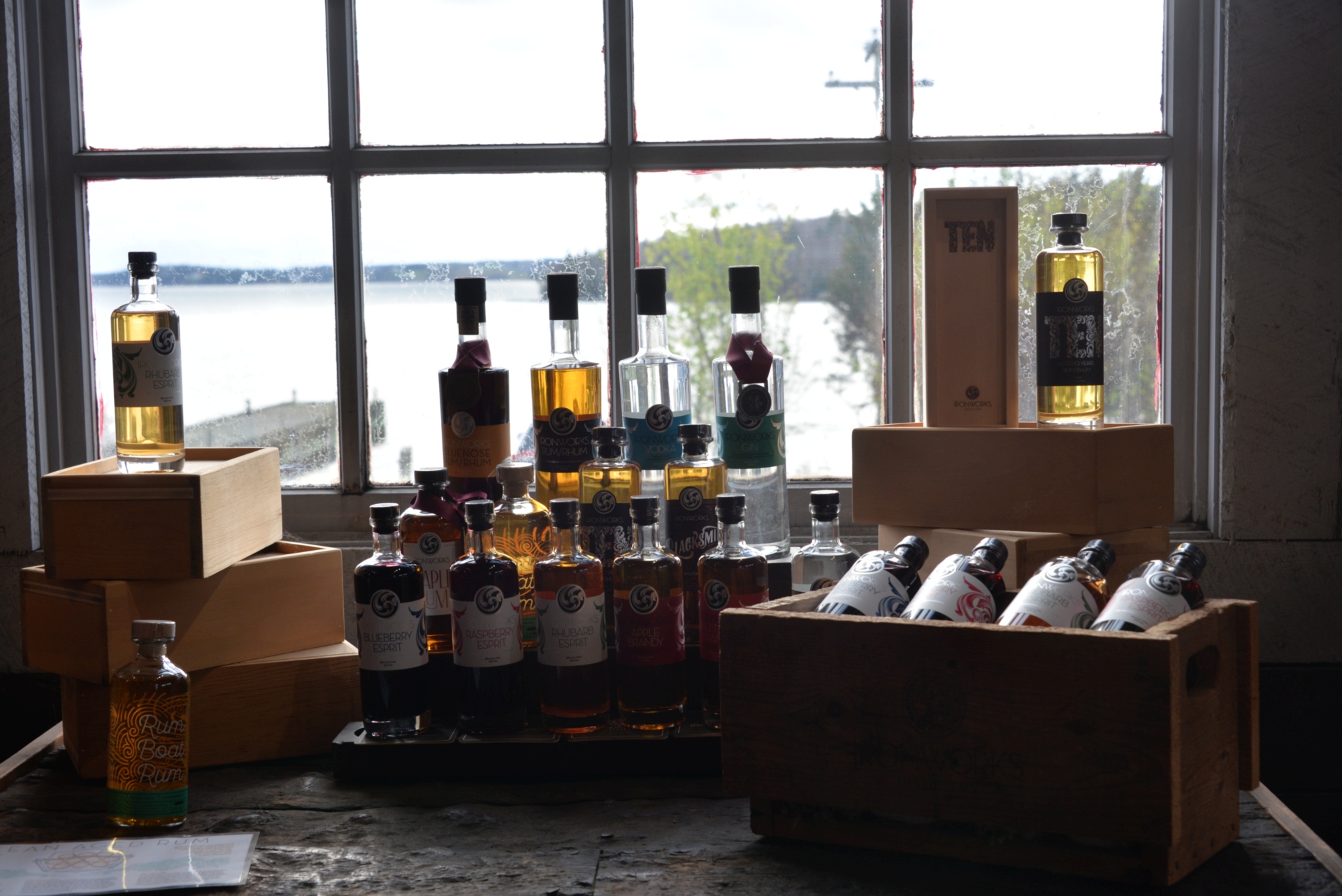
Ironworks products on display
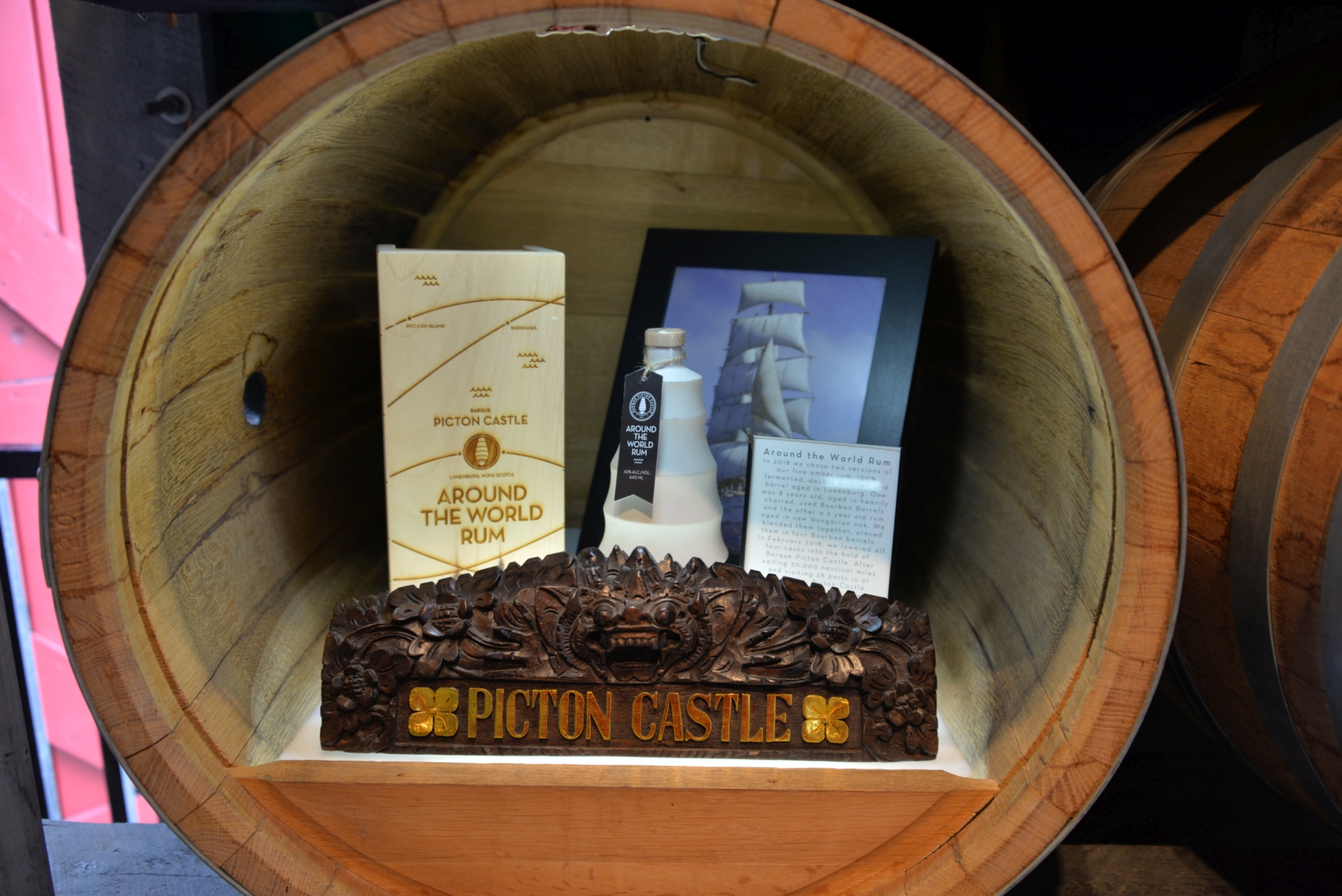
Around the World Rum – aged during the circumnavigation of the tall ship “Picton Castle”
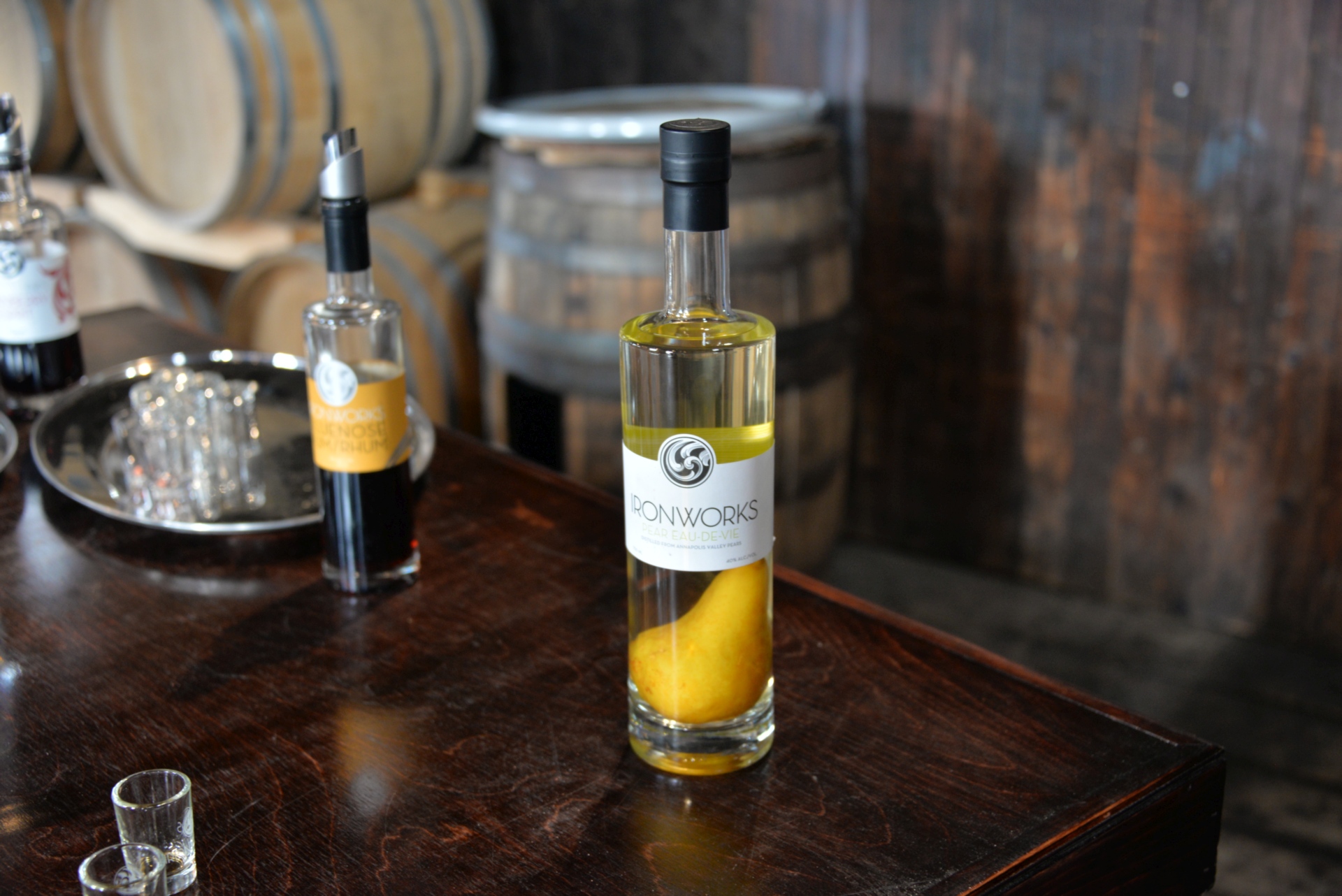
One of the signature products is Pear-eau-de-vie with a pear in the bottle! Guess, how they put a pear into a bottle?
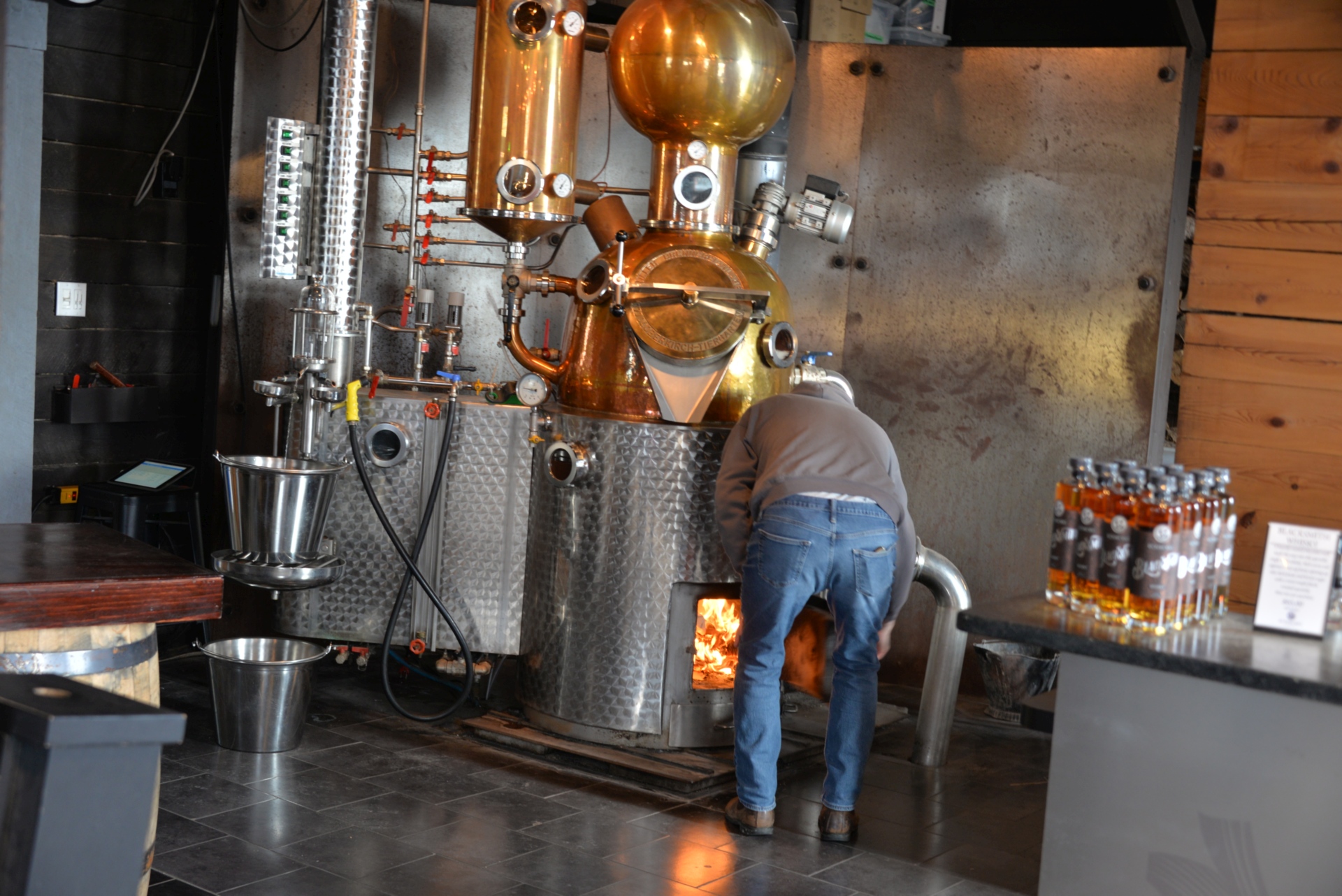
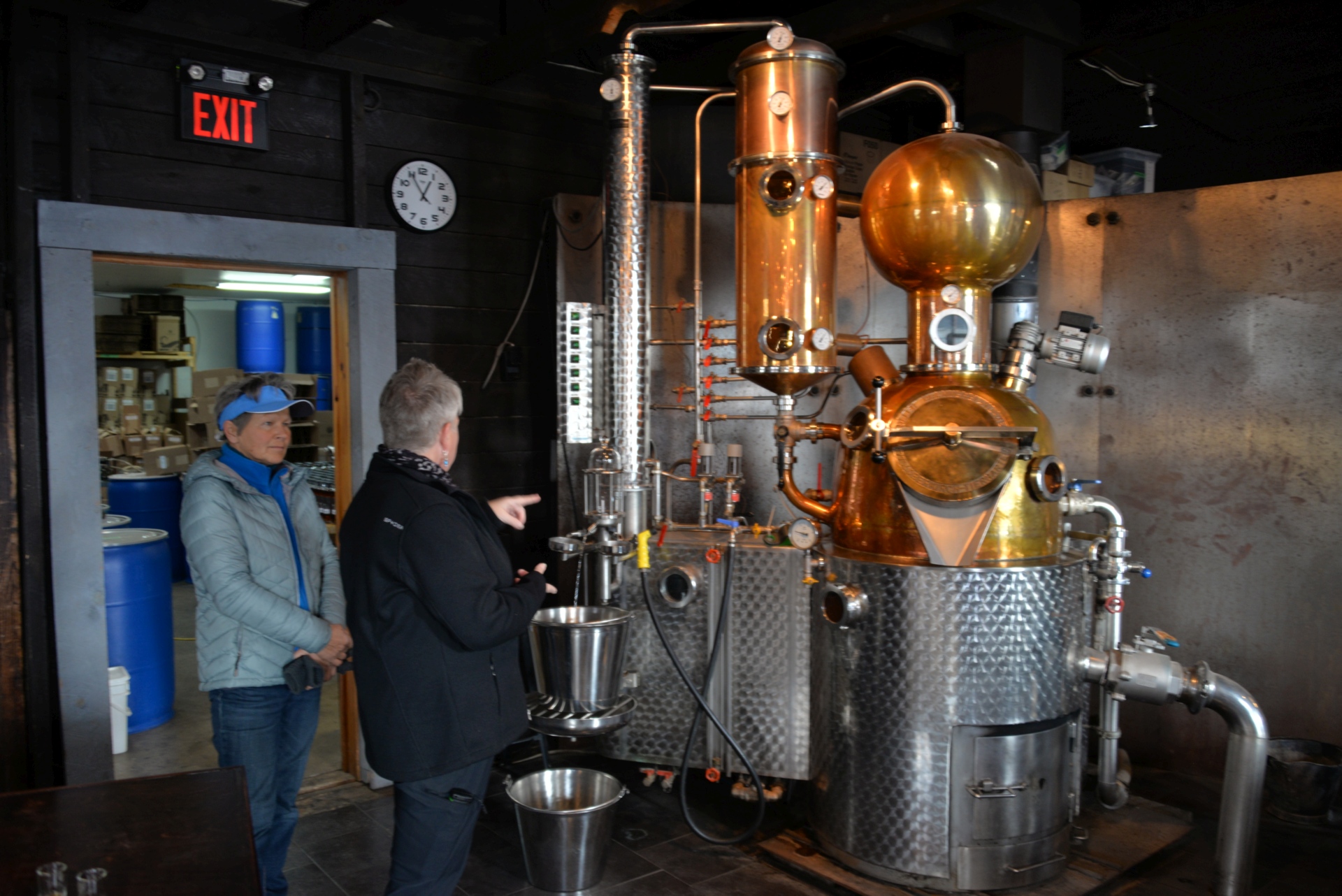
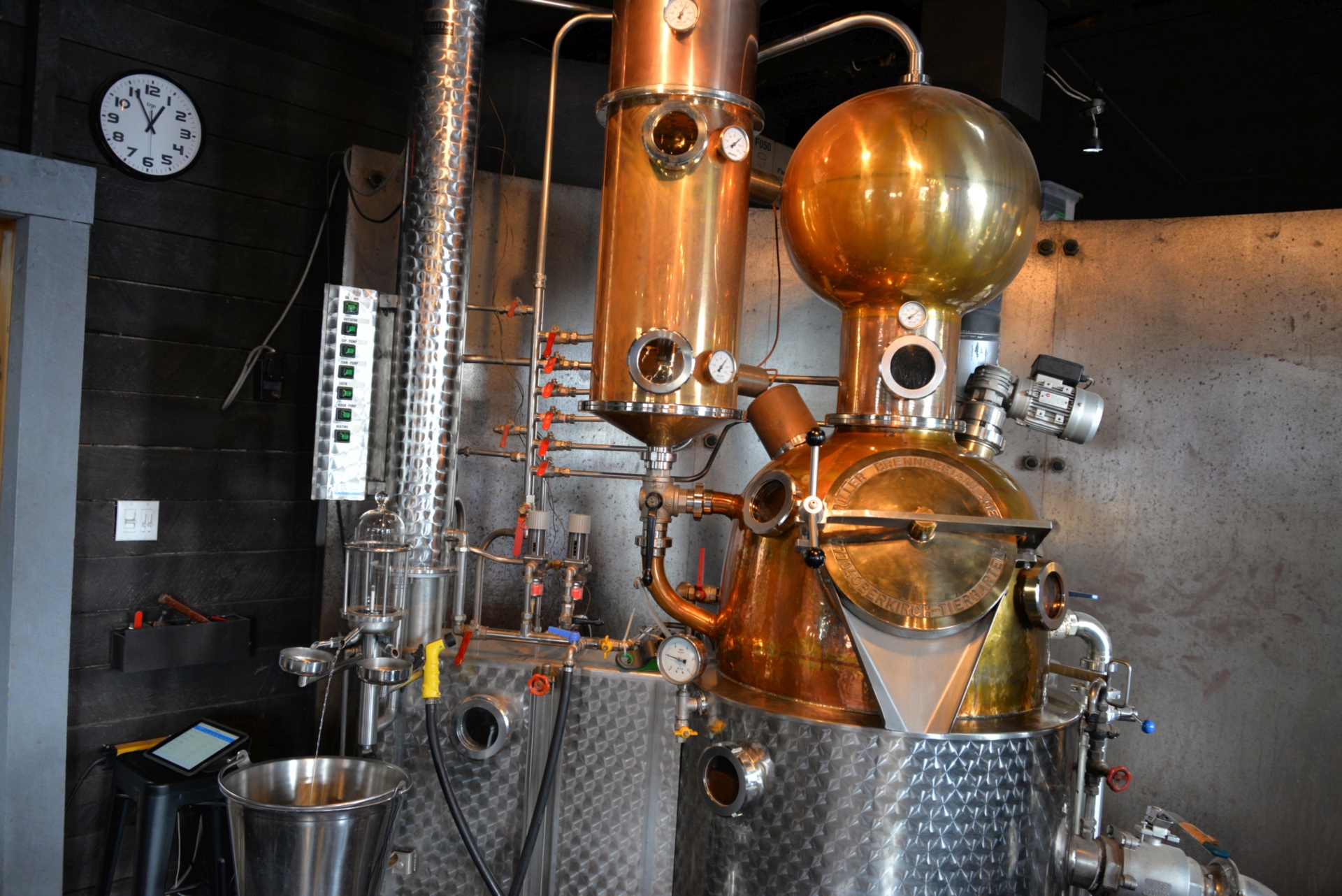
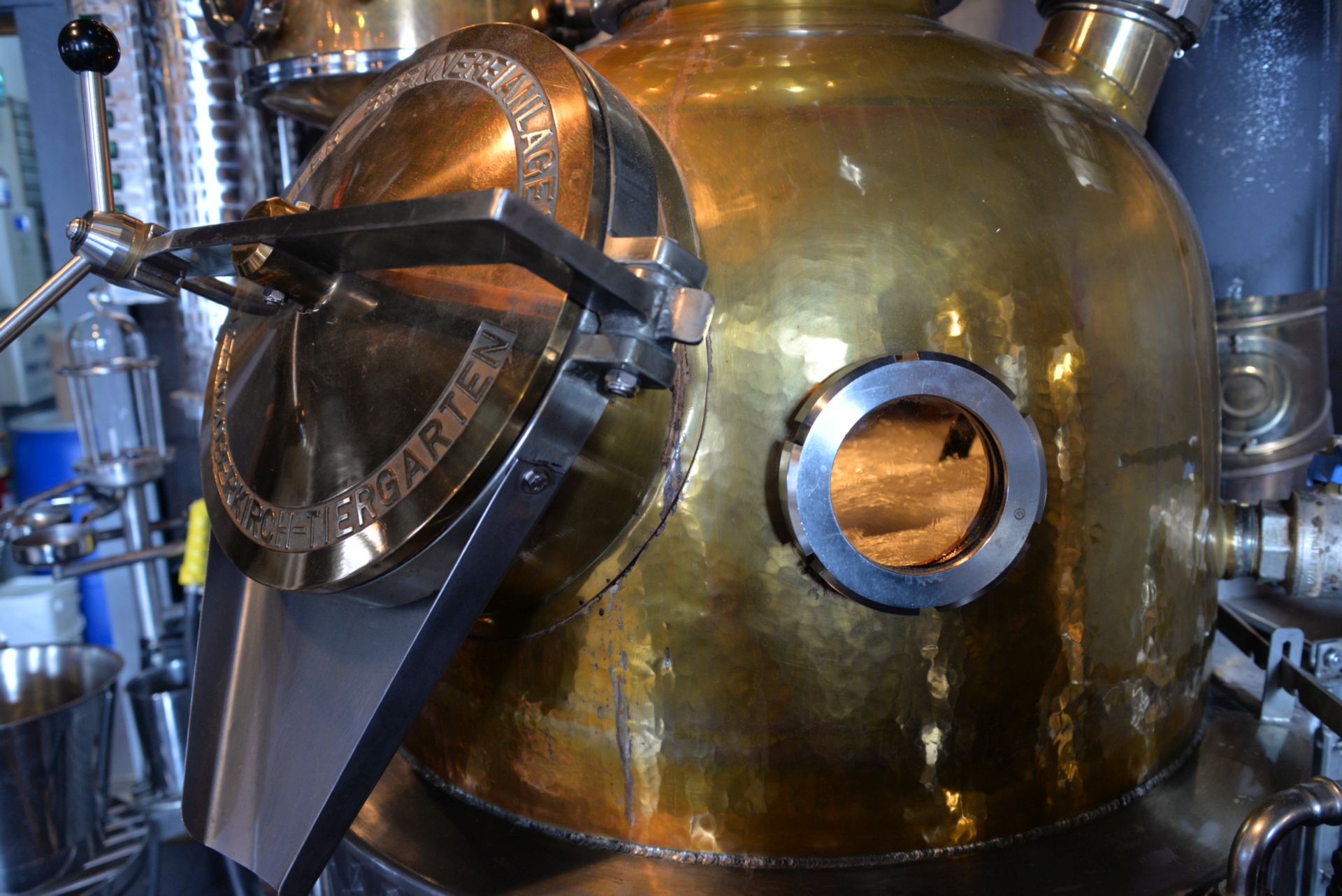
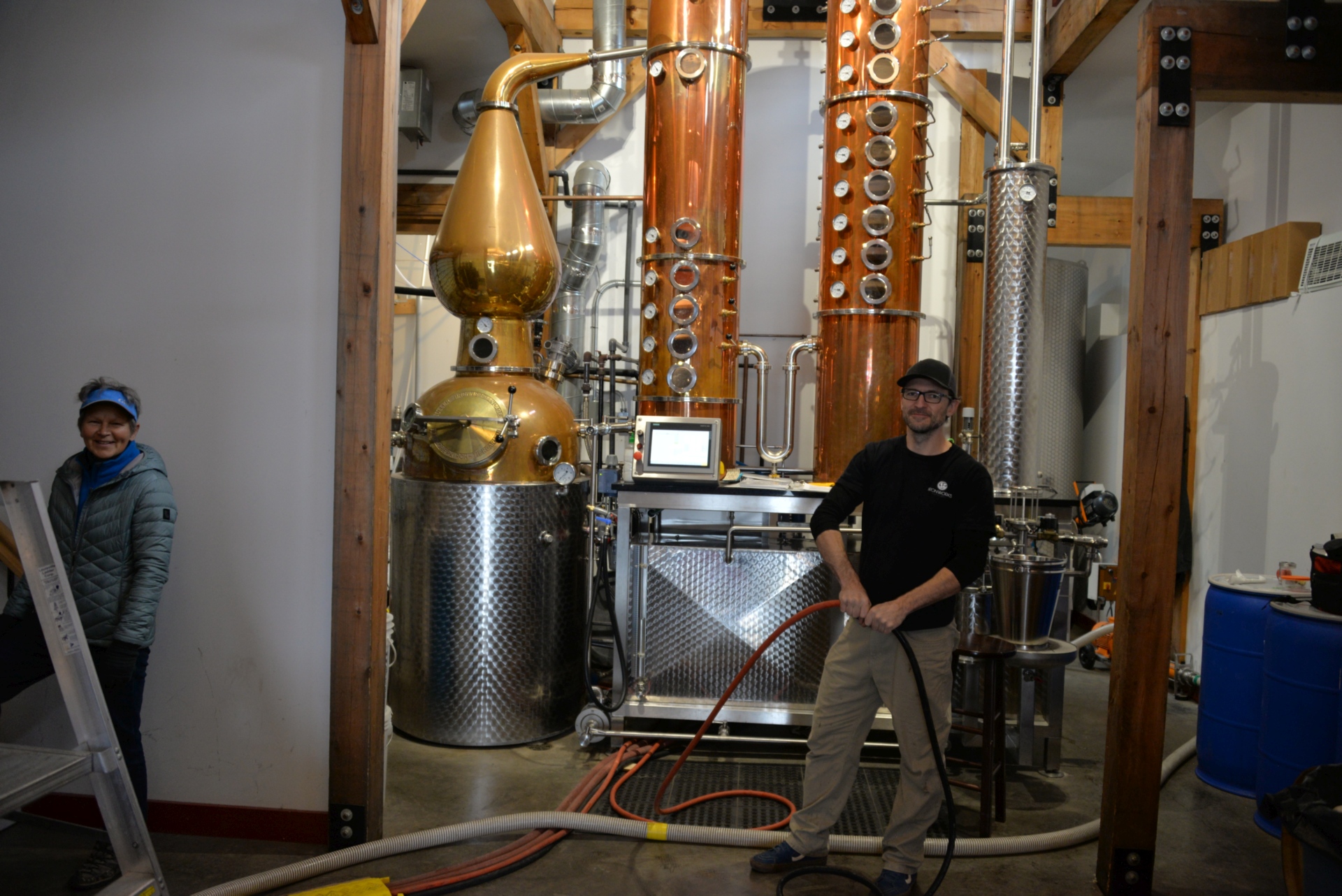
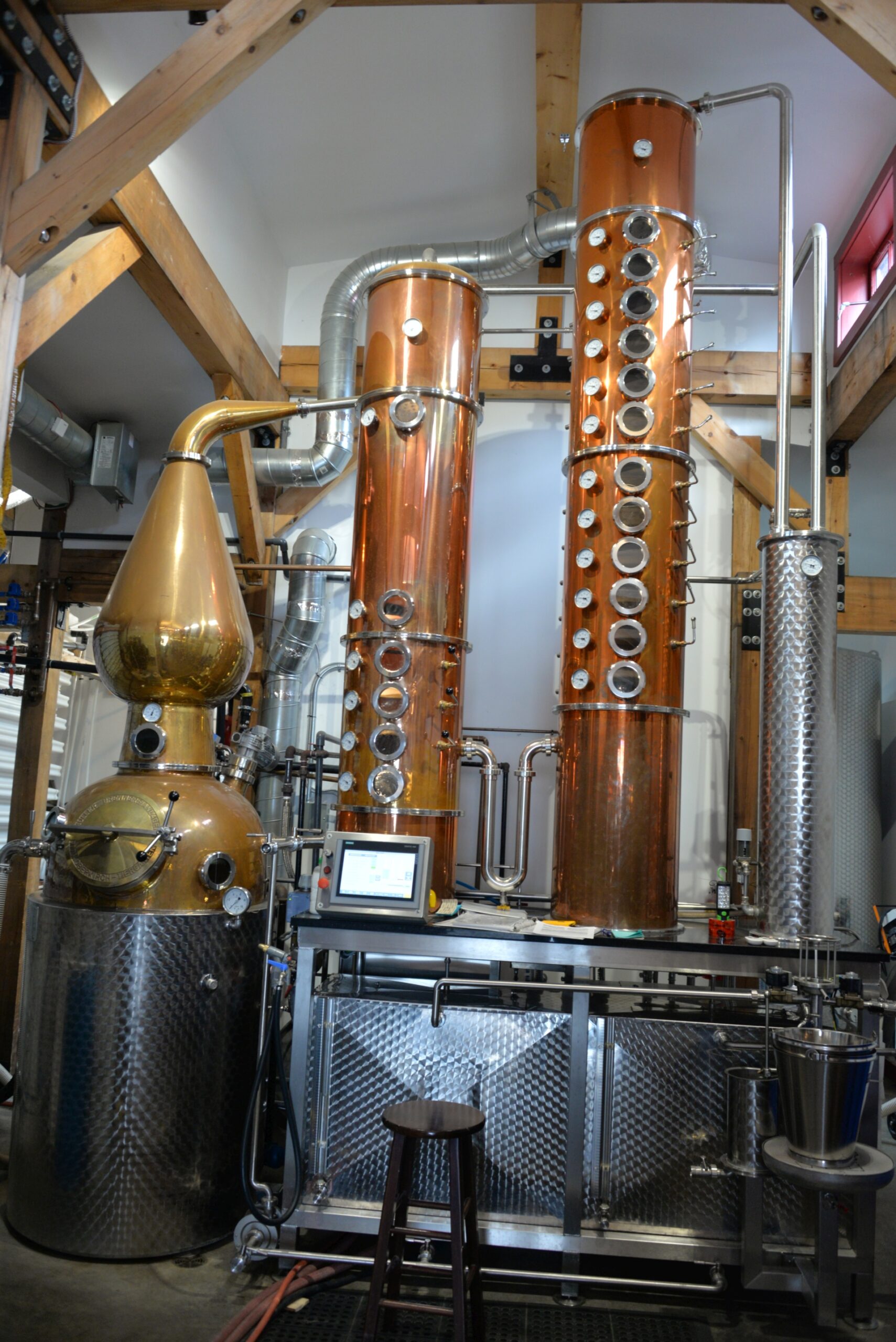
The distillation machine is made in Germany and heated by woodstove.
Our guide Meg explains the distillation process
Her name is Bertruda, is she beautiful?
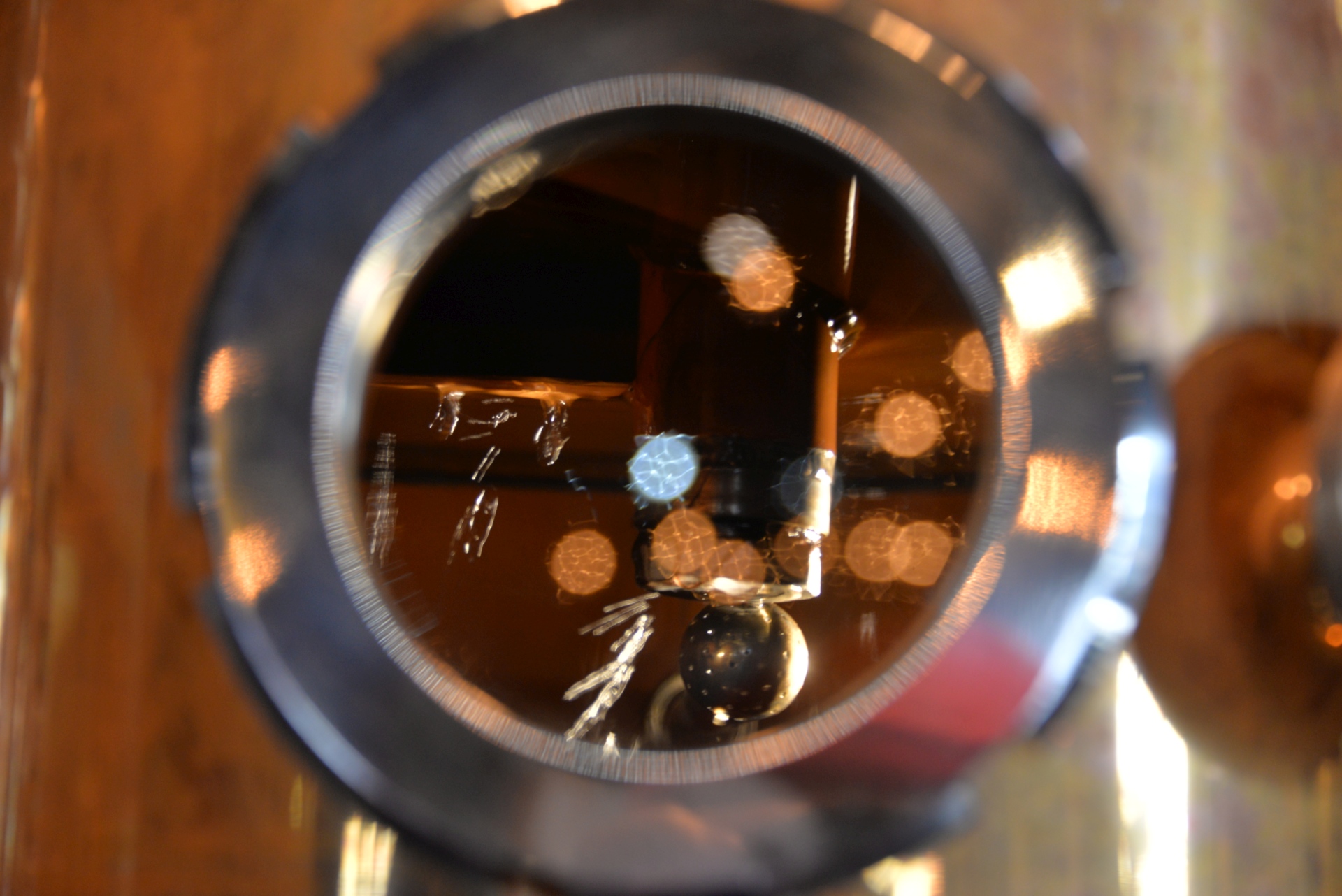
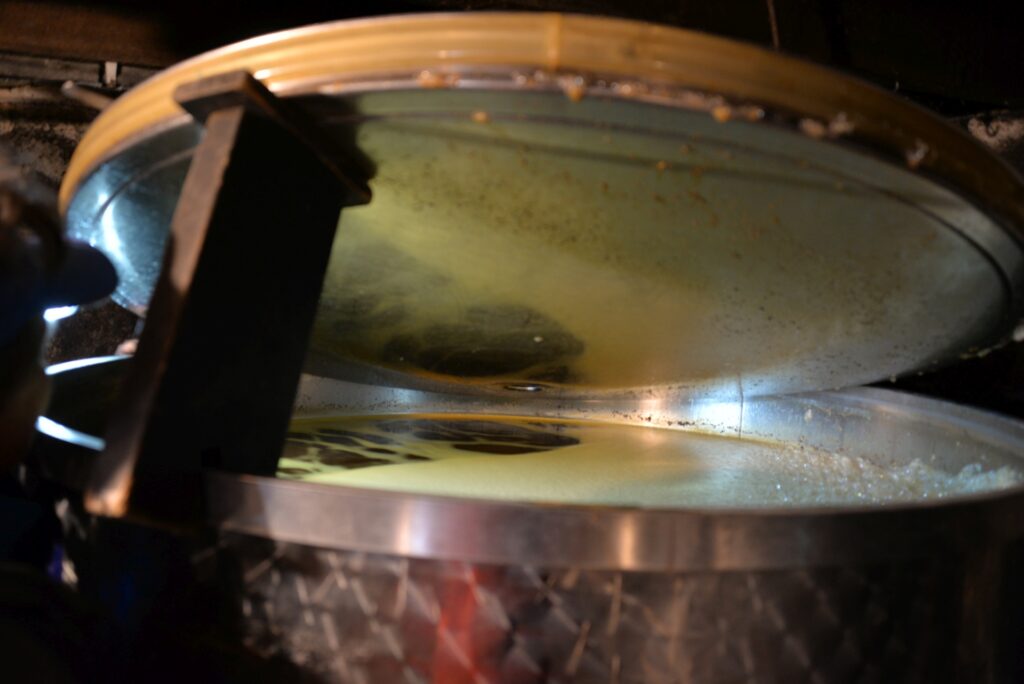
Boiling of fermented wort
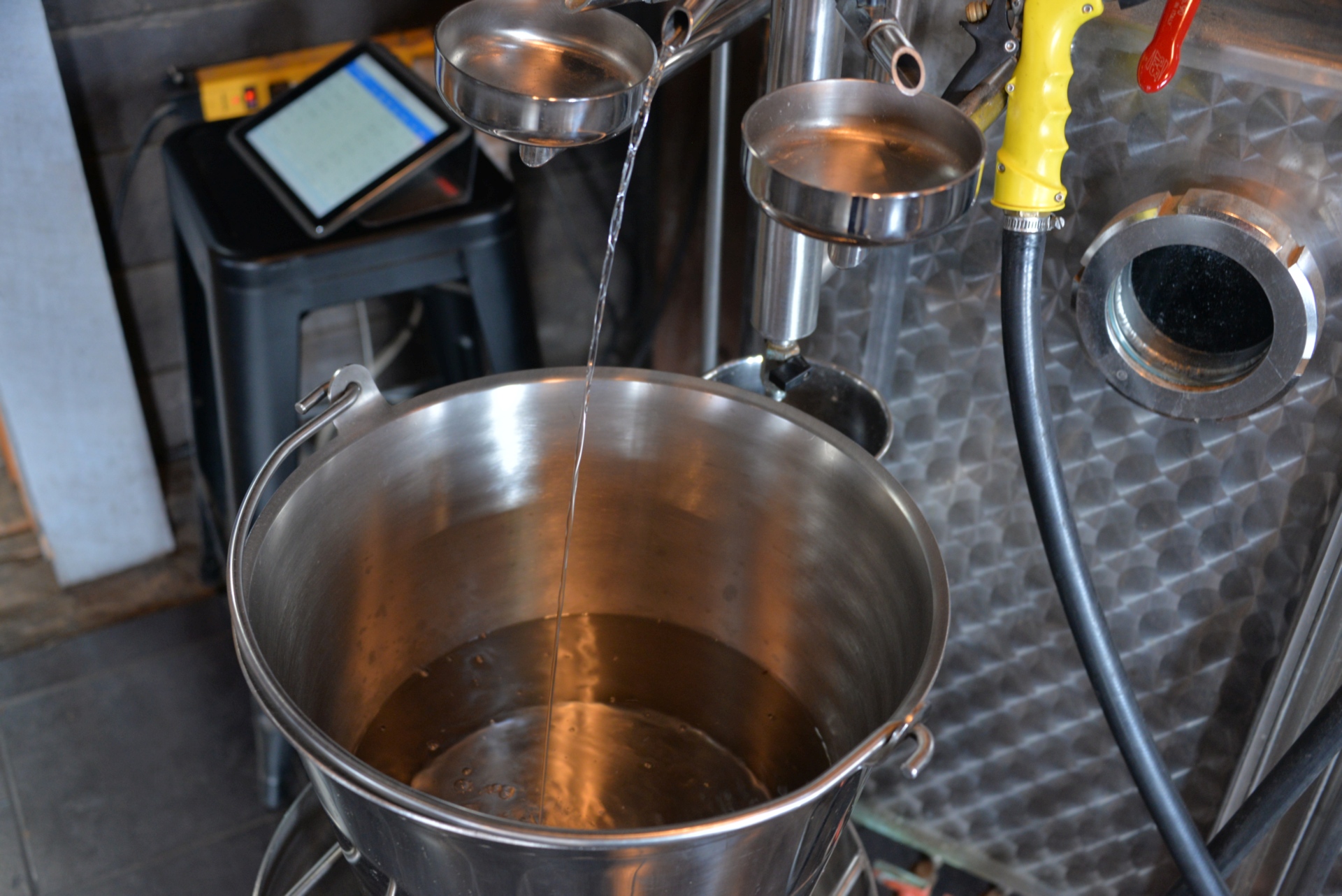
Majic of distillation
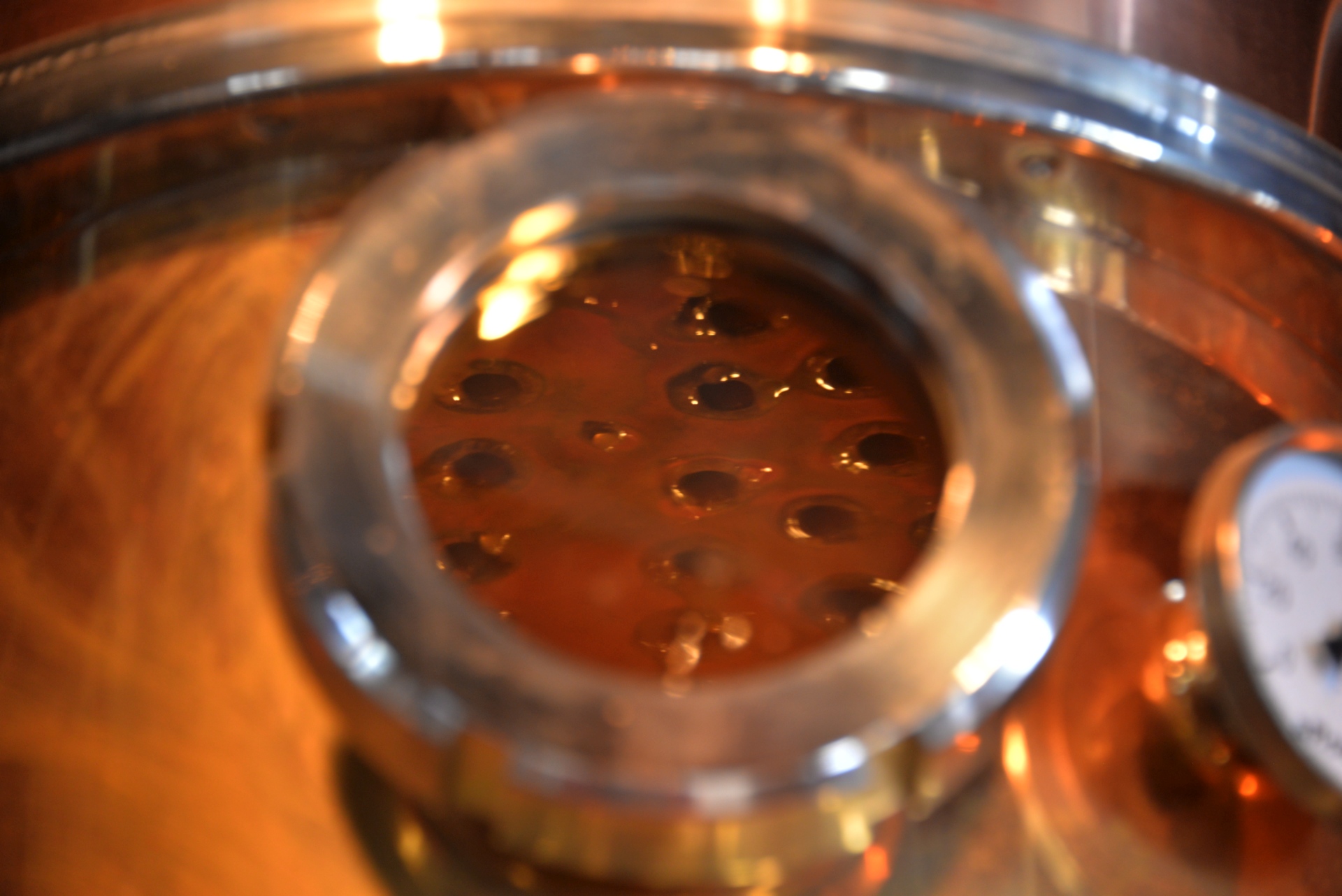
Spirit condensation on cooled copper plate with drainage holes
Today it was a whiskey run
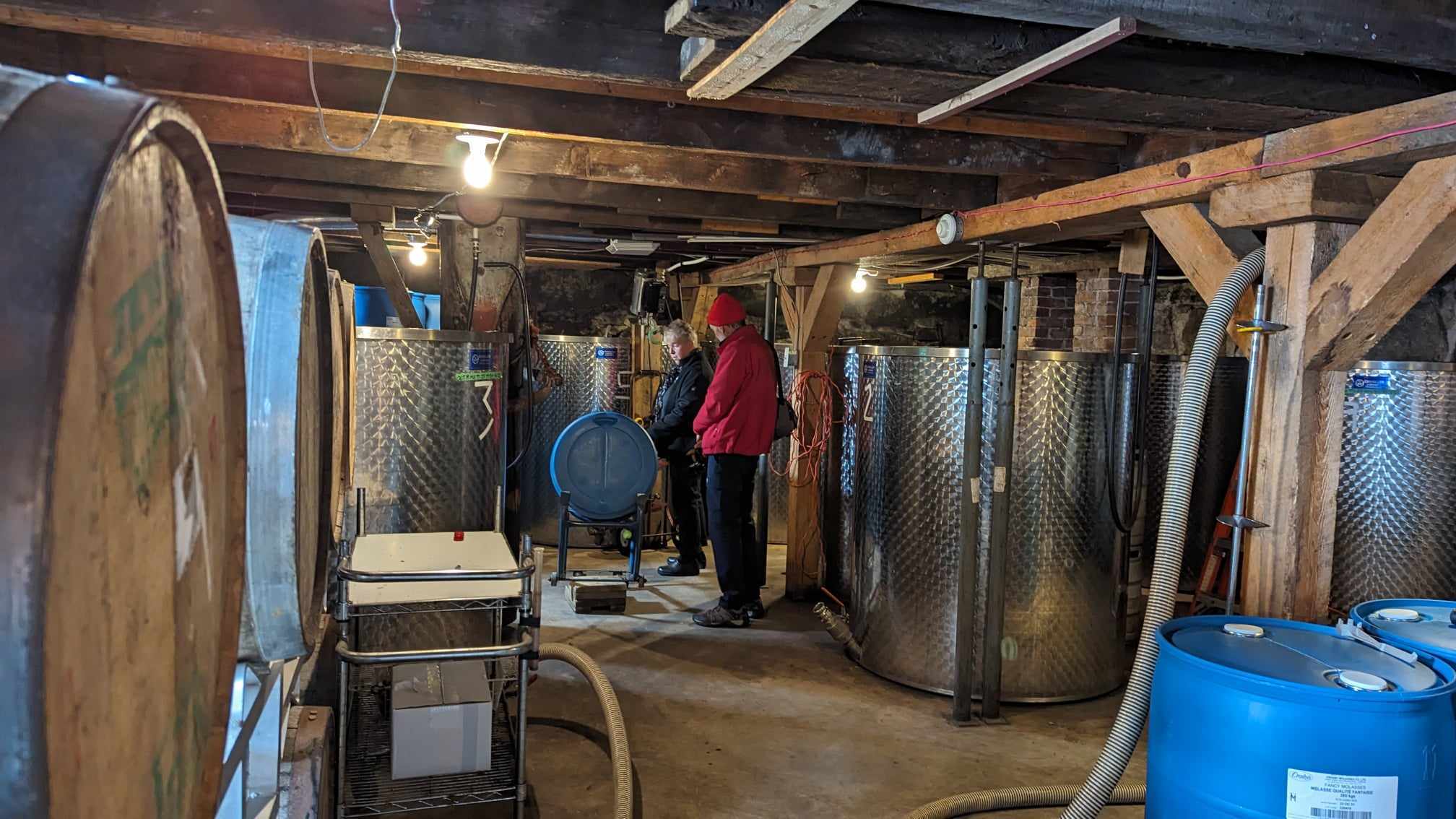
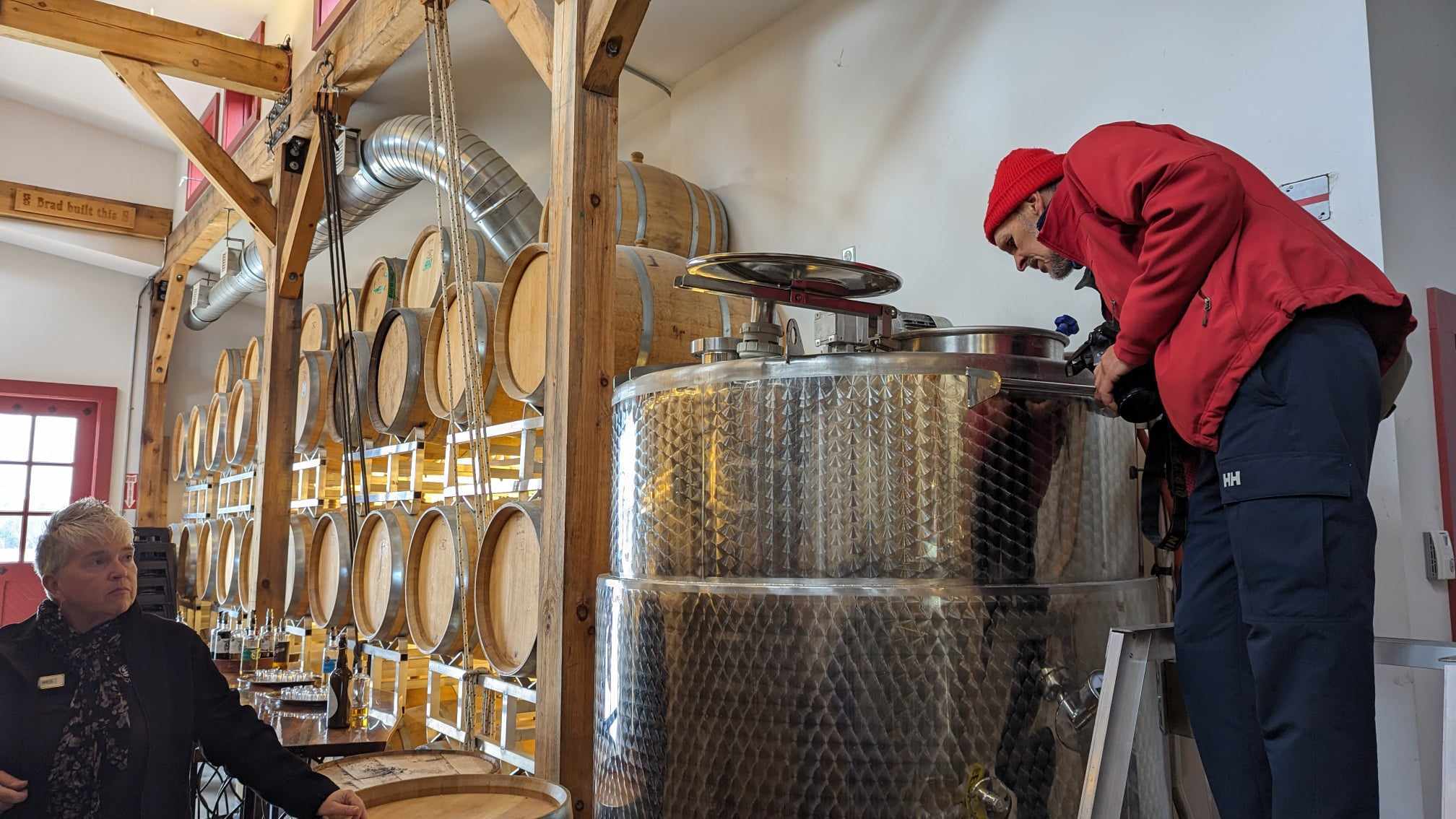
Fermentation tanks
The fermentation in progress
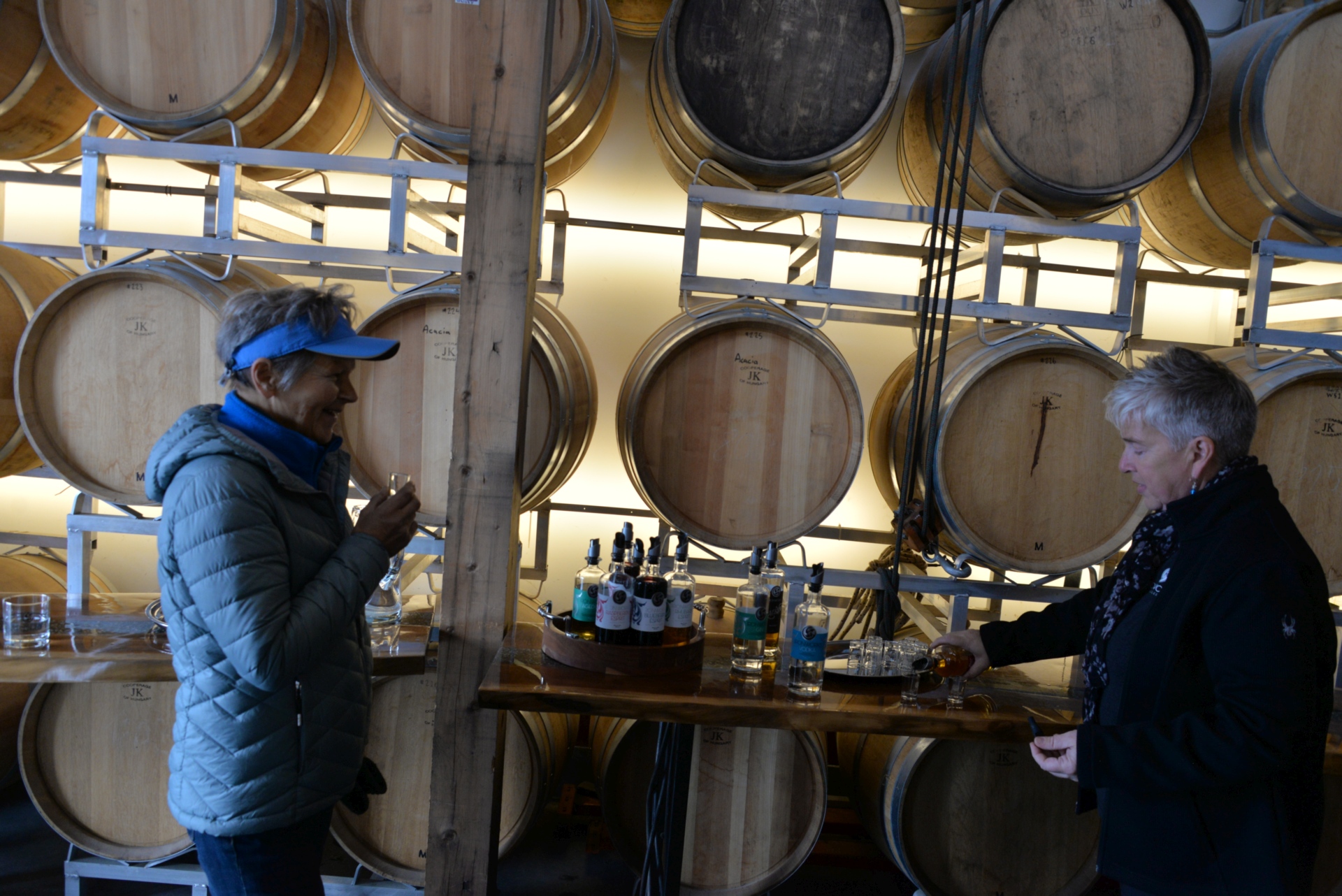
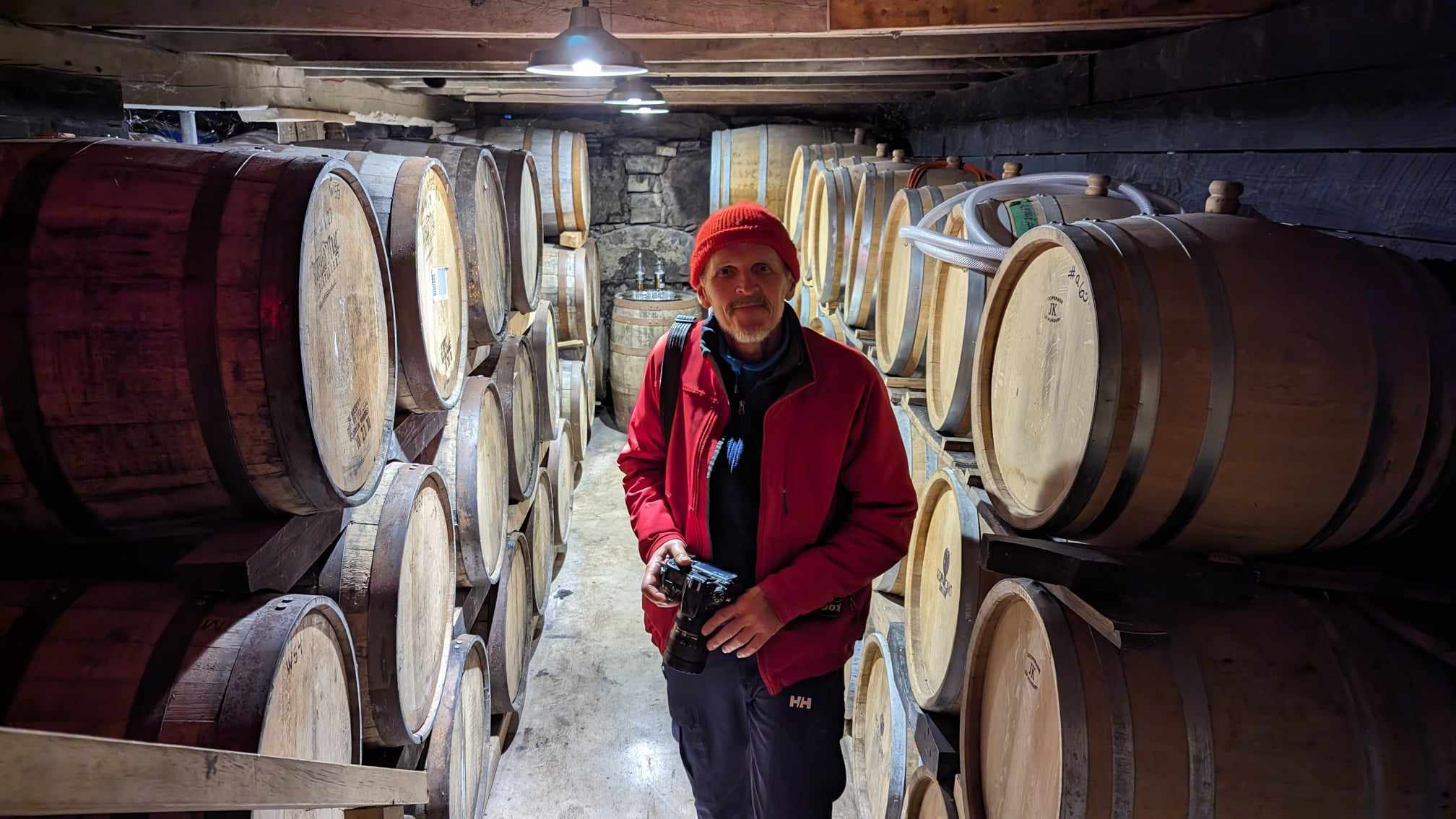
Aging barrels cellar
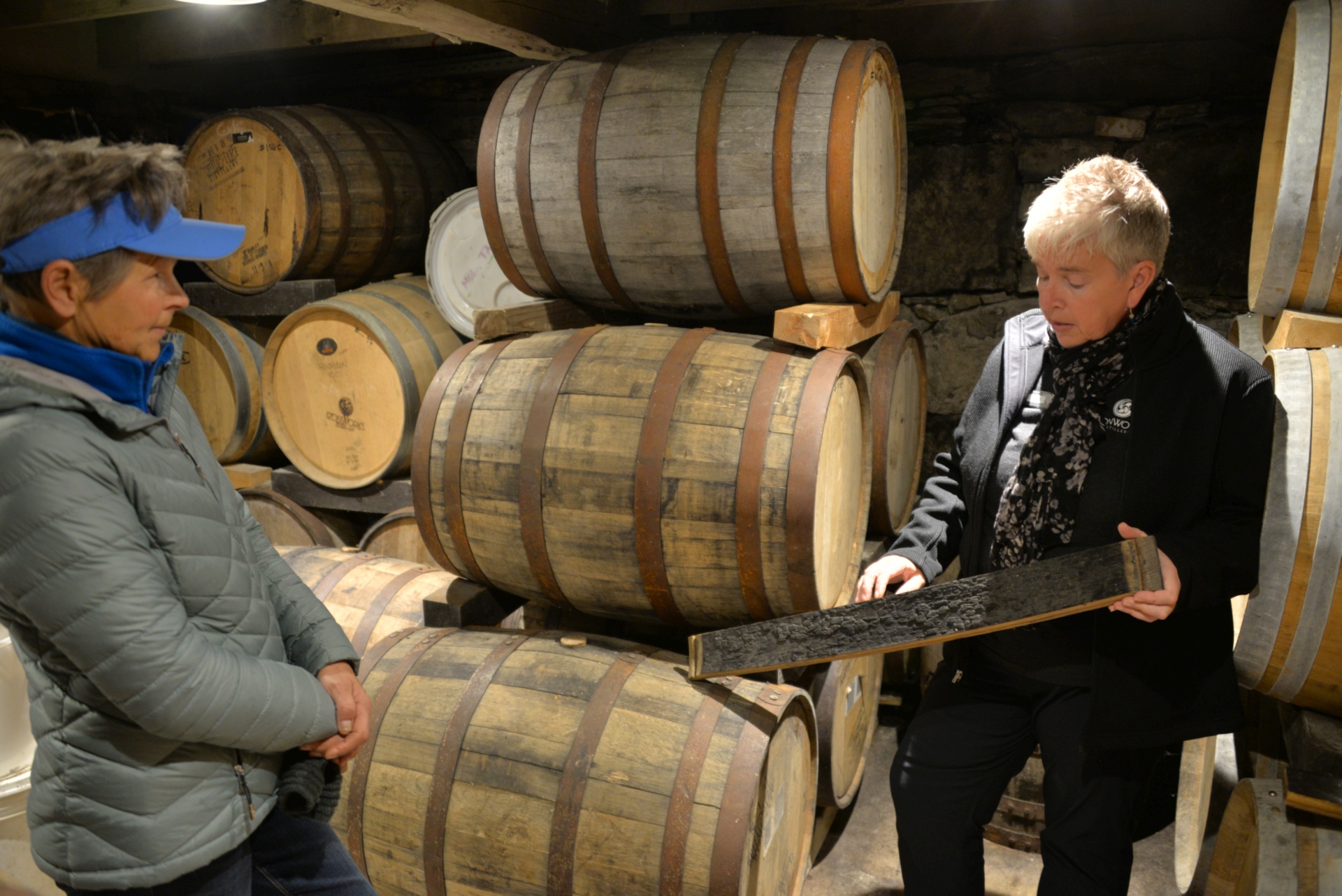
Majority of barrels come after bourbon production in USA
Meg demonstrates the burned surface inside of the barrel’s wood-plank
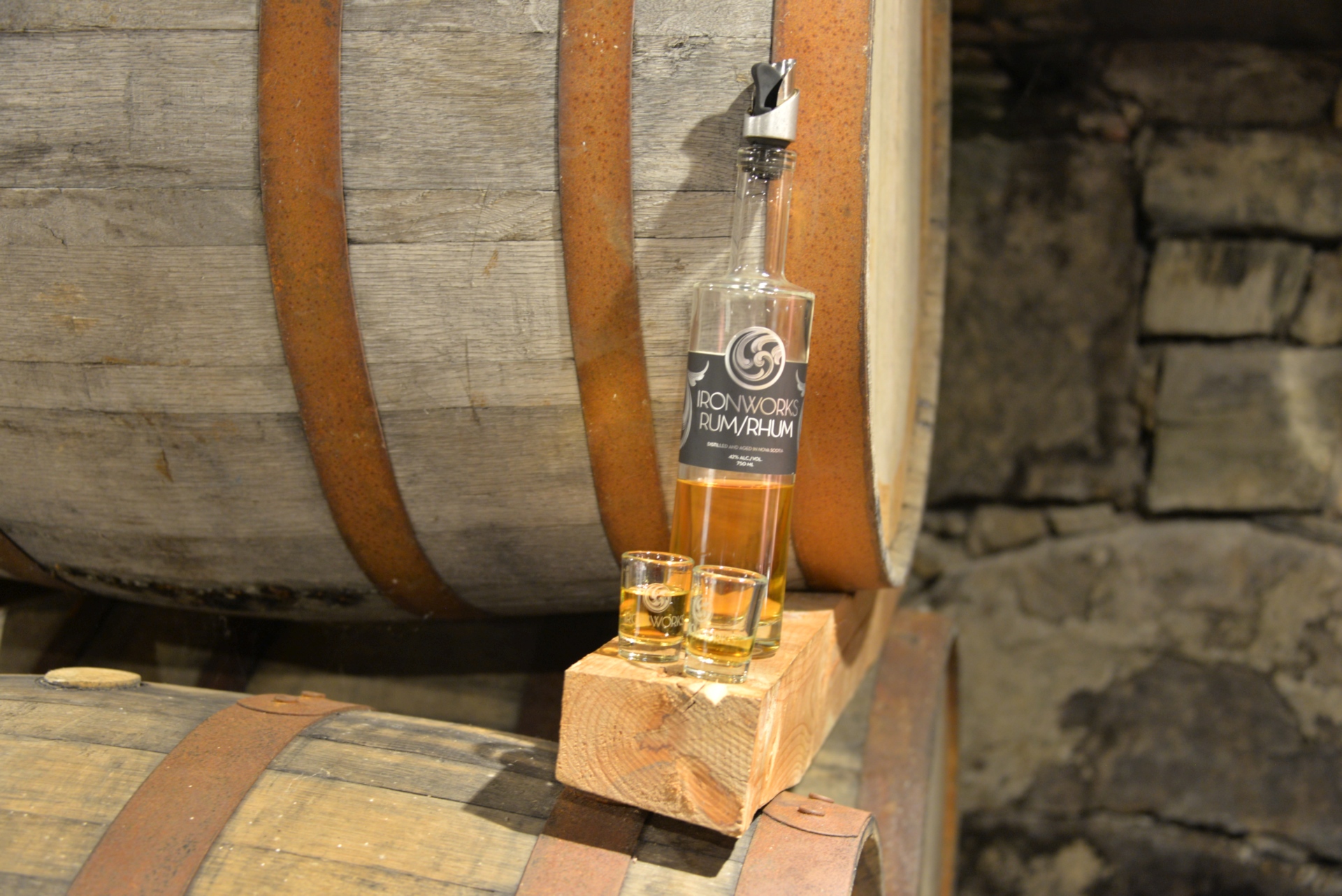
Ironworks Rum to test
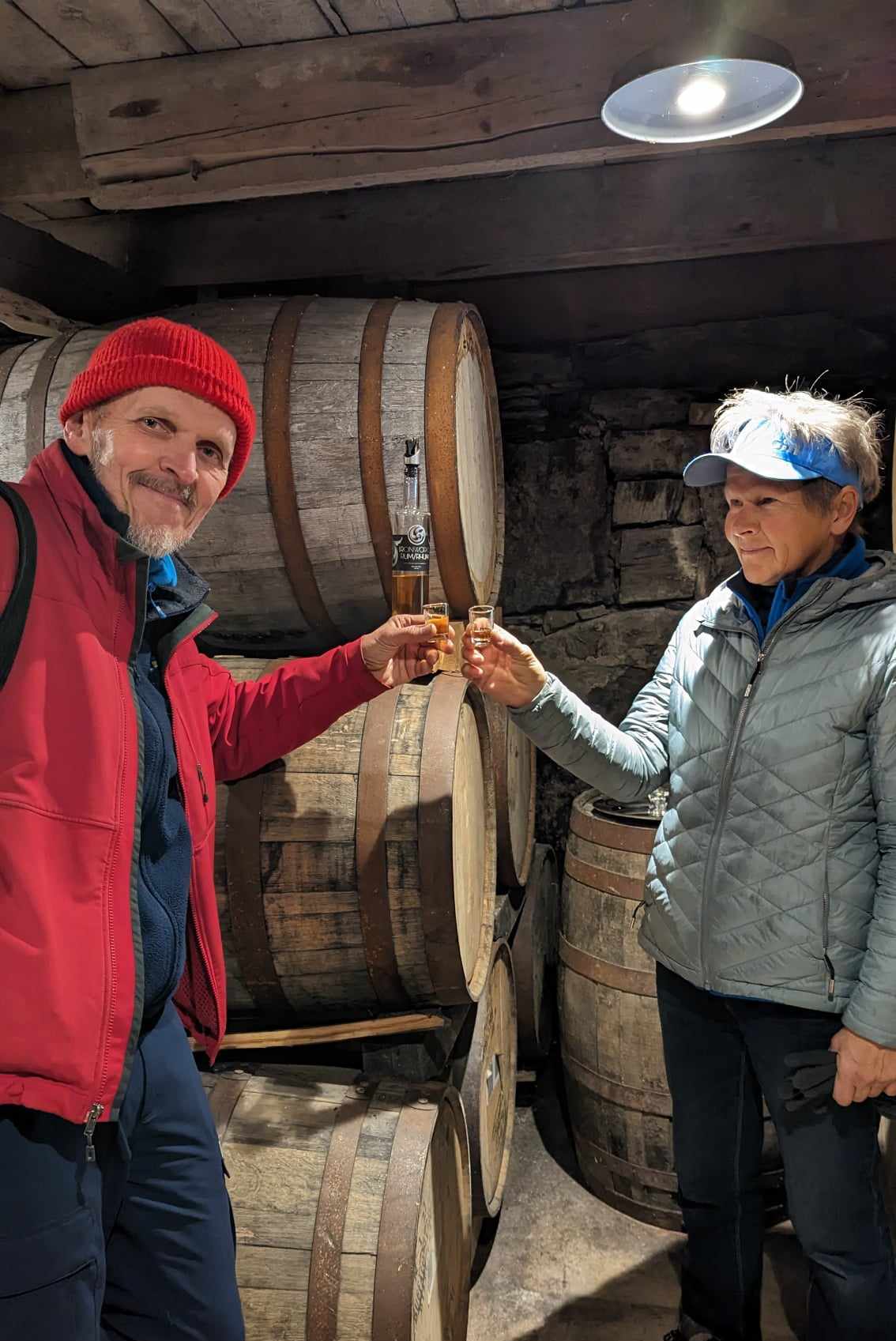
Cheers!
Inspecting fermentation of wheat for production of vodka
Matt – operator of the vodka distillery machine
Her name is Ruby – because of her copper-reddish skin
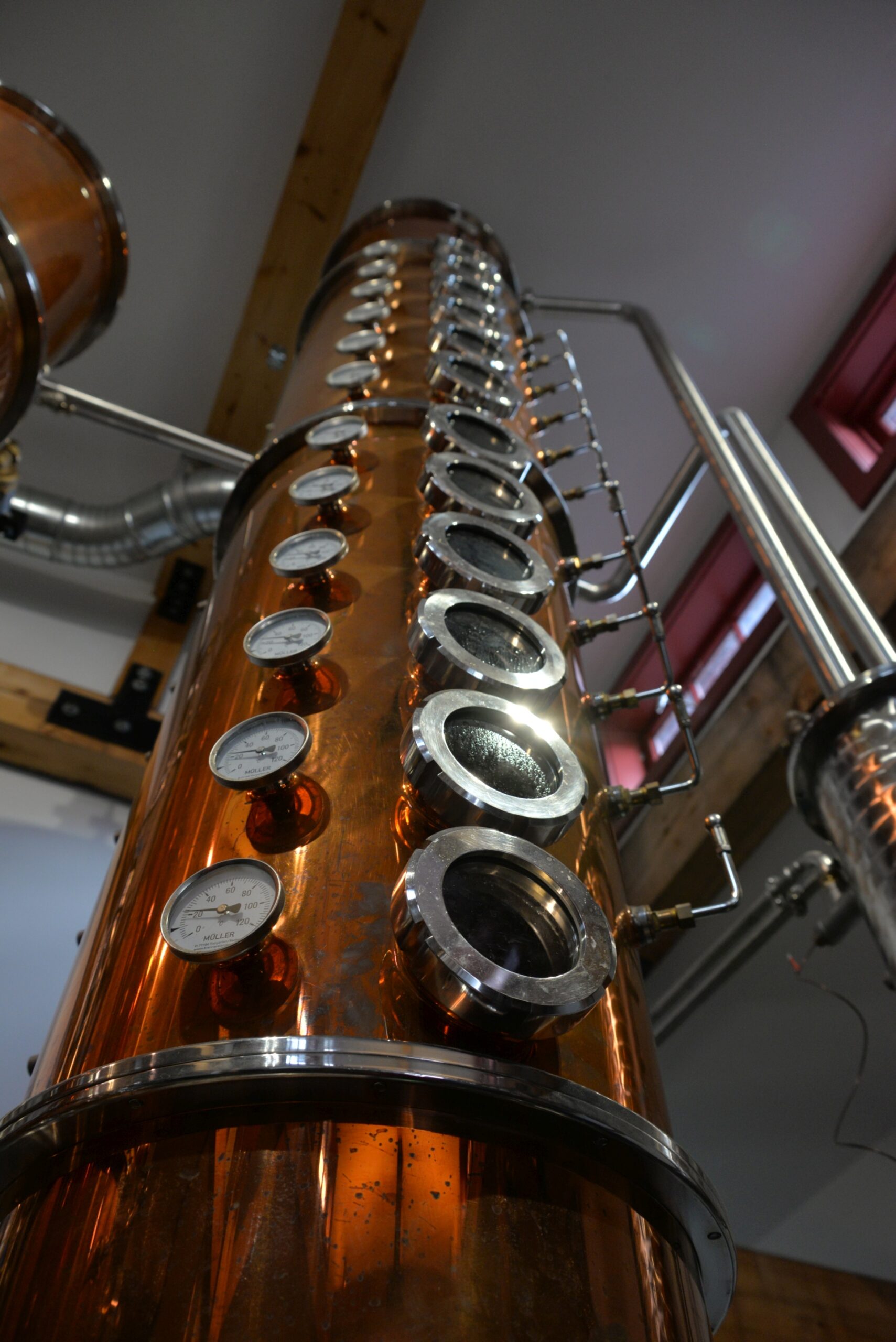
18 levels of distillation – that is what makes vodka smooth!
Iryna for the first time in her life admitted that vodka is tasty!
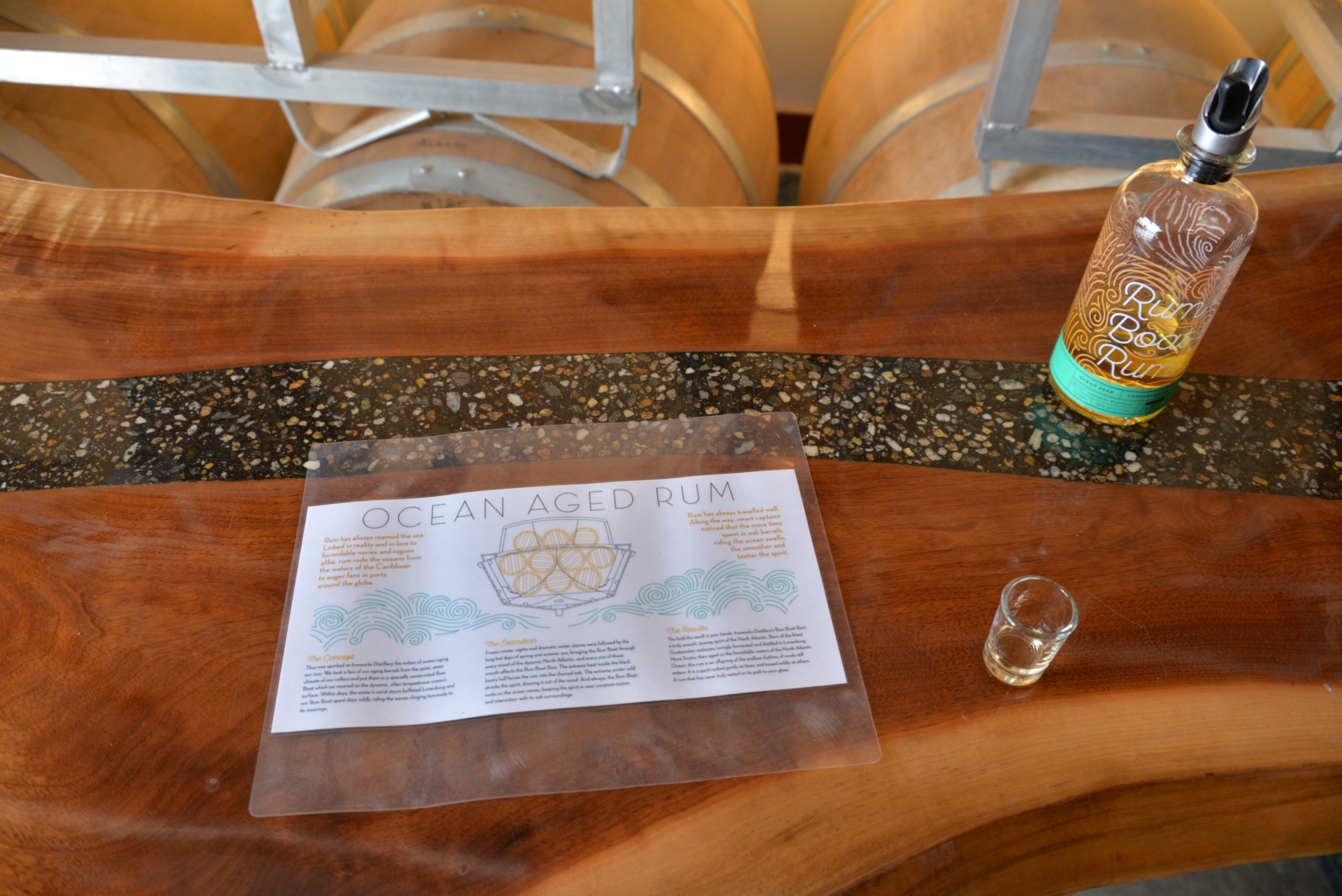
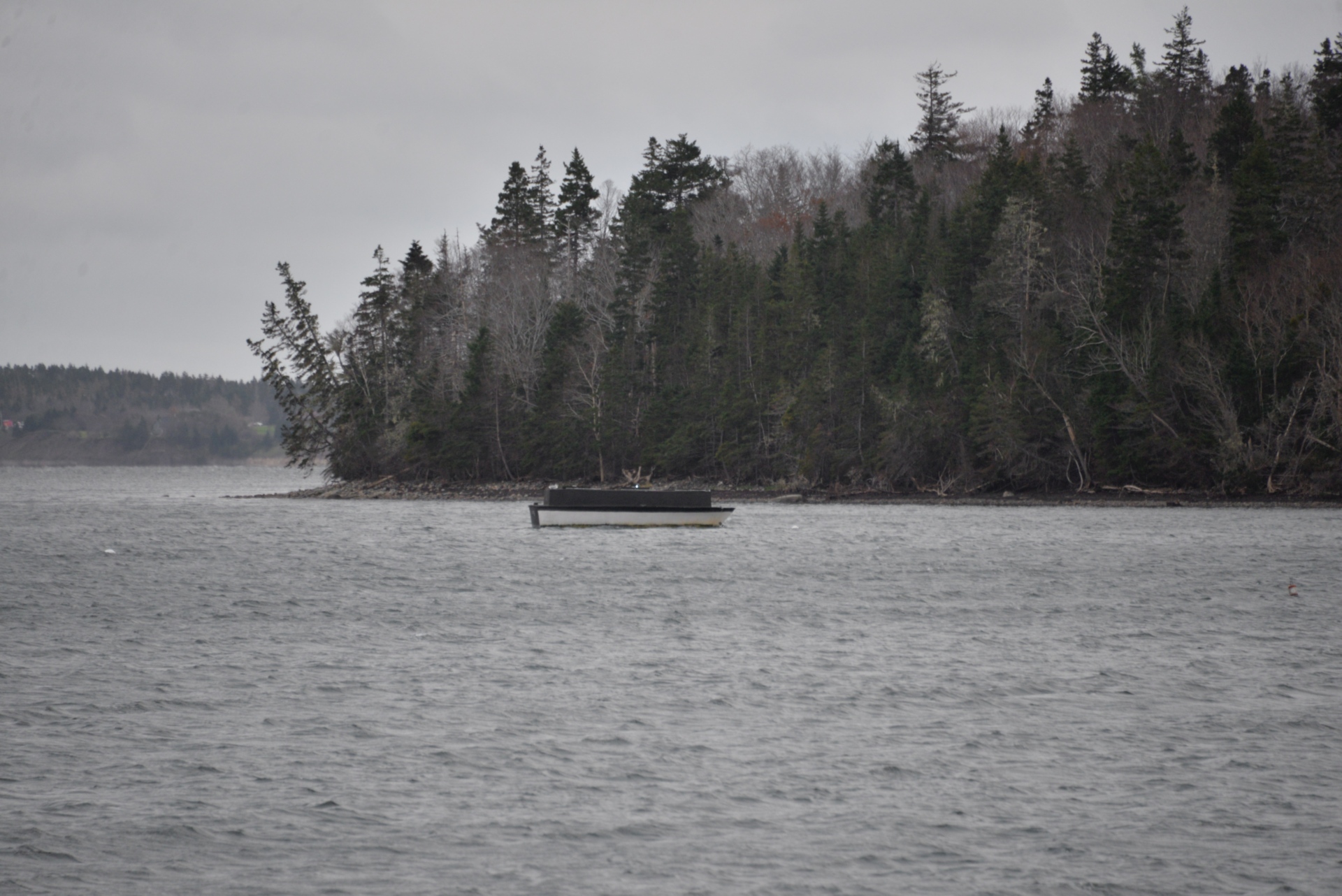
Ocean aged Rum!!! Barrels with aging rum stored in a boat, moored in the Lunenburg Harbour – taking all elements of nature!
Rum Boat moored in the Lunenburg harbour
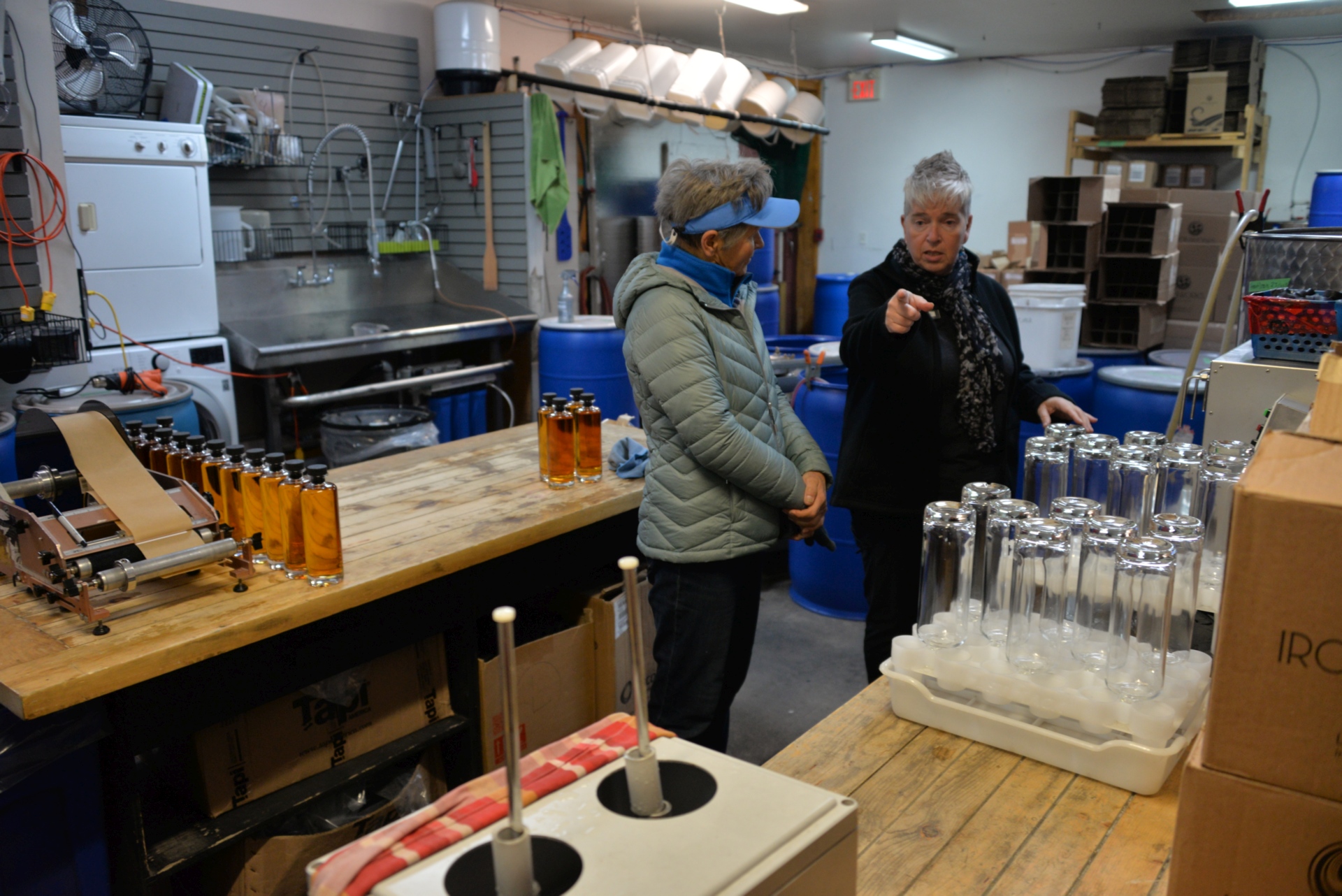
Area for cleaning of bottles and filling them up
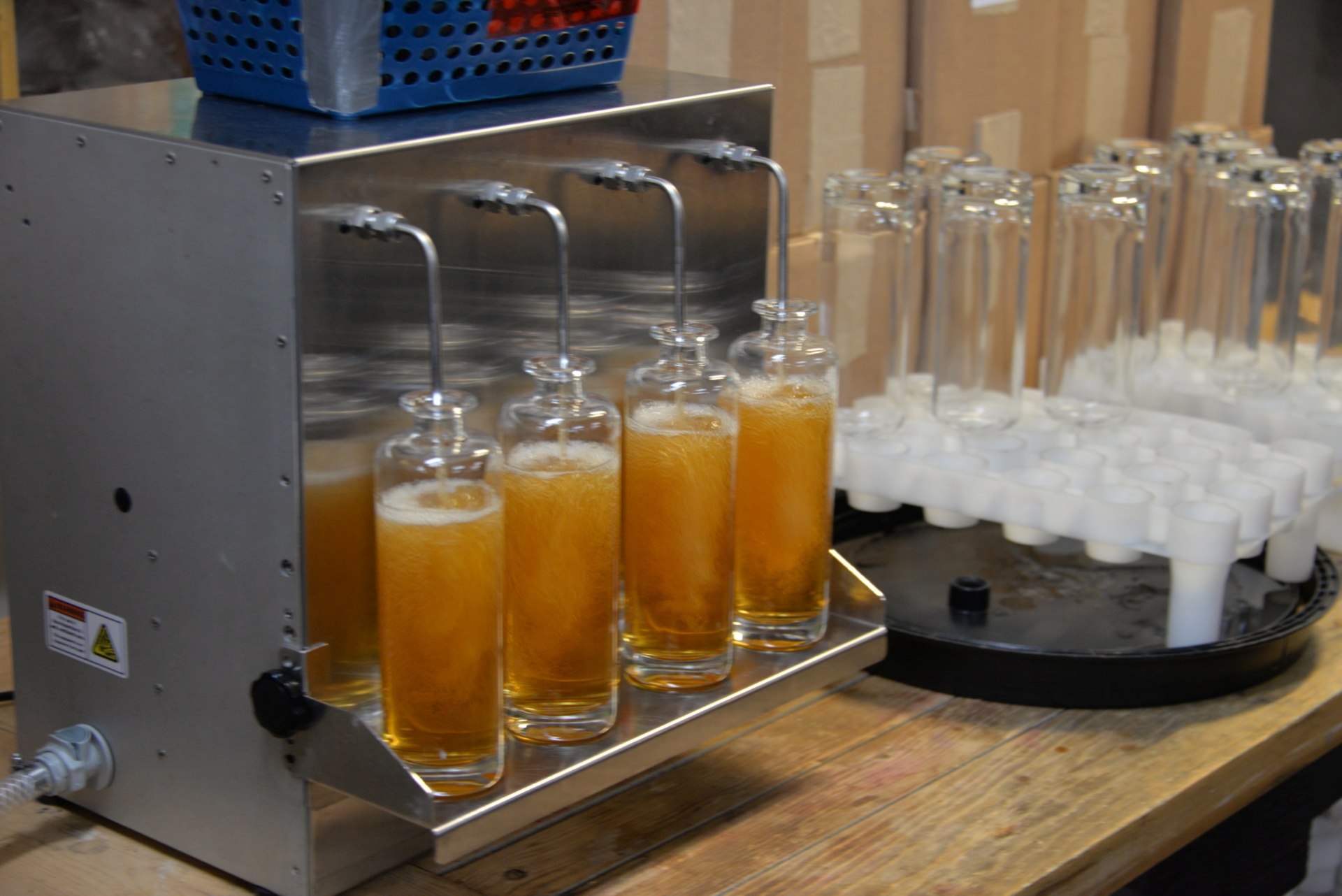
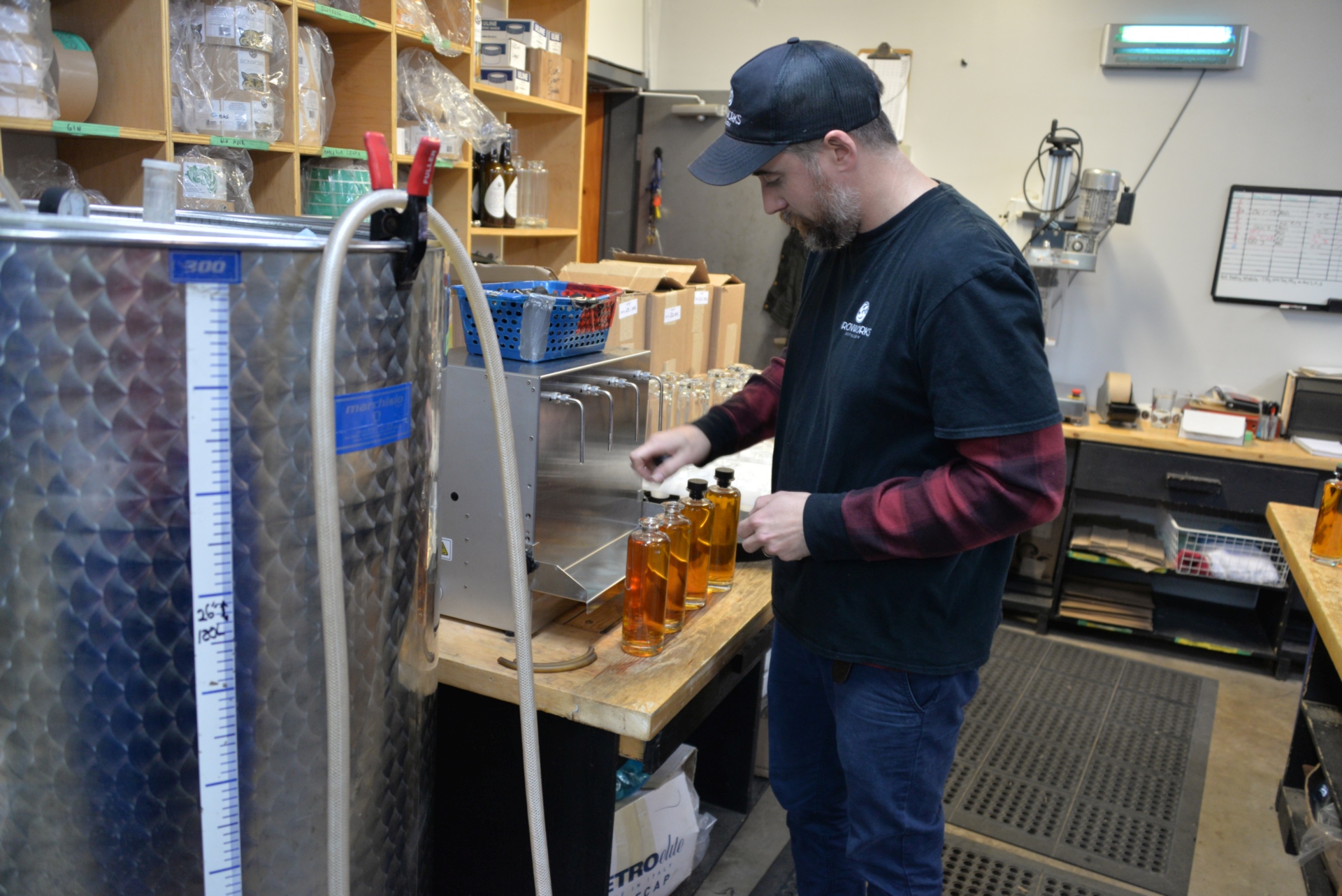
Filling of whiskey
Closing bottles with caps
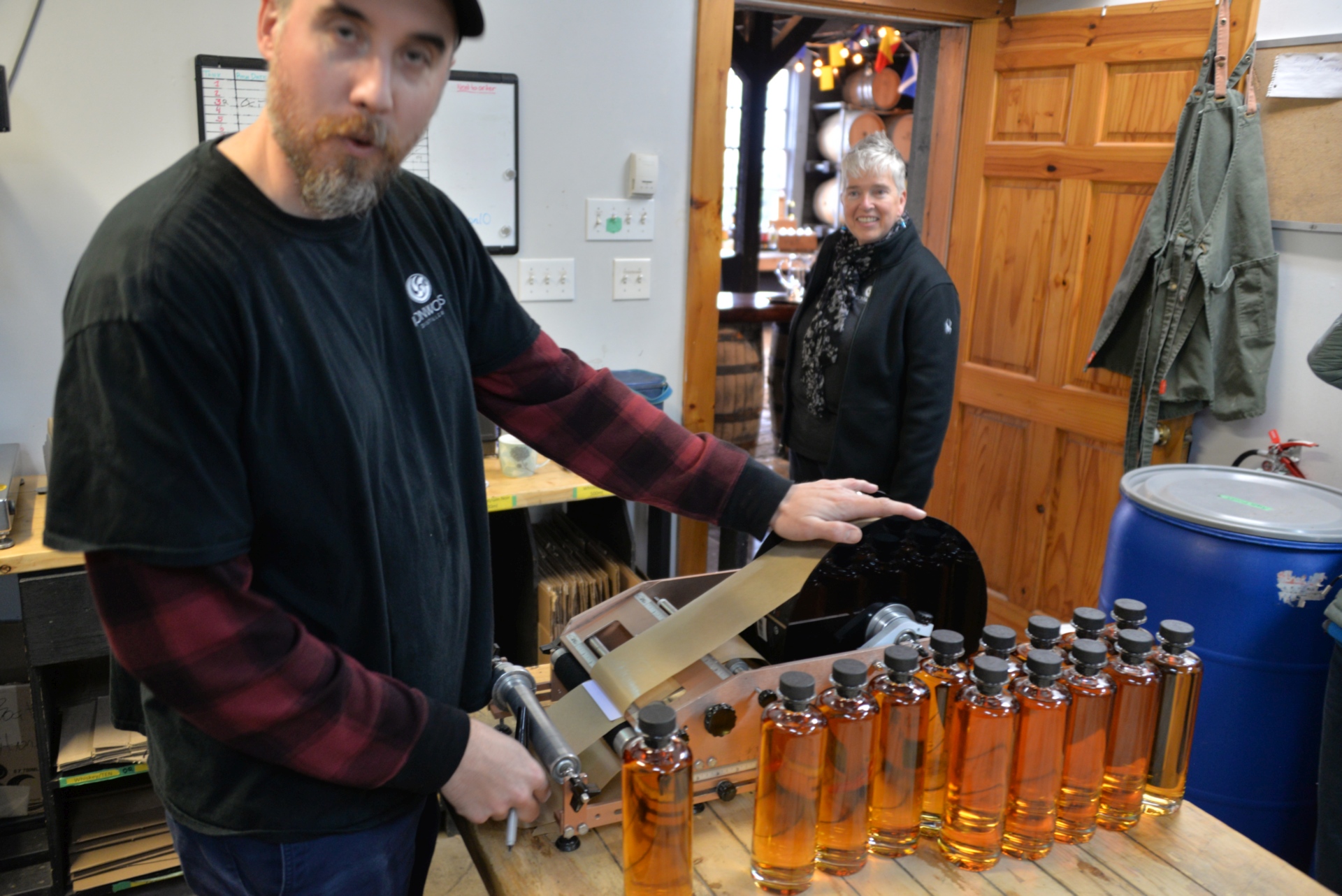
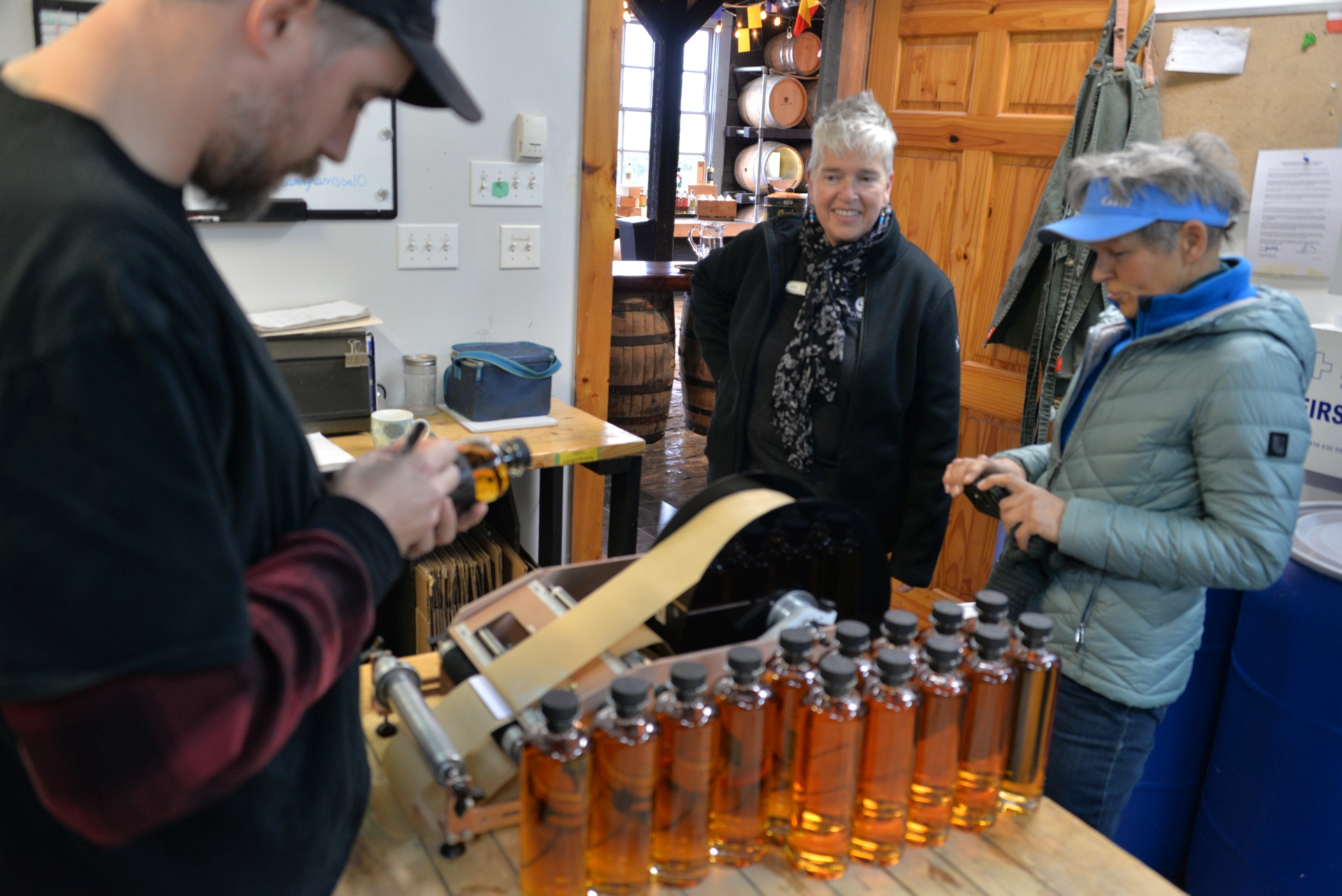
Labeling of whiskey bottles
Each bottle is signed with a batch#
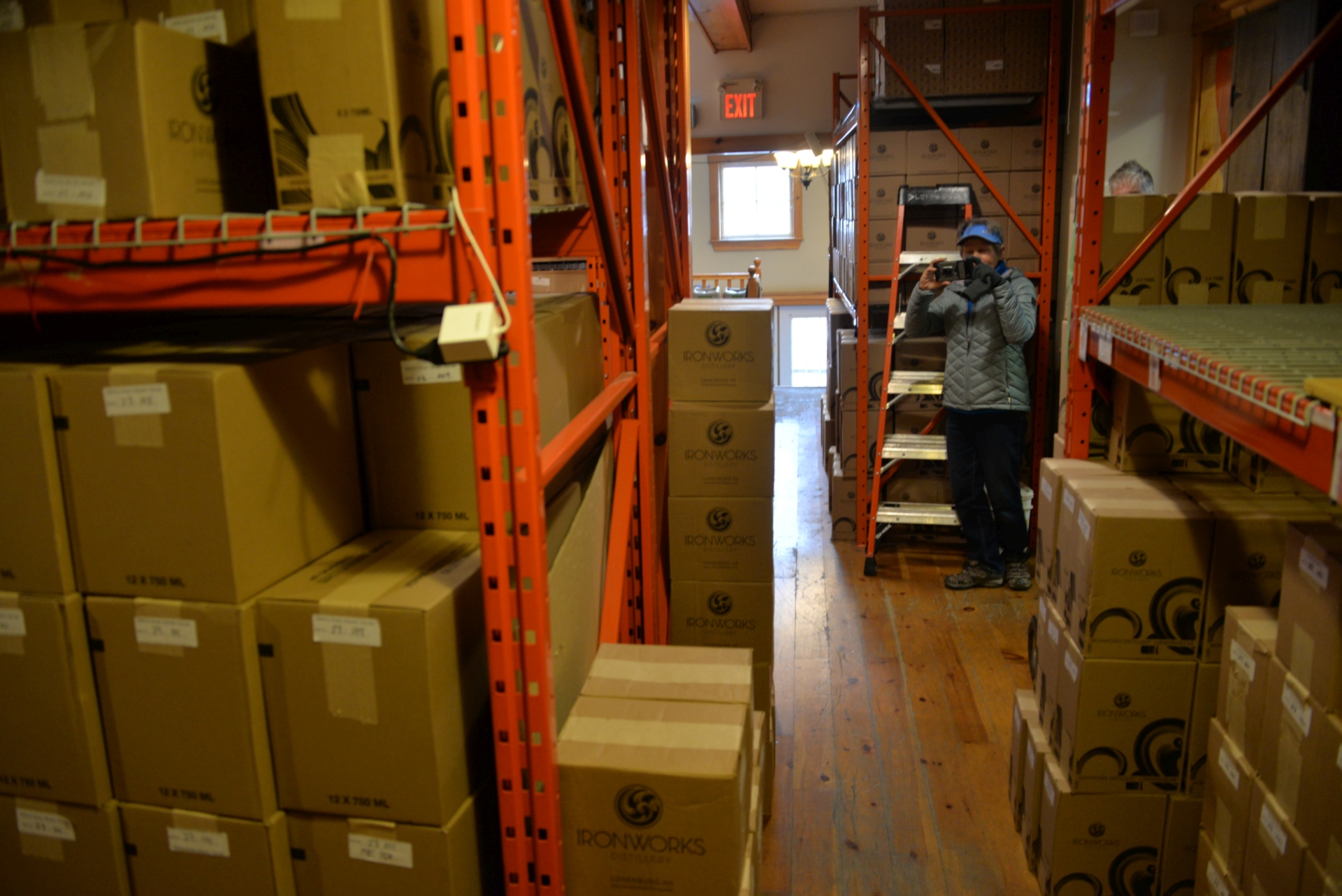
Production storage area – ready to ship!
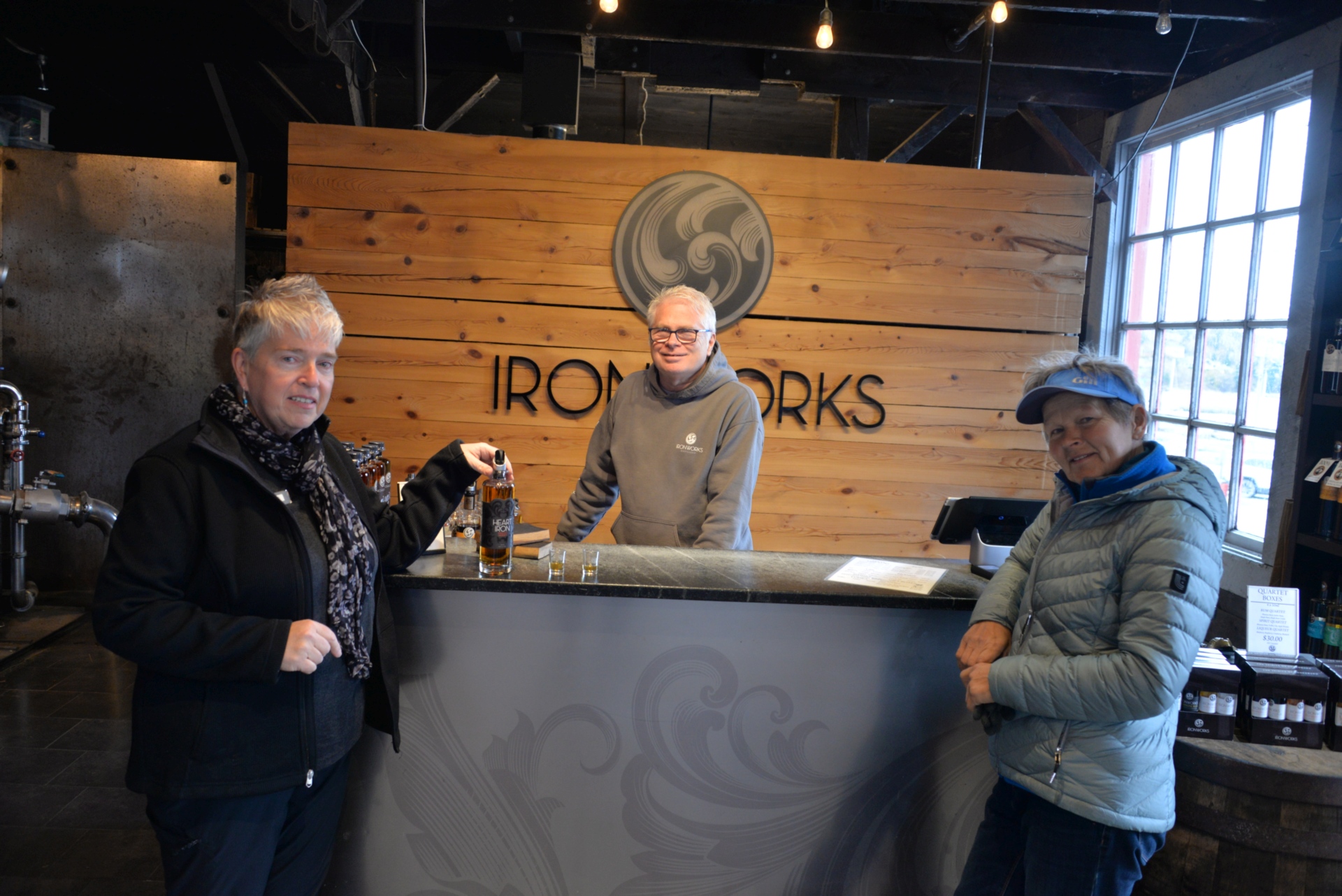
Thanks, Meg for the fantastic tour and Greg for the presents!

All Saints and All Souls

Sunday morning, bathed in sunlight and serenity, brimming with divine grace. As we sipped our morning coffee and charted out our plans for the day, a melodious bell rang out, beckoning us. It was the melodious call of the beautiful St. John’s Church, a gem even amid the artistic beauty of Lunenburg. Excited, we hastened to attend the morning mass, eager to immerse ourselves in the city’s life and bask in the splendour of its stained glass windows and the church’s interior.

St. John’s, the second oldest Anglican church in Canada, stands as an architectural marvel in the historical part of Lunenburg, designed in the Carpenter’s Gothic style. Since 1753, it has been a sanctuary of solace for its parishioners. On a fateful Halloween night in 2001, a destructive fire wreaked havoc, consuming 50% of the church. In a remarkable display of devotion, 91% of the parishioners voted for the restoration of the church, an edifice crafted in 1892, instead of opting for a modern replacement or a replica of the original 1754 design or transforming the site into a memorial park.

The church’s doors swung open once more on June 12, 2005. During the reconstruction, a curious mystery unfolded concerning the profusion of golden stars adorning the church’s interior. This enigma piqued the interest of the international media and astronomers. The captivating starry scene above the apse seemingly mirrors the night sky over Lunenburg on the evening of Jesus Christ’s birth.

This time, St. John’s commemorated All Saints and All Souls. We relished the solemn ceremony, accompanied by the resonant choir and the majestic organ. Following the mass, the church hosted a convivial coffee gathering, allowing us to engage in heartwarming conversations with parishioners and Rev. Victoria Byrne, the Priest in Charge. She told us about her oceanographic background and became acquainted with our project with due interest.
View of the St.John’s Church’s bells from our boat
. The starry scene above the apse seemingly mirrors the night sky over Lunenburg on the evening of Jesus Christ’s birth.
.
 The eagle is widely seen as a symbol of St. John’s gospel. This connection between the eagle and John dates to Christianity’s early days and was a popular subject for stained glass artists and sculptors in the Middle Ages.
With Jane Ritсey, Rev. Victoria Burne and a parishioner
With the Chair of the Lunenburg School of the Arts, retired Senator Wilfred Moore